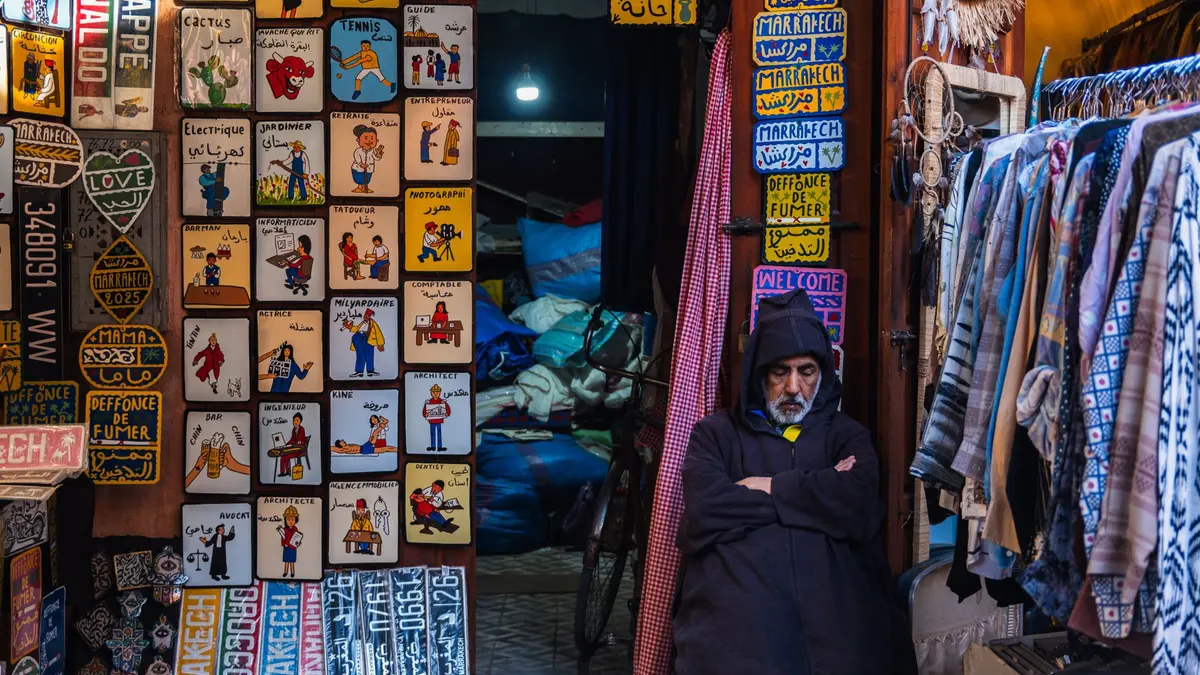
Why Morocco
Morocco is one of those rare destinations where every day feels like a different country. In the span of ten days you can lose yourself in the labyrinthine medinas of Marrakech and Fes, sleep under a blanket of stars in the Sahara Desert, hike through the snow-capped Atlas Mountains, wander the impossibly blue streets of Chefchaouen, and surf Atlantic swells off the ramparts of a fortified coastal town. Few countries pack this much geographic and cultural variety into such a compact space, and fewer still do it at Morocco's price point.
The country sits at the crossroads of Africa, Europe, and the Arab world, and you feel all three influences in everything from the architecture to the food. Moorish palaces with intricate zellige tilework stand beside French colonial boulevards. Berber villages cling to mountainsides above valleys of almond and olive trees. The call to prayer echoes across medinas where spice merchants, leather craftsmen, and metalworkers practice trades unchanged for centuries. And everywhere, the food is extraordinary — slow-cooked tagines, hand-rolled couscous, flaky pastilla, mint tea poured from a height with theatrical precision.
Morocco is also remarkably affordable. A beautifully restored riad in the medina costs what a mid-range hotel room would run in Barcelona or Rome. A three-course meal with drinks rarely exceeds USD 15. A private driver for an entire day through the Atlas Mountains costs less than a single Uber ride across London. The combination of sensory intensity, cultural richness, and genuine value for money makes Morocco one of the best travel destinations in the world — and ten days is enough to experience its full range without rushing.
Days 1-2: Marrakech
Day 1: Jemaa el-Fnaa and the Souks
Fly into Marrakech Menara Airport (RAK). The city has direct connections from most European hubs, and flights to Marrakech are frequent and affordable, especially from London, Paris, and Madrid. A taxi from the airport to the medina costs MAD 70-100 (USD 7-10) — agree on the price before getting in, or use the official taxi rank with fixed rates posted on a board outside arrivals.
Check into your riad in the medina. A riad is a traditional Moroccan house built around an interior courtyard, typically with a fountain, orange trees, and a rooftop terrace. Staying in one is non-negotiable — it is the single most important accommodation decision of this trip. Riads in the Marrakech medina range from USD 30-60 per night for a charming budget option to USD 150-400 for a luxury restoration with a plunge pool and personal chef. The experience of stepping through an unmarked wooden door in a narrow alley and finding yourself in a tiled courtyard filled with birdsong and bougainvillea is the essence of Moroccan hospitality.
Spend the afternoon in Jemaa el-Fnaa, the vast central square that has been the beating heart of Marrakech for nearly a thousand years. During the day, the square hosts snake charmers, henna artists, orange juice vendors (MAD 5-10 per glass, roughly USD 0.50-1.00), and Berber musicians. As the sun goes down, the square transforms: hundreds of food stalls assemble from scratch every evening, each with its own barker beckoning you to sit on a wooden bench and eat grilled lamb, merguez sausages, snail soup, and fried fish. The smoke, noise, and energy are overwhelming in the best possible way. Eat at stall number 1 or 14 for the best food — both are local institutions. A full dinner from the stalls costs MAD 40-80 (USD 4-8).
After dinner, walk into the northern edges of the souks — the vast covered market that radiates outward from the square in a maze of narrow passages. The souks are organized roughly by trade: leatherwork in one section, metalwork in another, spices in another, carpets in another. At night, the crowds thin, the shopkeepers are less aggressive, and the amber light from the stalls turns the narrow passages into something out of a medieval painting. Getting lost is inevitable and part of the experience — the square is always south, and locals will point you back for a small tip (MAD 5-10).
Day 2: Palaces, Gardens, and the Souks
Start the morning at the Bahia Palace (MAD 70, roughly USD 7). Built in the late 19th century for a grand vizier, the palace is a masterwork of Moroccan craftsmanship: rooms of carved cedarwood ceilings, painted stucco walls, and zellige mosaic floors arranged around a series of gardens and courtyards. Arrive at opening time (9am) when the light streams through the carved wooden screens and you have the rooms nearly to yourself.
Walk ten minutes south to the Saadian Tombs (MAD 70), a 16th-century royal necropolis sealed up and forgotten for centuries until it was rediscovered in 1917. The main mausoleum, the Hall of Twelve Columns, has an intricately carved Carrara marble ceiling and is considered one of the finest examples of Islamic architecture in North Africa. The small scale makes the detail overwhelming — every surface is worked.
After lunch, visit the Jardin Majorelle (MAD 70 garden, MAD 30 Berber Museum). Originally created by French painter Jacques Majorelle in the 1920s and later owned by Yves Saint Laurent, the garden is a bolt of electric cobalt blue and vibrant yellow set among cacti, bamboo groves, and bougainvillea. It is Marrakech's most photographed spot for good reason. The adjacent Musee Yves Saint Laurent Marrakech (MAD 100) showcases the designer's work in a stunning contemporary building — worth visiting even if fashion is not your primary interest, as the architecture alone justifies the entry fee.
Spend the late afternoon exploring the Marrakech souks in depth. The key areas to visit: Souk Semmarine (the main artery — textiles, slippers, lanterns), Souk des Teinturiers (the dyers' souk, where freshly dyed skeins of wool and silk hang above the alleyways in vivid colours), and the spice square (Rahba Kedima) where mounds of saffron, cumin, turmeric, and ras el hanout are displayed in open sacks. Bargaining is expected everywhere. Start at roughly one-third of the asking price and work toward a number both sides find reasonable. Never feel pressured to buy — walking away is a legitimate negotiation tactic and often brings the price down further.
Compare prices across hundreds of Marrakech riads and hotels — from traditional medina guesthouses to luxury palm grove resorts.
Compare Marrakech Hotels →
Day 3: Atlas Mountains Day Trip
The High Atlas Mountains rise dramatically from the Haouz Plain just south of Marrakech — from the medina rooftops, you can see their snow-capped peaks floating above the heat haze. A day trip into the mountains is essential contrast to the sensory intensity of the city, and the landscape is among the most dramatic in North Africa.
You have two excellent options. The Ourika Valley is closer (45 minutes from Marrakech) and more accessible. The road follows the Ourika River upstream through terraced Berber villages clinging to the valley walls, past almond and walnut orchards, to a series of waterfalls at the head of the valley. The hike to the Setti Fatma waterfalls takes about 45 minutes each way and involves scrambling over rocks with the help of local guides (tip MAD 50-100). The waterfalls cascade into pools surrounded by red rock and green vegetation — a natural amphitheatre that feels a world away from Marrakech. Stop at a riverside restaurant on the way back for lunch: tagine cooked over charcoal, Berber bread, and mint tea, sitting on cushions on a platform suspended over the rushing water (MAD 60-100 per person).
The second option is Imlil, the gateway village to Jebel Toubkal (4,167m), the highest peak in North Africa. Imlil is 90 minutes from Marrakech and sits at 1,740m elevation. You do not need to summit Toubkal — the village itself and the surrounding walnut groves and Berber hamlets are beautiful. A half-day guided hike (3-4 hours) from Imlil to the village of Armed and back takes you through terraced fields, across rope bridges, and past stone houses with flat roofs used for drying walnuts. Hire a local guide in Imlil (MAD 200-300 for a half-day) or book an Atlas Mountains day trip from Marrakech that includes transport and a guide.
Return to Marrakech in the evening. Tomorrow is an early start for the Sahara.
Days 4-5: Sahara Desert
Day 4: Marrakech to Merzouga via Todra Gorge
The drive from Marrakech to the Sahara dunes at Merzouga is roughly 560 kilometres and takes 9-10 hours. Most travellers book a two-day Sahara desert tour from Marrakech that includes transport, a driver-guide, overnight desert camp, and camel trek. These typically cost MAD 1,200-2,500 (USD 120-250) per person for a shared tour, or MAD 3,000-5,000 for a private vehicle. The shared tours are excellent value and the standard way most visitors do this route.
The drive is spectacular in itself. You cross the Tizi n'Tichka pass (2,260m) — the highest road pass in North Africa — winding through the Atlas Mountains with hairpin turns and panoramic views of valleys, Berber villages, and distant peaks. Stop at the fortified village of Ait Benhaddou, a UNESCO World Heritage Site and the most photographed ksar (fortified city) in Morocco. Its cascading mud-brick towers and walls have appeared in Gladiator, Game of Thrones, and Lawrence of Arabia. Walk across the shallow river (or use the stepping stones) and climb to the top of the ksar for views across the valley — the golden mud-brick structures against the barren red mountains behind are unforgettable.
Continue east through the Valley of the Roses (visit in April-May for the rose harvest) and the Dades Valley, a dramatic river gorge flanked by strange rock formations. Stop at Todra Gorge — a 300-metre-high canyon barely 10 metres wide at its narrowest point, with sheer limestone walls rising vertically on both sides. Walk through the base of the gorge (30 minutes, flat and easy) and feel the scale of the rock around you. In late afternoon, the light turns the canyon walls from grey to gold to deep orange.
Arrive in Merzouga in the late afternoon. Your desert camp operator meets you at the edge of the dunes and transfers you by camel to the camp deep in the Erg Chebbi dune field. The camel ride takes 60-90 minutes and crosses some of the tallest sand dunes in Morocco — up to 150 metres high — their shapes shifting from amber to copper to rose as the sun descends. The camp is a circle of Berber tents with carpeted floors, shared dining area, and (at better camps) private bathrooms. After a traditional dinner of tagine, couscous, and Berber bread, your hosts play drums and sing under a sky filled with more stars than you have ever seen. The Sahara at night, with zero light pollution, is one of the great natural spectacles on the planet.
Day 5: Sunrise and onward to Fes
Wake before dawn and climb to the top of the nearest dune for sunrise over the Sahara. The sand dunes glow through a spectrum of pinks, oranges, and golds as the sun breaks the horizon. The silence is absolute — no wind, no birds, no traffic, just the creak of sand settling. This is the single most memorable moment of most Morocco trips. Take your time. Photograph it if you want, but also just sit and absorb it.
After breakfast at camp, ride camels back to Merzouga and begin the drive north to Fes — approximately 7-8 hours via the N13 and N8. The landscape shifts from Saharan sand to rocky steppe to the green irrigated plains of the Ziz Valley, passing through the town of Errachidia and the cedar forests of Ifrane (known as "the Switzerland of Morocco" for its Alpine-style architecture and cold winters). Most Sahara tours drop you in Fes rather than returning to Marrakech, which works perfectly for this itinerary.
Multi-day Sahara experiences from Marrakech — camel treks, desert camps, Ait Benhaddou, and Todra Gorge included.
Browse Desert Tours →
Day 6: Fes
Fes el-Bali (Old Fes) is the largest car-free urban area in the world. The medina contains an estimated 9,400 narrow alleys and lanes, some barely wide enough for a loaded donkey to pass — which is exactly the form of transport you will encounter regularly, announced by shouts of "Balak! Balak!" (watch out). Getting lost is not a risk, it is a certainty. That is the point. Fes rewards wanderers who surrender to the labyrinth.
Hire an official guide at your riad or through the tourist office (MAD 300-400 for a half day). A good guide transforms Fes from disorienting to revelatory, explaining the history, craft traditions, and social codes embedded in every building. Start at the Bou Inania Madrasa (MAD 20), a 14th-century theological school and one of the few religious buildings in Morocco open to non-Muslims. The carved cedarwood, stucco, and zellige tilework represent the apex of Marinid-era craftsmanship — every surface is worked, every geometric pattern mathematically precise, and no two panels are identical.
Walk through the medina to the Chouara Tannery, the oldest leather tannery in the world (dating to the 11th century). From the surrounding terraces of leather shops, you look down into a surreal landscape of stone vats filled with dye — white, saffron yellow, poppy red, indigo blue, mint green — where men stand waist-deep in the vats, treading hides by foot using techniques unchanged since medieval times. The smell is potent (you will be offered mint sprigs to hold under your nose), and the visual impact is extraordinary. The shops on the terrace will offer you tea and try to sell you leather goods — the prices are inflated, but the viewing access is free with purchase pressure that is easy to decline politely.
Visit the Nejjarine Museum of Wooden Arts (MAD 20), housed in a beautifully restored 18th-century funduq (caravanserai), and the area around the Kairaouine Mosque — founded in 859 AD, it is the oldest continuously functioning university in the world (non-Muslims cannot enter but can peer through the doors at the vast prayer hall). Walk through the metalworkers' quarter, where coppersmiths hammer trays and teapots by hand, and the pottery district near Bab el-Amer.
Where to stay: A riad in the Fes medina is essential. Fes riads tend to be more affordable and less touristy than Marrakech — expect USD 40-100 per night for a beautiful double room with breakfast. Compare Fes hotel prices for the best options.
Day 7: Chefchaouen
Drive or take a CTM bus from Fes to Chefchaouen — approximately 4 hours through the Rif Mountains. Chefchaouen is Morocco's famous "blue city": a small mountain town where nearly every building in the old medina is painted in shades of blue, from powder to cobalt to indigo. The effect is extraordinary and photogenic from every angle — blue walls, blue doors, blue staircases, blue flower pots, all set against the green slopes of the Rif Mountains.
The reasons for the blue paint are debated — some say it was introduced by Jewish refugees in the 1930s (blue symbolizes the sky and heaven in Jewish tradition), others say it repels mosquitoes, and still others say it simply keeps buildings cool. Whatever the reason, the visual result is one of the most distinctive townscapes in the world.
Chefchaouen's medina is small enough to explore in half a day. The Plaza Uta el-Hammam is the main square, anchored by the 15th-century kasbah (MAD 10 entry, climb the tower for rooftop views) and lined with cafes where you can sit and watch the town go by over mint tea. Walk through the residential streets radiating from the square — the best photography is in the narrower lanes where the blue walls rise on both sides and the light bounces between them. The Ras el-Maa waterfall at the edge of town is where locals do their laundry and is a pleasant spot to sit and rest.
For a more active afternoon, hike to the Spanish Mosque on the hillside above town (30-40 minutes uphill). The mosque itself is a modest ruin, but the viewpoint offers a sweeping panorama of Chefchaouen's blue medina nestled in the valley below, backed by the twin peaks of Jebel Chefchaouen. Late afternoon light is ideal for this view.
Where to stay: A blue-painted guesthouse in the medina completes the experience. Rooms run USD 25-70 per night. Compare Chefchaouen hotel prices for the best deals.

Days 8-9: Essaouira
Day 8: Travel Day and Essaouira Arrival
Getting from Chefchaouen to Essaouira requires a full travel day. The most practical route is a CTM bus from Chefchaouen to Marrakech (approximately 7-8 hours, MAD 170-200) and then a connecting bus or transfer to Essaouira (2.5-3 hours, MAD 80-100). Alternatively, take the bus to Casablanca and then south to Essaouira. This is the one genuinely long transit day in the itinerary, but Essaouira is worth the effort.
Essaouira is Morocco's Atlantic coast jewel — a fortified port town with whitewashed buildings, blue shutters, and a laid-back atmosphere that feels completely different from the intensity of Marrakech and Fes. The town sits on a wide, sandy bay where the Atlantic trade winds blow reliably year-round, making it one of the best windsurfing and kitesurfing destinations in Africa. The medina is a UNESCO World Heritage Site, compact and easy to navigate compared to Fes or Marrakech, with wide main streets, French colonial architecture, and a thriving art gallery scene.
Check into your riad, walk the ramparts at sunset, and have dinner at the port fish stalls — open-air tables where you choose your fish fresh from the day's catch (sardines, sea bream, prawns, calamari, lobster) and it is grilled in front of you over charcoal. A generous seafood platter for two costs MAD 100-200 (USD 10-20). This is the best-value seafood meal in Morocco and one of the best anywhere.
Day 9: Essaouira Full Day
Spend the morning exploring the medina. The Skala de la Ville is the sea-facing rampart lined with Portuguese-era bronze cannons pointing out to sea — the terrace offers panoramic views of the harbour, the offshore Iles Purpuraires (Purple Islands), and the beach stretching south. Walk through the woodworking ateliers in the northern medina, where craftsmen carve boxes, chess sets, and furniture from fragrant thuya wood using techniques passed down through generations.
The harbour is the heart of Essaouira. Blue fishing boats crowd the quays, fishermen mend nets and unload the morning catch, and seagulls wheel overhead. Walk out along the harbour wall to the old Portuguese fortress (Sqala du Port, MAD 10) for views back toward the medina. The fish auction happens around 3-4pm and is a chaotic, fascinating spectacle.
In the afternoon, head to Essaouira Beach. The wide, sandy bay stretches for kilometres south of the medina. The consistent Atlantic wind makes it a world-class destination for windsurfing and kitesurfing — rental equipment and lessons are available from several operators on the beach (expect MAD 400-600 for a two-hour introductory lesson). Even if you do not windsurf, the beach is excellent for walking, and the wind creates dramatic light conditions that photographers love. Camel and horse rides along the beach are available for MAD 150-300.
Essaouira has a thriving arts scene and is home to the annual Gnaoua World Music Festival (usually held in June), which draws musicians from across Africa and the world. Even outside festival time, you can hear Gnaoua music — a hypnotic blend of African rhythms, Berber traditions, and Sufi spirituality — in cafes and street performances around the medina.
Compare prices for Essaouira's oceanfront riads and boutique hotels — wind-swept charm on the Atlantic coast.
Compare Essaouira Hotels →Day 10: Return to Marrakech
The bus or shared taxi from Essaouira to Marrakech takes 2.5-3 hours along a well-maintained road through argan tree groves. Argan oil — used in cooking and cosmetics — is Morocco's most famous export, and the trees grow almost exclusively in this region. Stop at an argan oil cooperative along the road (there are several between Essaouira and Marrakech) to see the traditional hand-pressing process and buy bottles directly from the women's cooperatives that produce them. Culinary argan oil (darker, from roasted nuts) costs MAD 150-250 per litre at cooperatives, compared to MAD 400-600 in Marrakech souks.
Arrive in Marrakech by midday and use your final afternoon for anything you missed on Days 1-2. The Maison de la Photographie (MAD 50) is worth a visit for its collection of vintage photographs of Morocco from the 1870s to the 1960s, displayed in a beautifully restored riad with a rooftop cafe overlooking the medina. The Le Jardin Secret (MAD 50) is a recently restored historic garden in the heart of the medina with Islamic and exotic garden courtyards. Or simply return to the souks for final purchases — now that you have seen crafts across the country, you will have a better eye for quality and fair prices.
For a memorable final dinner, book a table at a rooftop restaurant overlooking Jemaa el-Fnaa. Nomad and Le Jardin serve modern Moroccan cuisine in beautiful settings (budget MAD 200-400 per person). For a more traditional farewell, eat at Al Fassia, an all-female-run restaurant serving some of the best traditional Moroccan food in the city (MAD 150-300 per person).
If your flight departs the next morning, a taxi to the airport takes 15-20 minutes and costs MAD 70-100.
Getting Around Morocco
Morocco has several transport options, and the best choice depends on your budget, comfort level, and how much flexibility you want.
CTM and Supratours Buses
CTM is Morocco's national bus company and the most reliable option for intercity travel. Buses are modern, air-conditioned, and run on schedule. Supratours is the rail company ONCF's bus partner, covering routes that trains do not reach. Both are comfortable, affordable, and bookable online. Sample fares: Marrakech to Essaouira MAD 80-100, Fes to Chefchaouen MAD 75-90, Marrakech to Fes MAD 180-220. Book one to two days in advance for popular routes in peak season.
Grand Taxis
Grand taxis are shared Mercedes sedans that run fixed routes between cities. They depart when six passengers fill the car (three in front, three in back — it is cozy). They are faster than buses and depart more frequently, but less comfortable for longer distances. You can buy multiple seats for more space. Grand taxis are ideal for shorter routes like Fes to Chefchaouen or Marrakech to Essaouira. Fares are slightly higher than bus prices but the frequency and directness make up for it.
Trains (ONCF)
Morocco's train network connects Marrakech, Casablanca, Rabat, Meknes, and Fes. The Al Boraq high-speed train between Casablanca and Tangier is Africa's first high-speed rail line. For this itinerary, the Marrakech-Fes train (7 hours, MAD 200-300 first class) is an option if you skip the Sahara drive, but most travellers prefer to combine the desert with the Fes transfer. Trains are comfortable and scenic, especially the Fes-Marrakech route through the Middle Atlas.
Private Drivers and Car Rental
Hiring a private driver is surprisingly affordable in Morocco and eliminates the stress of navigating mountain passes and medina approaches. A driver with a comfortable car costs MAD 800-1,500 per day (USD 80-150), including fuel. This is particularly worthwhile for the Marrakech-Sahara-Fes route, where the driving is long and the scenery demands frequent stops.
Self-driving is an option but comes with caveats. Main highways are excellent, but mountain roads require confidence, and navigating into medina areas is extremely stressful (most medinas are car-free, but finding parking near the gates can be chaotic). If you do rent, compare car rental prices in Marrakech through an aggregator. Budget MAD 300-500 per day (USD 30-50) for a compact car. Drive on the right. International Driving Permit recommended.
- Airport: Marrakech Menara (RAK) has the most international connections. Fes-Saiss (FEZ) is an alternative entry/exit point.
- Fuel: MAD 13-15 per litre for petrol (roughly USD 1.30-1.50). Stations are frequent on main routes, sparse in remote areas.
- Tipping drivers: MAD 20-50 per day for a shared tour driver, MAD 50-100 for a private driver.
- City taxis: Petit taxis (small, coloured taxis) within cities. Insist on the meter or agree on a price before departure. Marrakech petit taxis are red; Fes taxis are red; Essaouira taxis are blue.
- Ride apps: InDrive and Careem work in Marrakech, Casablanca, and Fes for fixed-price rides.
Where to Stay: Riads vs Hotels
The single best accommodation decision in Morocco is to stay in a riad for at least half your nights. A riad transforms a Morocco trip from "visiting" to "inhabiting" — you experience the architecture, the hospitality, and the medina life from the inside rather than observing it from a hotel lobby.
Most riads include breakfast (Moroccan crepes, fresh orange juice, pastries, olives, cheese, and mint tea) served on the rooftop terrace or in the courtyard. Many offer dinner if booked in advance, and riad home cooking is often the best food you will eat in Morocco. The hosts provide insider knowledge — restaurant recommendations, trusted guides, souk strategies — that no hotel concierge can match.
Budget per city per night (double room with breakfast):
| City | Budget Riad | Mid-Range Riad |
|---|---|---|
| Marrakech | USD 30-60 | USD 80-180 |
| Fes | USD 25-50 | USD 60-140 |
| Chefchaouen | USD 20-40 | USD 50-100 |
| Essaouira | USD 30-55 | USD 70-150 |
| Sahara Camp | USD 30-50 | USD 80-200 |
Modern hotels (Accor, Marriott, etc.) exist in the Ville Nouvelle (new city) districts of Marrakech and Fes. They offer familiar comforts — pools, gyms, reliable Wi-Fi — but they miss the point of Morocco entirely. Stay in a riad in the medina. The experience is incomparable.
Morocco Food Guide
Moroccan cuisine is one of the world's great food traditions — slow-cooked, spice-layered, and deeply satisfying. Here is what to eat and what to expect to pay.
Essential Dishes
- Tagine: Morocco's defining dish. Meat (lamb, chicken, or beef) slow-cooked with vegetables, dried fruits, nuts, and spices in a conical clay pot. The cone traps and recirculates steam, producing incredibly tender meat with concentrated flavours. Classic versions include chicken with preserved lemon and olives, lamb with prunes and almonds, and kefta (meatball) tagine with eggs. Restaurant price: MAD 40-80 (USD 4-8). Street stall: MAD 25-40.
- Couscous: Hand-rolled semolina steamed above a vegetable and meat broth, traditionally served on Fridays (the Muslim holy day). A mountain of fluffy couscous topped with a stew of seven vegetables, chickpeas, and tender lamb or chicken. Proper hand-rolled couscous takes hours to prepare and is nothing like the instant version. Many riads serve Friday couscous as a special meal — always accept the invitation.
- Pastilla (B'stilla): A savoury-sweet pie of shredded pigeon (or chicken), almonds, eggs, and cinnamon, wrapped in layers of paper-thin warqa pastry and dusted with powdered sugar. It sounds bizarre and tastes extraordinary. Fes is considered the pastilla capital. MAD 50-100 at restaurants.
- Harira: A thick soup of tomatoes, lentils, chickpeas, and herbs, traditionally eaten to break the Ramadan fast but available year-round. Warming, filling, and cheap — MAD 5-15 per bowl from street vendors.
- Msemen and Baghrir: Moroccan flatbreads. Msemen is a square, layered, pan-fried bread — flaky, buttery, and addictive. Baghrir is a spongy semolina pancake with hundreds of tiny holes that soak up honey and butter. Both are breakfast staples. MAD 2-5 each from street vendors.
Street Food
- Jemaa el-Fnaa food stalls: Grilled meats, merguez, snail soup (babbouche), fried fish, sheep's head. MAD 20-60 for a filling meal.
- Fresh orange juice: Squeezed on every corner. MAD 5-10 per glass.
- Moroccan sandwich: Baguette stuffed with tuna, olives, harissa, and vegetables. MAD 10-20.
- Mint tea: The national drink. Sweet, strong gunpowder green tea with fresh spearmint, poured from a height to create a froth. Offered everywhere as a gesture of hospitality — always accept. MAD 10-15 at cafes, free at shops and riads.
Daily Food Budget
Budget: MAD 100-200 per day (USD 10-20). Street food for lunch, simple restaurant dinner, and snacks. Mid-range: MAD 200-400 per day (USD 20-40). Restaurant meals with variety, one splurge dinner. Comfort: MAD 400-800 per day (USD 40-80). Upscale restaurants, food tours, wine with dinner.
Best Time to Visit Morocco
Morocco's climate varies dramatically by region — the coast, the mountains, and the desert each have distinct weather patterns. Timing your visit well makes a significant difference in comfort.
March to May is the best time for a Morocco trip covering all regions. Temperatures in Marrakech range from 20-30C, the Atlas Mountains are green with wildflowers, the Sahara is warm but not unbearable (25-35C), and the coast is pleasant for walking though still cool for swimming. The Valley of the Roses near Kelaat M'Gouna blooms in April and early May. Crowds are moderate and prices reasonable.
June to August is scorching inland. Marrakech regularly hits 40-45C, and the Sahara exceeds 50C. The medinas become furnaces and walking is exhausting. The only comfortable areas are the Atlantic coast (Essaouira stays a pleasant 20-25C year-round thanks to the trade winds) and the mountains. Unless your trip focuses on coastal and mountain destinations, avoid midsummer.
September to November is arguably the ideal window, especially October. Summer heat recedes, Marrakech drops to 25-32C, the Sahara becomes comfortable for camping (20-30C by day, 10-15C at night), and the coast warms for swimming. The autumn light in the desert is spectacular. Prices are moderate and crowds are thinner than spring.
December to February is Morocco's quiet season. Marrakech sees 15-20C days with cool nights. The Atlas Mountains get snow (ski season at Oukaimeden runs January-March). The Sahara is cold at night (can drop below 5C) but pleasant by day. Essaouira and the coast are mild and wind-swept. Hotel prices drop 30-50% and the medinas are blissfully uncrowded. Pack layers.
Safety and Cultural Tips
Morocco is a safe country for travellers, but cultural awareness and basic street smarts make the difference between a smooth trip and a frustrating one. Here is what you need to know.
General Safety
- Morocco is safe. Violent crime against tourists is extremely rare. The main hassles are persistent touts, unofficial guides, and overcharging — annoying but not dangerous.
- Scams to watch for: "The road is closed, let me show you another way" (it is not closed — they want a guiding tip). Henna artists grabbing your hand and demanding payment. People offering to take your photo at viewpoints and demanding money. A firm "La, shukran" (No, thank you) handles all of these.
- Money: The Moroccan Dirham (MAD) is the currency. ATMs are widely available in all cities. Credit cards are accepted at upscale restaurants, hotels, and shops, but the medinas and street vendors are cash-only. Bring MAD for daily spending. USD 1 = approximately MAD 10 in 2026.
- Tipping: Expected in most service situations. MAD 10-20 for restaurant meals, MAD 5-10 for cafe service, MAD 50-100 per day for guides, MAD 20-50 per day for drivers. Riad staff: MAD 50-100 at the end of your stay.
Cultural Etiquette
- Dress modestly. Morocco is a Muslim country. Women should cover shoulders and knees in medinas and rural areas. Men should avoid sleeveless shirts. Beachwear is fine at the beach but not in town. Essaouira is the most relaxed; Fes and Chefchaouen are the most conservative.
- Ramadan: If your trip falls during Ramadan (dates shift annually based on the lunar calendar), be aware that most Moroccans fast from dawn to sunset. Eating, drinking, and smoking in public during fasting hours is considered disrespectful. Tourist restaurants stay open, but options are reduced. The evening iftar (fast-breaking meal) is a wonderful cultural experience if you are invited to share it.
- Photography: Ask before photographing people, especially in rural areas and markets. Many Moroccans do not want to be photographed and will tell you so clearly. Some will expect a small tip (MAD 5-10) if they agree. Never photograph military installations, police, or government buildings.
- Mosque access: Non-Muslims cannot enter mosques in Morocco, with the exception of the Hassan II Mosque in Casablanca. You can admire exteriors and peek through open doors.
- Left hand rule: The left hand is considered unclean in Islamic culture. Eat, greet, and hand over money with your right hand.
- Alcohol: Available in licensed restaurants, hotels, and supermarkets (Carrefour, Acima) in cities. Not available in medinas or rural areas. Moroccan wine (especially from the Meknes region) and Flag Speciale beer are decent and affordable — MAD 30-50 for a beer, MAD 80-150 for a bottle of wine at restaurants.
- Salam alaikum — Peace be upon you (universal greeting)
- Shukran — Thank you
- La, shukran — No, thank you (your most-used phrase)
- Bsahha — Cheers / enjoy your meal
- B'shhal? — How much?
- Inshallah — God willing (used constantly and sincerely)
- Balak! — Watch out! (you will hear this from donkey drivers in the medina)
Everything you need — hotels, guided tours, desert experiences, and car rental across Morocco.
Ready to plan your Morocco trip?
Tell Tripva your travel dates, interests, and budget — we'll build a complete day-by-day itinerary with riad picks, activity timing, and transport routes. Takes 30 seconds.
Plan Your Morocco Trip ✦