Why Drive Portugal from Lisbon to Porto
Portugal is one of Europe's most underrated road trip countries — and also one of its most rewarding. The distance from Lisbon to Porto by motorway is just 310 kilometres, about three hours of driving. But taking the direct route would mean missing everything that makes Portugal extraordinary: the fairy-tale palaces perched on misty hillsides in Sintra, the cork oak plains and medieval walled towns of the Alentejo, the jaw-dropping sea caves and golden cliffs of the Algarve, the terraced vineyards cascading down to the Douro River, and the port wine cellars lining the waterfront in Vila Nova de Gaia.
Ten days is the sweet spot for a Lisbon-to-Porto road trip. It gives you two full days to explore Lisbon without rushing, a day trip to Sintra, three days in the Alentejo and Algarve, and enough time to savour Coimbra, the Douro Valley, and Porto without the trip feeling like a checklist. You will cover roughly 1,200 kilometres in total, averaging 1.5 to 3 hours of driving per day — enough to feel the journey without exhausting yourself behind the wheel.
Portugal's roads are excellent. The motorways (autoestradas) are smooth, well-signed, and rarely congested outside Lisbon's rush hour. The smaller national roads and coastal routes are where the scenery lives — winding through hilltop villages where old men sit outside cafes drinking espresso, past whitewashed churches surrounded by bougainvillea, and along cliff-edge tracks where the Atlantic explodes against ochre limestone. The food is extraordinary and absurdly affordable by Western European standards. A three-course lunch with wine at a local tasca costs what a single main course would set you back in Paris.
This itinerary runs south from Lisbon to the Algarve before looping north through the interior to Porto. You can reverse it — pick up in Porto and drop off in Lisbon — and the route works equally well. Either way, the one-way drop-off fee is worth paying to avoid backtracking.
Car Rental and Driving Tips
Renting Your Car
Pick up your rental car at Lisbon Airport (LIS) or at a city-centre branch. A compact car (Renault Clio, VW Polo, or similar) is ideal for Portugal — small enough for narrow village streets and easy parking, but comfortable for motorway driving. Expect to pay EUR 25-45 per day for a manual compact in shoulder season, EUR 40-70 per day in July-August peak. Automatic transmission adds roughly EUR 10-15 per day and is worth it if you are not comfortable with a manual on steep hills.
Book through an aggregator to compare car rental prices across all providers in Lisbon. One-way rentals (pick up Lisbon, drop off Porto or Porto Airport) are available from most major companies — the one-way fee typically runs EUR 30-75 depending on the provider and season. Book as far in advance as possible for summer travel; inventory gets tight in July and August.
Always take full CDW (collision damage waiver) coverage. Portugal's narrow village roads and tight parking spots mean small scrapes are common. Decline the rental company's upsold insurance and buy standalone coverage through your aggregator if it is cheaper. Keep your rental agreement, a valid driving licence (EU licences are accepted directly; non-EU drivers should carry an International Driving Permit), and your passport in the car at all times.
Compare prices from all major rental companies at Lisbon Airport. Free cancellation on most bookings — lock in your rate early for the best summer prices.
Compare Car Rentals in Lisbon →Toll Roads (Via Verde)
Portugal's motorway system uses electronic tolls. Most rental cars come with a Via Verde transponder — confirm this at pickup and make sure it is active. If your car does not have one, you must register your number plate at a post office or online through the Portugal Tolls website and link a credit card. Do not ignore tolls: unpaid tolls accrue fines that the rental company will charge to your card weeks later, plus an administration fee.
Toll costs add up. The full Lisbon-to-Porto motorway toll is approximately EUR 22 one way. Over a 10-day trip using a mix of motorways and free national roads, budget EUR 50-80 total for tolls. Some of the best driving in Portugal is on toll-free national roads (N-roads) anyway — the N2, which runs the length of the country from Chaves to Faro, is Portugal's answer to Route 66 and is entirely free.
Fuel and Parking
Petrol (gasolina) costs approximately EUR 1.60-1.80 per litre in 2026. Diesel (gasoleo) is slightly cheaper at EUR 1.45-1.65. A compact car averaging 6 litres per 100km will cost roughly EUR 120-150 in fuel for the entire 1,200 km trip. Fill up at Intermarche, Pingo Doce, or Jumbo supermarket petrol stations — they are consistently EUR 0.05-0.10 per litre cheaper than branded stations like Galp or Repsol.
Parking in Lisbon and Porto is tight and expensive. Use park-and-ride lots on the outskirts and take the metro in, or park in a covered garage (EUR 15-25 per day in central Lisbon, EUR 10-18 in Porto). In smaller towns like Evora, Lagos, and Coimbra, free street parking is usually available within a short walk of the centre. Look for white-lined spots (free) rather than blue-lined (metered) or yellow-lined (prohibited).
- Drive on the right. Speed limits: 50 km/h in towns, 90 km/h on national roads, 120 km/h on motorways.
- Roundabouts are everywhere. Traffic already in the roundabout has priority. Use the outer lane for the first exit, inner for all others.
- Road quality is excellent on motorways and main national roads. Some rural Alentejo and Algarve back roads have potholes — drive slowly after dark.
- Drink driving limit: 0.05% BAC, strictly enforced. With Portuguese wine this good, designate a driver or skip the lunchtime glass.
- Emergency number: 112 (Europe-wide).
Days 1-2: Lisbon
Do not rent your car yet. Lisbon is best explored on foot, by tram, and by metro. Pick up your rental on the morning of Day 3, when you leave for Sintra. Driving in central Lisbon is stressful, parking is expensive, and the city's seven hills are far more enjoyable climbed on foot with a pastel de nata in hand.
Day 1: Alfama, Belem, and the Waterfront
Start in Alfama, Lisbon's oldest neighbourhood. The labyrinth of narrow alleys, tiled facades, and hidden courtyards predates the 1755 earthquake that destroyed most of the city — Alfama survived because it sits on solid bedrock. Walk uphill to the Castelo de Sao Jorge (EUR 15 entry) for panoramic views over the red rooftops and the Tagus River. The castle ramparts are the best viewpoint in Lisbon, and the morning light is ideal for photography. On the way down, stop at the Miradouro da Graca and Miradouro das Portas do Sol — both free, both spectacular.
Ride Tram 28 from Alfama through Graca and down through Chiado — it is a functioning public transit route that happens to pass through the most photogenic streets in the city. Board at the Graca terminus early (before 10am) to avoid queues. A single ride costs EUR 3.00 with a Viva Viagem card, compared to EUR 7.00 without one. The tram lurches through streets so narrow you could reach out and touch the buildings on both sides.
In the afternoon, take the tram or bus west to Belem. The Jeronimos Monastery (EUR 10, free on Sundays before 2pm) is a masterpiece of Manueline architecture — the cloisters alone justify the visit, with their impossibly detailed stone carvings of ropes, shells, and maritime motifs celebrating Portugal's Age of Discovery. The Torre de Belem (EUR 8) stands in the river nearby, a fortified tower that once guarded the harbour entrance. Walk along the waterfront to the Padrao dos Descobrimentos (Monument to the Discoveries) for the full Age of Exploration context.
Before leaving Belem, visit Pasteis de Belem — the bakery that has been producing Lisbon's most famous pasteis de nata since 1837, using the original recipe from the monks of Jeronimos Monastery. The queue looks long but moves fast. Order at the counter (EUR 1.40 each), dust with cinnamon and powdered sugar, and eat them warm. They are worth every minute of waiting.
Day 2: Chiado, Baixa, and Time Out Market
Spend the morning in Chiado and Bairro Alto, Lisbon's cultural and nightlife districts. The Livraria Bertrand in Chiado holds the Guinness record for the world's oldest operating bookshop (founded 1732). Browse the shelves, then walk through the elegant Praca do Comercio — Lisbon's grand waterfront square, rebuilt after the 1755 earthquake with symmetrical arcades and a triumphal arch.
For lunch, head to Time Out Market (Mercado da Ribeira), Lisbon's famous food hall on the river. Over 30 stalls run by some of Lisbon's best chefs serve everything from Mozambican prawns to slow-cooked suckling pig. Budget EUR 12-18 per dish. Arrive before noon or after 2pm to beat the worst crowds. For a more local experience, skip Time Out and eat at a traditional tasca in Alfama — Taberna da Rua das Flores and Zé da Mouraria serve extraordinary Portuguese home cooking for EUR 8-15 per main.
In the afternoon, ride the Elevador de Santa Justa (EUR 5.30 return, or free with a 24-hour transport pass) for views from the top, then explore the LX Factory — a converted industrial complex in Alcantara filled with independent shops, galleries, restaurants, and a bookshop inside an old printing warehouse. It is Lisbon's creative hub and a good place to pick up Portuguese design, ceramics, and local art.
Where to stay: Alfama or Baixa-Chiado for walkability. A well-rated guesthouse or apartment runs EUR 80-140 per night; boutique hotels EUR 150-250. Book on Hotellook to compare Lisbon hotel prices across Booking.com, Agoda, and direct rates.
Compare prices from hundreds of Lisbon hotels — from Alfama guesthouses to waterfront boutiques.
Compare Lisbon Hotels →Day 3: Sintra + Cascais
Pick up your rental car first thing in the morning. Drive 30 minutes west to Sintra, a UNESCO World Heritage town draped across forested hills, where 19th-century Portuguese royalty and aristocracy built fantastical palaces designed to outdo each other in extravagance.
Pena Palace (EUR 14 for palace + park) is the crown jewel — a Romanticist castle painted in vivid yellow and red, perched on the highest peak in the Sintra hills. From the ramparts, you can see all the way to the Atlantic on a clear day. The interior is preserved as it was when the royal family fled to Brazil in 1910, complete with original furnishings. Arrive by 9:30am to beat the tour buses that swarm from 10:30 onward. The surrounding park is a 200-hectare forest of exotic trees, hidden trails, and fairy-tale grottoes — worth an hour of wandering.
Quinta da Regaleira (EUR 10) is the most atmospheric of Sintra's estates. The Initiation Well — a 27-metre inverted tower spiralling underground, inspired by Masonic and Templar symbolism — is the highlight. Descend the spiral staircase into the earth, emerge through a hidden tunnel behind a waterfall, and explore the surrounding gardens of grottos, secret passages, and lakeside towers. It feels like walking through a Gothic novel.
After Sintra, drive 15 minutes to Cabo da Roca — the westernmost point of mainland Europe. A windswept cliff with a lighthouse and a monument marking the spot. The views are dramatic and the wind is ferocious. Spend 20 minutes, take the obligatory "edge of Europe" photo, and continue south along the coastal road to Cascais.
Cascais is a former fishing village turned upscale beach town, 30 minutes west of Lisbon along the coast. Walk the seafront promenade, check out the Boca do Inferno (Hell's Mouth) — a sea cave where Atlantic waves crash into a chasm with explosive force — and have dinner at one of the harbourfront restaurants. Grilled sea bass or fresh sardines with a cold vinho verde as the sun sets over the Atlantic is one of Portugal's essential experiences. Book a guided tour of Sintra's palaces if you want skip-the-line access and historical context.
Where to stay: Return to Lisbon for the night, or stay in Cascais if you want a beach evening (EUR 90-160 per night). You will depart south for Evora in the morning.

Day 4: Drive to Evora (Alentejo)
Drive southeast from Lisbon across the Tagus and into the Alentejo — Portugal's vast, sun-baked interior. The landscape shifts immediately: Lisbon's urban density gives way to rolling plains of golden wheat, silvery olive groves, and forests of cork oak with their bark stripped to reveal bright orange trunks. Portugal produces over half the world's cork, and the Alentejo is where most of it comes from. The drive to Evora takes about 1.5 hours on the A6 motorway.
Evora is a UNESCO World Heritage city that has been continuously inhabited since Roman times. The Roman Temple of Evora (Temple of Diana) stands remarkably intact in the city centre — fourteen Corinthian columns rising against the Alentejo sky, dating to the 1st century AD. The Chapel of Bones (Capela dos Ossos, EUR 6) inside the Church of St. Francis is Evora's most famous attraction: the walls and columns of this 16th-century chapel are entirely constructed from the bones and skulls of over 5,000 Franciscan monks, arranged in geometric patterns. An inscription above the door reads: "We bones that are here, for yours we wait." It is macabre, beautiful, and genuinely thought-provoking.
Walk the medieval walls, explore the 12th-century Cathedral of Evora (EUR 3.50; climb to the roof terrace for 360-degree views over the plains), and wander the narrow streets of the old town. Evora is a university city, so despite its ancient bones the atmosphere is youthful — students fill the outdoor cafes in the Praca do Giraldo, the main square.
For dinner, try Alentejo cuisine: migas (a bread-based dish with pork or asparagus), carne de porco alentejana (pork with clams — one of Portugal's great dishes, the surf-and-turf combination working far better than it sounds), and local sheep's cheese (queijo de Evora) drizzled with honey. Wash it down with a bottle of Alentejo red — the region's wines are rich, full-bodied, and cost EUR 8-15 per bottle in restaurants.
Where to stay: Evora's old town. Charming converted convents and manor houses run EUR 70-130 per night. Compare Evora hotel prices to find the best deals.
Day 5: Alentejo Wine Region
The Alentejo is Portugal's largest wine region and one of Europe's most exciting. The wines are bold, sun-drenched, and increasingly recognized internationally, but the region has none of the Douro Valley's crowds. Today is about slow exploration: country roads, vineyards, hilltop villages, and serious wine tasting.
Drive south from Evora to Reguengos de Monsaraz (40 minutes), a wine town surrounded by some of the region's best estates. Stop at Herdade do Esporao, one of Portugal's most acclaimed wineries, for a tasting and vineyard tour (EUR 15-35 depending on the tasting tier; book online). The estate also has an excellent restaurant serving Alentejo cuisine paired with their wines — a long lunch here, sitting on the terrace overlooking the vines, is one of the trip's highlights.
After lunch, drive 15 minutes to Monsaraz — a tiny medieval village perched on a hilltop above the Alqueva reservoir, the largest artificial lake in Europe. Monsaraz has maybe 150 permanent residents and feels like it has not changed since the 14th century: a single cobbled main street, a castle at the top, whitewashed houses with blue trim, and views that stretch to Spain. Walk the ramparts at sunset when the light turns the plains gold and the lake reflects the sky. This is one of Portugal's most photogenic villages and one of its least touristed.
If you want a second winery visit, Adega da Cartuxa near Evora produces the legendary Pera-Manca wines. A basic tasting costs EUR 10-15; the Pera-Manca tasting (if available) is a splurge at EUR 40-60 but includes some of Portugal's most celebrated bottles.
Where to stay: Monsaraz (a handful of boutique guesthouses, EUR 80-150) or return to Evora. Tomorrow you drive south to the Algarve — about 2.5 hours from Evora.
Day 6: Algarve Coast — Lagos + Benagil Caves
Drive south through the Alentejo's increasingly arid landscape, cross the gentle hills of the Serra de Monchique, and descend to the Algarve — Portugal's southernmost coast and one of Europe's most spectacular stretches of shoreline. The drive from Evora to Lagos takes about 2.5 hours via the A2.
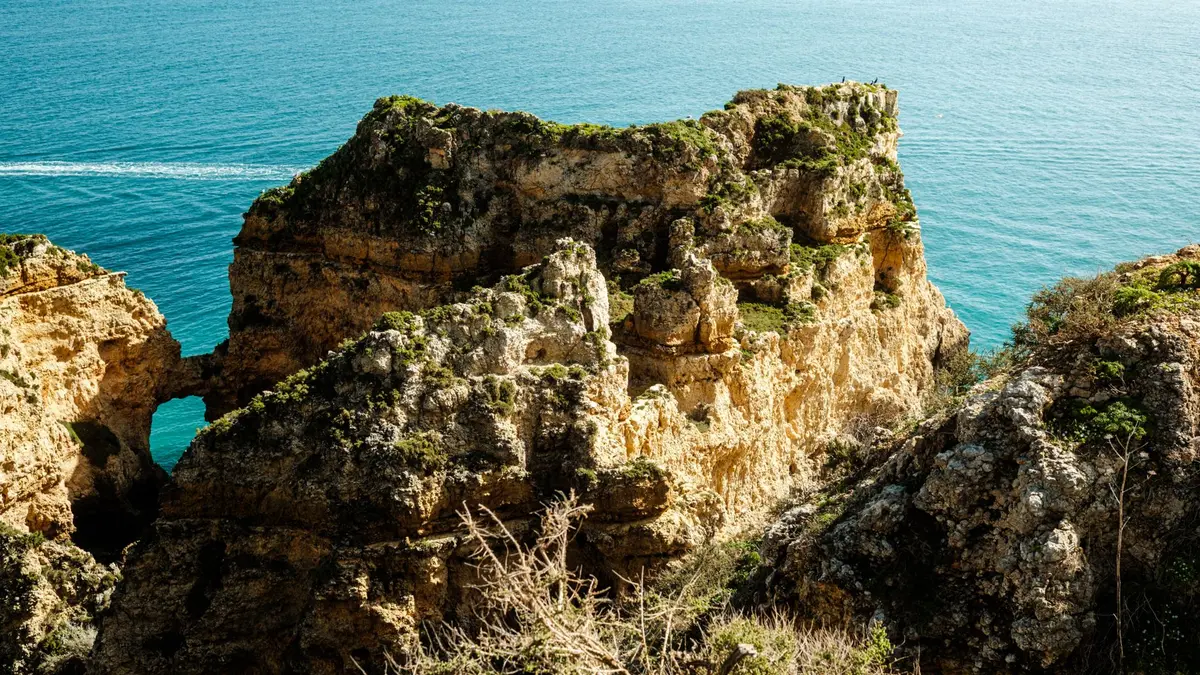
Lagos is the Algarve's most characterful town: a walled old centre of cobbled streets, independent restaurants, and a vibrant surf culture, wrapped around a harbour where the first Portuguese sailing expeditions launched in the 15th century. The Ponta da Piedade headland, a 15-minute walk south of town, is the Algarve's most dramatic landscape — towering ochre and golden limestone cliffs, sea stacks, arches, grottos, and turquoise water so vivid it looks digitally enhanced. Walk the clifftop trail for the panoramic views, then descend the steep wooden staircase to the water level for a completely different perspective. Boat tours from Lagos Marina (EUR 20-30 per person, 1-1.5 hours) navigate into the sea caves and around the stacks — book a Lagos grotto boat tour in advance during summer.
In the afternoon, drive 45 minutes east along the coast to Benagil. The Benagil Sea Cave (Algar de Benagil) is Portugal's most photographed natural wonder: a cathedral-sized cave inside a cliff, with a circular hole in the ceiling that lets sunlight pour onto a small sand beach below. You cannot reach the cave on foot — access is by kayak (EUR 30-40 per person), SUP, swimming from Benagil Beach (about 100 metres, only for confident swimmers in calm conditions), or boat tour (EUR 25-35). Kayak is the best option: you control your own timing, can enter the cave directly, and spend as long as you want inside. Book a morning slot for the best light through the skylight.
Where to stay: Lagos old town. Excellent boutique hotels and guesthouses from EUR 80-160 per night in shoulder season, EUR 130-250 in peak summer. Compare Lagos hotel prices for the best rates.

Day 7: Algarve Beaches — Faro + Tavira
Today is about the eastern Algarve — quieter, more authentic, and less developed than the busy resort strips around Albufeira. Drive east from Lagos along the EN125 or the A22 motorway.
Stop first at Faro, the Algarve's capital. Most visitors skip Faro entirely, which is a mistake. The Cidade Velha (Old Town) is a walled medieval quarter accessed through the Arco da Vila, a grand 19th-century archway. Inside, cobbled streets lead to the 13th-century Cathedral (EUR 3.50; climb the tower for views over the rooftops and the Ria Formosa lagoon) and the Bone Chapel (Capela dos Ossos, similar to Evora's but smaller). The Ria Formosa Natural Park — a vast network of lagoons, salt marshes, barrier islands, and tidal flats — stretches along the coast east of Faro. Take a boat from Faro to Ilha Deserta (Desert Island, EUR 10-15 return ferry), an uninhabited barrier island with pristine white sand beaches and warm, shallow water. It is the southernmost point of mainland Portugal and feels genuinely remote.
Continue 30 minutes east to Tavira, widely considered the most beautiful town on the Algarve coast. A Roman bridge spans the Gilao River at the town's centre, connecting two halves of a settlement that blends Moorish, Renaissance, and Baroque architecture. Tavira has 37 churches — more per capita than almost any town in Portugal. The atmosphere is relaxed and local; this is where Portuguese families come for summer holidays, not package tourists. Walk up to the castle ruins for views, browse the morning fish market, and have lunch at a riverside restaurant.
For beaches, take the short ferry from Tavira to Ilha de Tavira (EUR 2 return), a barrier island with kilometres of golden sand and warm, sheltered water. The western end near the ferry jetty has beach bars and umbrellas; walk east for 15 minutes and you will have pristine sand virtually to yourself.
Where to stay: Tavira for a quieter final Algarve night (EUR 70-130), or Lagos again if you prefer the livelier atmosphere. Tomorrow is a long drive north.
Day 8: Drive to Coimbra
Today is the trip's longest driving day — approximately 3.5 hours from Tavira to Coimbra via the A2 and A1 motorways. Leave early, stop for coffee and a pastel de nata at a motorway service area (Portuguese service station food is genuinely good), and arrive in Coimbra by lunchtime.
Coimbra was Portugal's medieval capital and is home to one of Europe's oldest and most prestigious universities, founded in 1290. The University of Coimbra (EUR 13 combined ticket) sits on a hilltop overlooking the Mondego River. The Biblioteca Joanina — the university's 18th-century Baroque library — is the highlight and one of the most magnificent rooms in Europe. Three interconnected halls with gilded woodwork rising from floor to ceiling, trompe-l'oeil painted ceilings, and 200,000 books dating from the 12th to the 19th century. Entry is timed (every 20 minutes, limited to 60 visitors) and sells out — buy your ticket at the university gate first thing, or book online. A colony of bats lives in the library and is deliberately maintained; they eat insects that would otherwise damage the books.
Walk through the old town's steep medieval streets, past student residences where the tradition of fado de Coimbra — a style of Portuguese fado distinct from Lisbon's, traditionally sung only by men — is still very much alive. If you are in Coimbra during term time (October to June), check at the university or tourist office for fado performances. The Machado de Castro Museum (EUR 6) houses an outstanding collection of medieval sculpture and sits above a Roman cryptoporticus — a 2,000-year-old underground gallery of stone arches that you can walk through.
For dinner, try chanfana — goat slow-cooked in red wine, a Coimbra regional speciality — at a local restaurant in the Baixa (lower town) area. Pair it with a Dao wine from the nearby mountains.
Where to stay: Coimbra old town, EUR 60-120 per night. Compare Coimbra hotel prices for the best options.
Day 9: Douro Valley Wine Tour
Drive north from Coimbra to the Douro Valley — about 2 hours to Peso da Regua or Pinhao, the valley's two main towns. This is the most beautiful wine region in Europe, and arguably the world. The Douro River has carved a deep valley through granite mountains, and for centuries farmers have built terraces into the impossibly steep slopes to grow grapes for port wine and, increasingly, exceptional still wines. The terracing is so extensive and so dramatic that the entire valley is a UNESCO World Heritage Site.
The drive from Regua to Pinhao along the N222 road — which hugs the north bank of the Douro, winding through tunnels of vines with the river glinting below — has been voted one of the most scenic roads in the world. Take it slowly. There are pullover viewpoints every few kilometres, and each one reveals a different composition of terraces, river bends, and quintas (wine estates) with their white manor houses tucked among the vines.
Visit a quinta for a tasting and tour. Quinta do Crasto, Quinta do Bomfim (Symington family), and Quinta da Pacheca all offer tours that explain the port wine production process — from grape treading in granite lagares to ageing in oak barrels — followed by tastings of tawny, ruby, and white ports alongside the estate's still wines. Expect to pay EUR 15-30 per person for a standard tasting, EUR 40-60 for premium tastings with older vintages. Browse Douro Valley wine tours to find guided options that include transport and multiple quintas.
For a different perspective, take a rabelo boat cruise on the Douro — the traditional flat-bottomed boats that historically carried port wine barrels downriver to Porto. One-hour cruises from Pinhao cost EUR 15-20 and drift past terraced hillsides with commentary on the wine estates. For a full-day experience, the Douro railway line from Regua to Pocinho follows the river through the heart of the valley — one of Europe's great train journeys.
Where to stay: Pinhao for maximum Douro atmosphere — several quintas offer guest rooms with valley views (EUR 90-200 per night). Alternatively, drive 1.5 hours west to Porto in the evening to maximize time in the city tomorrow.

Day 10: Porto
Porto is Portugal's second city and, for many visitors, the more characterful of the two. Where Lisbon is grand and horizontal, Porto is vertical and gritty — stacked on steep granite hillsides above the Douro River, its tiled facades ranging from immaculate azulejo masterpieces to beautifully crumbling ruins. The city has an intensity that Lisbon, for all its charm, lacks.
Start in the Ribeira, Porto's UNESCO-listed waterfront district. The colourful medieval buildings lining the Cais da Ribeira — leaning at improbable angles, draped in laundry, their facades covered in blue, yellow, and white tiles — are the city's visual signature. Walk along the river to the Dom Luis I Bridge, the double-deck iron bridge designed by a student of Gustave Eiffel. Cross on the upper deck for vertiginous views 45 metres above the Douro, with Porto's skyline on one side and the port wine lodges of Vila Nova de Gaia on the other.
Cross to Vila Nova de Gaia for a port wine cellar tour. The major port houses — Taylor's, Graham's, Sandeman, Calem, Ferreira — all line the Gaia waterfront and offer tours of their ageing cellars followed by tastings. Taylor's (EUR 15-22) has the best terrace views back across to Porto; Graham's (EUR 15-25) has the most informative tour; Sandeman (EUR 15-18) has the most theatrical presentation. You do not need to pre-book for most, but Taylor's and Graham's get busy in summer — reserve online. A tasting typically includes three to five ports: a young ruby, an aged tawny (10 or 20 year), a white port, and sometimes a vintage or LBV.
Back in Porto, visit Livraria Lello (EUR 8 entry, redeemable against a book purchase), widely considered one of the most beautiful bookshops in the world. The neo-Gothic interior features a crimson staircase spiralling between two floors, stained glass ceilings, and carved wooden shelves. J.K. Rowling lived in Porto in the early 1990s and is said to have drawn inspiration from Lello for the Hogwarts library. Buy your ticket online to skip the street queue, and visit early morning or late afternoon for fewer crowds inside.
Walk to the Sao Bento Railway Station — even if you are not catching a train, the entrance hall is worth seeing. Over 20,000 hand-painted azulejo tiles cover the walls, depicting scenes from Portuguese history in blue and white. It is one of the world's great railway station interiors and took artist Jorge Colaco 11 years to complete (1905-1916). Nearby, the Igreja do Carmo and the Chapel of Souls (Capela das Almas) showcase the azulejo tradition on their exterior facades — entire building walls covered in intricate blue-and-white tilework.
For your final dinner in Portugal, eat a francesinha — Porto's legendary sandwich. Layers of ham, sausage, and steak between thick bread, covered in melted cheese and drenched in a spicy beer-and-tomato sauce, served with a mountain of fries. It is absurd, indulgent, and beloved by every portuense. Cafe Santiago and Capa Negra II are the classic spots; expect to pay EUR 12-16. Pair it with a Super Bock beer — the local rival to Sagres. If you prefer something more refined, Porto's Bolhao Market (recently renovated) is a magnificent cast-iron market hall with fresh produce, cheese, cured meats, and several restaurants on the upper floor.
Drop off your rental car at Porto Airport (OPO) or a city-centre branch. If you have a late flight, spend your final hours at the Jardins do Palacio de Cristal, whose terraced gardens offer the best sunset views in Porto — down over the Douro, across to the Arrabida Bridge, with the river winding toward the Atlantic.
Where to stay: Ribeira or central Porto, EUR 80-160 per night. Compare Porto hotel prices for the best deals in the city centre.
When to Visit Portugal
Portugal is pleasant year-round, but the best driving conditions and weather windows vary significantly:
April to June is the sweet spot. Temperatures range from 18-27C, the wildflowers carpet the Alentejo, prices are 30-40% lower than peak, and the major sights are manageable without crushing crowds. Late May and June offer reliably warm beach weather in the Algarve while Lisbon and Porto are pleasantly warm without being oppressive.
July and August are peak season. The Algarve hits 35-40C, Lisbon 30-35C, and the entire coast is packed with European holidaymakers. Rental car prices double, hotel availability tightens, and Sintra and the Algarve beaches can feel uncomfortably crowded. The upside: guaranteed sunshine, warm ocean swimming (water reaches 20-22C in the Algarve), and the longest days. If you must travel in peak summer, book everything 3-4 months ahead.
September and October are arguably the best months for a Portugal road trip. The summer crowds thin dramatically after Labour Day, but temperatures remain warm (22-28C in the Algarve, 20-25C in Lisbon and Porto). The ocean is at its warmest after months of summer heating. Prices drop. The Douro Valley grape harvest (vindima) happens in September — some quintas invite visitors to participate in the traditional grape treading. October brings the first autumn colours to the Douro terraces.
November to March is off-season. Porto and the north see significant rainfall, and the Algarve, while mild (15-18C), has shorter days and occasional storms. The upside: rock-bottom prices, no crowds, and Lisbon remains pleasant for city exploration year-round. The Algarve has more than 300 sunny days per year, so even winter visitors get stretches of clear weather. Driving conditions are fine, though mountain roads in the Serra da Estrela (not on this route) can see snow.
Budget Breakdown
Portugal is one of Western Europe's most affordable countries. Here is what to expect for 10 days, per person, based on a couple sharing costs:
| Category | Mid-Range | Comfort |
|---|---|---|
| Car rental (10 days) | EUR 300 | EUR 550 |
| Fuel | EUR 130 | EUR 150 |
| Tolls | EUR 60 | EUR 80 |
| Accommodation (10 nights) | EUR 900 | EUR 1,600 |
| Food & drink | EUR 500 | EUR 900 |
| Activities & entry fees | EUR 200 | EUR 400 |
| Parking | EUR 80 | EUR 120 |
| Total per person | EUR 1,085 | EUR 1,900 |
These figures assume two people sharing a car and double room. Solo travellers should roughly double the accommodation and car costs. The mid-range budget assumes guesthouses and 3-star hotels, eating lunch at local tascas and one nicer dinner per day. The comfort budget covers boutique hotels, daily winery visits, and restaurant dinners with wine.
Portugal's best-value meals are the prato do dia (dish of the day) at local restaurants — typically EUR 7-10 for a full meal including soup, main, drink, and coffee. Always ask for the prato do dia before looking at the menu; it is almost always better value and often the freshest option. Tip 5-10% in sit-down restaurants; rounding up is standard at cafes.
If you prefer not to drive, the Lisbon-Porto route is also doable by train. The Alfa Pendular high-speed train connects the two cities in 2 hours 40 minutes for EUR 25-35 one way. Compare train tickets from Lisbon to Porto — it is a comfortable alternative for the direct connection, though you will miss the Alentejo, Algarve, and Douro Valley.
Photo Spots — Five Unmissable Frames
-
1Ponta da Piedade, Lagos — Clifftop at Golden HourThe Algarve's defining landscape: towering ochre limestone stacks, natural arches, and grottos with turquoise water swirling below. The clifftop walking trail offers multiple composition angles — each headland reveals a new arrangement of rocks and sea. Shoot from the wooden staircases for depth, or find an elevated position where the stacks recede into the distance. A telephoto lens (70-200mm) compresses the stacks beautifully; wide-angle (16-35mm) captures the full panorama.Best time: 1-2 hours before sunset when the limestone glows gold. Arrive early to walk the trail and scout compositions.
-
2Benagil Cave — Skylight from InsideThe circular skylight punched through the cave ceiling, pouring sunlight onto the small sand beach below while the ocean rolls in through the cave mouth. This shot requires being inside the cave — kayak or SUP access only. Shoot upward toward the skylight with a wide-angle lens, including the cave walls for scale. The beam of light hitting the sand is most defined when the sun is high and slightly to the south.Best time: Late morning (10am-noon) for direct overhead sunlight. Book a morning kayak tour for the best light.
-
3Monsaraz — Medieval Village at SunsetMonsaraz at sunset, with the Alqueva reservoir stretching to the horizon behind the village's medieval walls. Shoot from the castle ramparts looking south-southwest, including the whitewashed houses with their terracotta roofs and the vast Alentejo plain beyond. The combination of intimate medieval architecture and infinite open landscape is unique to this spot. An alternative composition frames the village from below on the approach road, the entire hilltop silhouetted against the sunset.Best time: 30 minutes before to 15 minutes after sunset. The village faces west, so late afternoon light is ideal year-round.
-
4Porto Ribeira from Dom Luis I BridgeThe classic Porto composition: the stacked, tile-fronted Ribeira buildings climbing the hillside, reflected in the Douro River, with rabelo boats moored along the quay. Shoot from the upper deck of the Dom Luis I Bridge looking north toward Porto (not south toward Gaia). The tilt of the buildings, the variety of tile colours, and the river below create a layered composition that works in any light but sings in the warm tones of late afternoon. Use a medium zoom (35-70mm) to compress the layers.Best time: Late afternoon (4-6pm) when the sun illuminates the Ribeira facades. The lower deck gives a different, more intimate angle.
-
5Douro Valley — Terraced Vineyards from Sao Leonardo de GalafuraThe viewpoint at Sao Leonardo de Galafura, near Peso da Regua, is the Douro's most famous panorama — the poet Miguel Torga called it "the most beautiful view in the world." Terraced vineyards cascade down to the river in geometric patterns, with the Douro winding between the mountains. The scale is extraordinary: thousands of terraces built by hand over centuries, rising hundreds of metres from the riverbank. Shoot with a wide-angle to capture the sweep, or a telephoto to isolate the graphic patterns of the terraces.Best time: Morning light (8-10am) illuminates the east-facing terraces. September during harvest adds golden vine colours.
Food Highlights by Region
Portuguese cuisine is one of Europe's great underappreciated food traditions — honest, ingredient-driven, and deeply regional. Here is what to eat where:
Lisbon
- Pasteis de nata: Flaky pastry cups filled with egg custard, caramelized on top. Pasteis de Belem is the classic, but Manteigaria in Chiado and Time Out Market both produce exceptional versions.
- Bacalhau: Salt cod, prepared in reportedly 365 different ways — one for each day of the year. Try bacalhau a bras (shredded cod with matchstick fries and scrambled egg) or bacalhau com natas (baked with cream).
- Grilled sardines: June is sardine season (the Santo Antonio festival), but good sardines are available May through October. Served whole, grilled over charcoal, with boiled potatoes and roasted peppers.
- Ginjinha: Sour cherry liqueur, served in a shot glass (EUR 1.50) at tiny bars in Rossio. A Ginjinha is the quintessential Lisbon nightcap.
Alentejo
- Carne de porco alentejana: Pork marinated in white wine and garlic, cooked with clams. Portugal's most surprising flavour combination and one of its best.
- Migas: Bread soaked in garlic and olive oil, fried into a loose cake, served with pork ribs or asparagus. Simple, filling, and deeply satisfying.
- Queijo de Evora: Small, semi-hard sheep's cheese from the Evora region. Drizzle with honey for the perfect wine-tasting companion.
- Alentejo wines: Rich, full-bodied reds and increasingly impressive whites. The Esporao, Herdade dos Grous, and Cartuxa labels are reliably excellent.
Algarve
- Cataplana: A copper-domed seafood stew, cooked in a clam-shaped vessel, loaded with clams, prawns, fish, and chorizo. Order one to share between two.
- Fresh grilled fish: The Algarve's daily catch — sea bream (dourada), sea bass (robalo), or swordfish (espadarte) — grilled whole over charcoal. Ask the waiter what came in that morning.
- Dom Rodrigo: Algarve's signature sweet — threads of egg yolk wrapped in a foil cone. Intensely sweet and unique to this region.
Porto and the Douro
- Francesinha: Porto's monument to indulgence. A towering sandwich of ham, sausage, and steak, drowned in melted cheese and a spicy beer-tomato sauce. Not health food. Definitely soul food.
- Tripas a moda do Porto: Tripe stew with white beans — the dish that earned Porto residents the nickname tripeiros (tripe eaters). An acquired taste, but locals consider it sacred.
- Port wine: Tawny, ruby, white, rose, vintage, LBV, colheita — the variety is staggering. A 10-year tawny is the most approachable starting point. Try a white port mixed with tonic water over ice — Porto's signature aperitif.
- Vinho verde: Light, slightly fizzy young wine from the Minho region north of Porto. Served ice-cold, it is the perfect match for grilled fish. Despite the name ("green wine"), it comes in white, red, and rose.
Everything you need — rental car, hotels, guided tours, and transport alternatives.
Ready to plan your Portugal road trip?
Tell Tripva your travel dates, interests, and budget — we'll build a complete day-by-day itinerary with hotel picks, driving routes, activity timing, and restaurant recommendations. Takes 30 seconds.
Plan Your Portugal Trip ✦