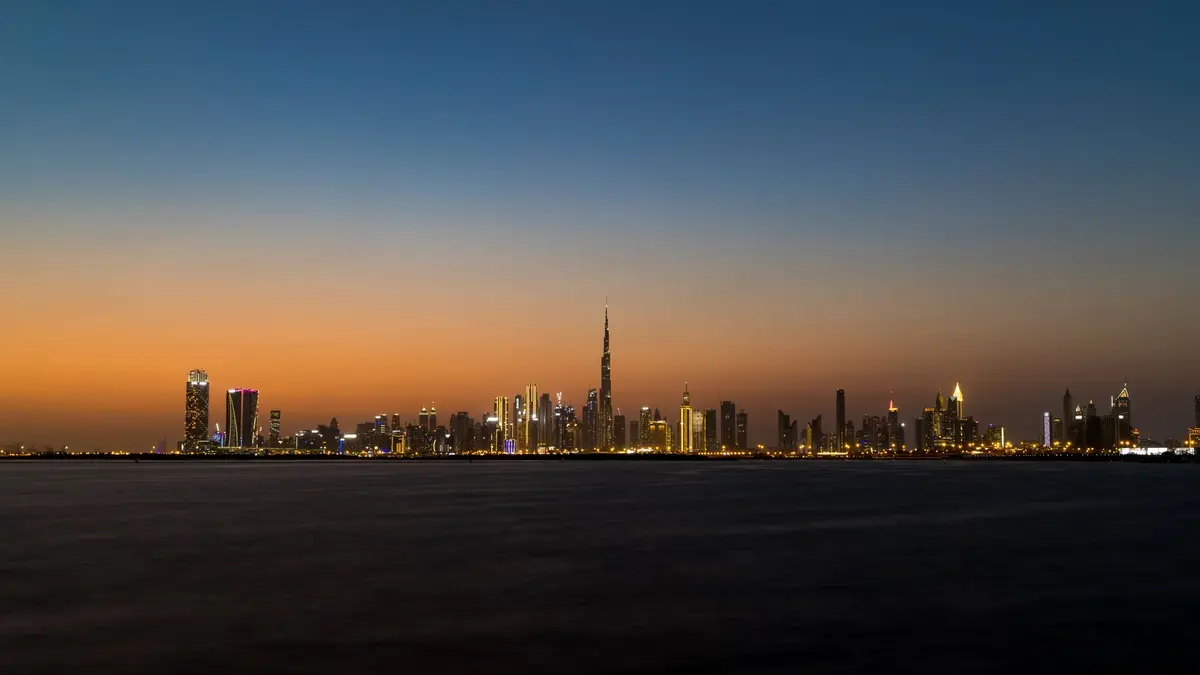
Why Budget Dubai Actually Works
There is a version of the Dubai conversation that goes like this: it's for the ultra-rich, it's all gold-plated everything, you'll blow a thousand dollars before lunch. And then you actually go. You ride a wooden abra across Dubai Creek for one dirham — twenty-five cents — watching the sun set behind minarets and wind towers while the call to prayer echoes across the water. You eat a shawarma the size of your forearm from a street counter in Deira for twelve dirhams ($3.25). You walk through the world's largest mall, watch the tallest building on earth light up behind dancing fountains, stroll a kilometre of free public beach, and realize you haven't spent twenty dollars all evening.
Dubai's reputation as an expensive city is earned at the top end. The Burj Al Arab charges $200 for afternoon tea. Atlantis has a $5,000-per-night suite. There are restaurants where the steak is covered in gold leaf. But this layer of extreme luxury sits on top of a city that is, at its foundations, a trading port built by merchants, fishermen, and migrant workers — and their Dubai still exists. The street food scene in Deira and Al Rigga is one of the best-value dining corridors in the Middle East. The public beaches are genuinely world-class and completely free. The metro is modern, air-conditioned, and costs a fraction of London or Tokyo. And a huge number of Dubai's most impressive experiences — the fountain show, the souk atmosphere, the Marina skyline walk, the Dubai Frame views — cost nothing or nearly nothing.
This guide is the proof that you can do Dubai properly — not a watered-down version, but the real thing — for under $100 a day. We are going to break down every cost, name the specific neighbourhoods, and show you exactly where the value hides in this absurdly ambitious city.
Where to Stay: Budget Accommodation
Accommodation is the biggest variable in your daily budget. The trick in Dubai is neighbourhood selection — the city's geography creates massive price gaps between areas that are only a ten-minute metro ride apart.
Deira — The Budget Traveller's Base
Deira is old Dubai's commercial heart, sitting on the north side of Dubai Creek. The streets are dense, chaotic, and full of life — spice traders, textile merchants, gold dealers, and street food vendors packed into a district that feels more like Karachi or Mumbai than the glass-and-steel Dubai of the brochures. Budget hotels here run 100-200 AED ($27-55) per night for clean, air-conditioned rooms with Wi-Fi. You will not get a pool. You will not get a view. You will get a central location with the Gold Souk, Spice Souk, and Creek within walking distance, and a metro station (Union or Al Ras) that connects you to the rest of the city in minutes.
What to expect: Rooms are functional — think 2-3 star hotels, not hostels. Most include breakfast. The neighbourhood is safe but loud, especially around the souk areas. Air conditioning works hard because it has to. The surrounding streets have some of the cheapest food in the city.
Best for: Solo travellers, couples who value location over luxury, anyone on a strict budget.
Bur Dubai — One Step Up
Directly across the Creek from Deira, Bur Dubai is marginally more polished but still firmly affordable. The Al Fahidi Historic District is here, the textile souk runs along the waterfront, and the neighbourhood has a large South Asian community that supports dozens of excellent, inexpensive restaurants. Hotel rates are 150-300 AED ($40-82) per night for mid-range options, with the occasional deal dropping below that. The Al Fahidi metro station puts you on the Red Line.
What to expect: Better hotel quality than Deira on average. Slightly quieter streets. Walking distance to the creek, the abra stations, and the historical quarter. Many hotels here sit in the 3-star range with small pools.
Best for: Couples, first-time visitors who want old Dubai atmosphere with slightly more comfort.
International City and Al Nahda — Deep Budget
If you are genuinely trying to minimize accommodation costs, International City and Al Nahda offer hotel apartments and budget rooms from 80-150 AED ($22-41) per night. These areas are further from tourist attractions and require metro or bus to reach anything interesting, but the savings are real. International City in particular has an enormous food court-style dining scene with cuisines from across Asia and the Middle East at rock-bottom prices.
For hostel-style stays, Dubai has a small but growing hostel scene. Expect 60-100 AED ($16-27) per night for a dorm bed in areas like Bur Dubai or near the Marina. Check Hotellook for rates — they aggregate prices from Booking.com, Agoda, and others so you can compare without clicking through twenty tabs.
Compare prices from hundreds of Dubai hotels — filter by budget, neighbourhood, and guest rating to find Deira and Bur Dubai deals.
Compare Hotel Prices →Free and Nearly-Free Things to Do
Dubai's best-kept budget secret is that many of its most impressive experiences cost nothing. The city pours billions into public infrastructure, waterfront promenades, and free entertainment — and as a budget traveller, you benefit directly.
JBR Beach (Jumeirah Beach Residence)
A wide, clean, public beach backed by the JBR Walk promenade and the towering Marina skyline. The water is warm, the sand is maintained daily, and there are public showers and changing facilities. Cost: free. Sun lounger rental if you want one: 50-80 AED ($14-22). You absolutely do not need one — bring a towel and claim your stretch of sand. The beach faces west, so sunset here is spectacular. Walk along The Walk at JBR afterward for window shopping, people-watching, and street performers.
Kite Beach
Named for the kitesurfers who use it, Kite Beach is arguably Dubai's best free beach — wider and less crowded than JBR, with the Burj Al Arab visible in the background. There is a running track, outdoor gym equipment, beach volleyball courts, and a skatepark, all free. Food trucks line the back of the beach with meals from 20-40 AED ($5.50-$11). The vibe is more active and local than JBR. Cost: free.
La Mer
A beachfront lifestyle destination in Jumeirah with an art-district feel — street murals, boutique shops, and a long stretch of public beach. It is more designed and curated than JBR or Kite Beach, with a pastel-coloured, Instagram-friendly aesthetic. The beach itself is free. Restaurants and cafes range from 30-80 AED ($8-22) for a meal. Worth a couple of hours for the atmosphere even if you do not swim.
Dubai Mall and the Fountain Show
The Dubai Mall is not just a shopping centre — it is a destination. Over 1,200 shops, a full-size ice rink, a three-storey waterfall sculpture, a 10-million-litre aquarium with a walk-through tunnel (viewing from outside is free; entering costs 130 AED / $35), and a dinosaur skeleton in the main atrium. You can spend hours here without buying anything. Entrance: free.
The Dubai Fountain show happens every 30 minutes from 6pm to 11pm on the lake outside the mall. It is the world's largest choreographed fountain system — jets shooting 150 metres into the air, synchronized to Arabic, Hindi, and Western music, with the Burj Khalifa towering behind it. The show is mesmerizing and completely free. Stand on the waterfront promenade for the best view, or watch from the bridge for a closer perspective. This is one of those rare things that genuinely exceeds the hype.
Dubai Marina Walk
A seven-kilometre waterfront promenade winding through the Marina district, lined with towers, yachts, cafes, and restaurants. Walk it at night when the buildings light up and the water reflects the skyline. It connects to JBR Walk and Bluewaters Island (where Ain Dubai, the world's tallest observation wheel, sits — currently closed for maintenance, but the island itself is free to visit). The walk is free, and it is one of the most visually impressive urban walks in the world.
Dubai Creek and the Dhow Wharfage
The Creek is where Dubai began — a saltwater inlet that splits the city into Deira and Bur Dubai. Along the Deira side, you can still see traditional wooden dhows being loaded with goods bound for Iran, Somalia, and India, exactly as they have been for centuries. It is a working port, not a tourist attraction, and that is what makes it fascinating. Walk along the wharf at dusk and watch the loading operations while the city skyline glows behind the masts. Cost: free.

Old Dubai: Souks, Abras, and Al Fahidi
If new Dubai is glass and ambition, old Dubai is texture and history. The areas around the Creek — Deira and Bur Dubai — contain the city's soul, and exploring them costs almost nothing.
The Abra Water Taxi
This is the best twenty-five cents you will spend anywhere in the world. Traditional wooden abras — small motorized boats that hold about twenty people — cross Dubai Creek continuously from early morning until midnight. The crossing takes five minutes and costs 1 AED ($0.25). No ticket counter, no app — you hand the driver a coin as you step off. The main route runs between Bur Dubai Abra Station and Deira Old Souk Abra Station, depositing you directly into the souk markets on either side. Take it at sunset for the best light on the water.
Gold Souk
Dubai's Gold Souk in Deira is one of the largest gold markets in the world — hundreds of shops lining a covered arcade, their windows packed with necklaces, bangles, chains, and rings in quantities that border on absurd. Even if you have zero intention of buying, it is worth walking through just for the spectacle. Gold is sold by weight at daily market rates plus a making charge, so prices are often lower than you would find at home. Bargaining is expected — start at 30-40% below the asking price for the making charge. The souk is busiest (and most atmospheric) in the evening. Cost to visit: free.
Spice Souk
A few minutes' walk from the Gold Souk, the Spice Souk is a narrow, covered alley where shops overflow with sacks of saffron, cardamom, frankincense, dried limes, and turmeric. The smell alone is worth the visit. Prices are a fraction of what you would pay at home — saffron in particular is dramatically cheaper. Even if you buy nothing, this is one of the most sensory-rich experiences in the city. Cost to visit: free.
Al Fahidi Historic District
Tucked behind the Bur Dubai waterfront, Al Fahidi (formerly Al Bastakiya) is a restored neighbourhood of traditional courtyard houses with coral-stone walls and distinctive wind towers — the pre-air-conditioning cooling system that defines Gulf architecture. The narrow lanes are quiet, shaded, and completely different from the rest of the city. Inside the old houses you will find small galleries, the Coffee Museum (free entry, excellent Arabic coffee for 10 AED / $2.70), the XVA Art Hotel and Gallery, and the Sheikh Mohammed Centre for Cultural Understanding, which hosts cultural meals and mosque visits (lunch around 85 AED / $23 — one of the more worthwhile paid experiences in old Dubai). The Dubai Museum in nearby Al Fahidi Fort covers the city's history from fishing village to metropolis. Entrance: 3 AED ($0.82). That is not a typo.
For a longer, more scenic ride, take the abra from Al Seef to Festival City — it follows the Creek for about 45 minutes and costs just 5 AED ($1.36). The modern Al Seef waterfront development on the Bur Dubai side of the Creek is free to walk and blends traditional architecture with contemporary restaurants. It is particularly beautiful at night.
Big-Ticket Attractions on a Budget
Dubai's headline attractions have headline prices. Here is how to experience them without destroying your budget.
Burj Khalifa — Budget Timing
The world's tallest building at 828 metres is worth going up, but the pricing structure rewards planning. The standard At the Top (Level 124/125) observation deck costs 169 AED ($46) during peak hours (sunset slots) but drops to 149 AED ($41) for non-prime times. Book online in advance — walk-up prices are significantly higher. The morning slots (before 10am) have shorter queues and clearer air for photography. Skip the Level 148 "At the Top SKY" experience at 399 AED ($109) — the view is not meaningfully different from Level 124, and you cannot see the spire from inside it.
Budget hack: If $41 is still too much, go to the Dubai Frame instead. At 50 AED ($14), it offers a panoramic view of old and new Dubai that many visitors prefer to the Burj Khalifa's altitude-induced abstraction. More on that below.
Dubai Frame
A 150-metre-tall picture frame structure in Zabeel Park that frames the old city on one side and the new skyline (including the Burj Khalifa) on the other. The glass-floor walkway at the top is a rush, and the views are arguably better contextualized than the Burj Khalifa because you can see the entire city spread out at a comprehensible height. Entrance: 50 AED ($14). Book online to skip the queue. Go in the late afternoon for the best light on both sides of the frame, and stay for the transition into sunset.
Desert Safari — Finding the Deals
A desert safari is the quintessential Dubai experience — dune bashing in a 4x4, camel rides, sandboarding, a BBQ dinner in a Bedouin-style camp with belly dancing and a fire show under the stars. Full-package evening safaris are widely available from 120-180 AED ($33-49) per person including hotel pickup, all activities, and dinner. That is astonishing value for four to five hours of entertainment with a meal included. Compare desert safari deals on GetYourGuide — read the reviews carefully and avoid anything under 100 AED, which usually means overcrowded vehicles and a disappointing dinner spread.
Budget alternative: If you just want the desert experience without the full package, some operators offer morning dune drives for 80-120 AED ($22-33). You miss the dinner and entertainment but get the dune bashing and a sunrise that will permanently recalibrate your concept of "empty space."
Global Village (Seasonal: October-April)
Dubai's Global Village is a sprawling open-air cultural and entertainment complex where over 90 countries have pavilions selling food, crafts, and products. It is part county fair, part world expo, and part theme park. The entrance fee is just 25 AED ($7), and you can spend an entire evening eating your way through Iranian kebabs, Turkish ice cream, Indian chaats, and Emirati desserts — most items priced at 10-30 AED ($2.70-8.20). Rides and attractions cost extra. It is only open during the cooler months (typically late October through mid-April), so check dates. Getting there requires a car or taxi — it is about 30 minutes from the city centre.
Desert safaris, Burj Khalifa skip-the-line tickets, dhow cruises, and city tours — compare prices and read verified reviews.
Browse Activities →
Street Food and Cheap Eats
Food is where budget Dubai really shines. The city's enormous migrant worker population — from India, Pakistan, the Philippines, Lebanon, Iran, Ethiopia, and beyond — has created a street food and casual dining scene that rivals any in the world for value. You can eat extremely well for 15-40 AED ($4-11) per meal.
Al Rigga and Deira
Al Rigga Road and the surrounding streets in Deira form the beating heart of budget dining in Dubai. This is where Indian, Pakistani, Filipino, and Lebanese cafeterias line the street and serve massive portions at prices that feel impossible for a Gulf city. A full biryani with raita at a place like Calicut Notebook or Sind Punjab: 18-25 AED ($5-7). A shawarma plate with fries and garlic sauce from Ravi Restaurant (a Dubai institution since 1978): 12-18 AED ($3.25-5). A mandi platter of slow-roasted lamb on fragrant rice from a Yemeni joint: 25-35 AED ($7-10). You will eat better here for ten dollars than in most mid-range restaurants in the Marina.
Cheap Eats Worth Seeking Out
- Al Mallah (Al Dhiyafah Road, Satwa): A legendary shawarma and falafel counter open since 1979. Chicken shawarma: 9 AED ($2.45). Falafel wrap: 7 AED ($1.90). The fresh juices are excellent at 10-15 AED ($2.70-4).
- Ravi Restaurant (Satwa): Arguably Dubai's most famous budget restaurant. Pakistani curries, naan, and grilled meats in a no-frills setting. A full meal with drinks rarely exceeds 30 AED ($8.20) per person. Cash only.
- Ashwaq Cafeteria (multiple locations): Chain of Indian-Pakistani cafeterias serving chai for 2 AED ($0.55) and samosas for 3 AED ($0.82). These cafeterias are everywhere and are the true budget traveller's lifeline.
- Bu Qtair (Jumeirah): An open-air fish restaurant near Kite Beach that serves fried fish, shrimp, and curry with rice. The fish is caught daily and fried to order. A full plate: 40-55 AED ($11-15). No menu — you pick your fish and they cook it. It has moved locations over the years but the quality endures.
- Supermarket strategy: Carrefour, Lulu Hypermarket, and Spinneys have hot food counters, ready-made sandwiches, and fresh juices. A complete meal from a supermarket deli costs 12-20 AED ($3.25-5.50). The Carrefour in the Dubai Mall basement has one of the best selections.
During Ramadan (dates shift annually — check before booking), eating, drinking, and smoking in public during daylight hours is prohibited by law. Most restaurants close during the day or screen off their dining areas. Budget food options shrink significantly during daytime, but the iftar (breaking of fast) buffets at sunset are spectacular cultural experiences. Many hotels offer iftar deals at 80-150 AED ($22-41) that would normally cost far more. If your trip overlaps with Ramadan, plan accordingly — it is a fascinating time to visit, but your daily food routine will be different.
Getting Around Dubai Cheaply
Dubai is sprawling. The distances between areas are significant — Deira to the Marina is 25 kilometres — so transport planning matters. The good news is that the public transport system is modern, clean, and air-conditioned.
Dubai Metro
The Dubai Metro is your primary budget transport tool. Two lines (Red and Green) cover most tourist areas: Deira, Bur Dubai, the Mall of the Emirates, Dubai Mall/Burj Khalifa, Dubai Marina, and JBR. Trains run every 4-7 minutes during peak hours. Buy a Nol Silver Card for 25 AED ($7) — this includes 19 AED of credit — and top it up as needed. Single trips cost 3-8.50 AED ($0.82-2.30) depending on distance and zone crossings. A daily cap of 22 AED ($6) means that even with multiple trips, your daily transport cost is capped.
Key stations for budget travellers:
- Union (Green Line): Deira, Gold Souk, Spice Souk
- Al Fahidi (Green Line): Bur Dubai, Al Fahidi Historic District, textile souk
- Burj Khalifa/Dubai Mall (Red Line): Dubai Mall, fountain show, downtown
- DMCC (Red Line): Dubai Marina, JBR Walk
- Mall of the Emirates (Red Line): Mall of the Emirates, Ski Dubai
Public Buses
Dubai's bus network covers areas the metro does not reach, including Jumeirah Beach, Kite Beach, and many residential neighbourhoods. Fares start at 3 AED ($0.82) using your Nol card. Buses are air-conditioned and generally reliable. Google Maps shows real-time bus routes and schedules. The RTA (Roads and Transport Authority) app is also excellent for route planning.
Taxis and Ride-Hailing
Dubai taxis are metered, starting at 12 AED ($3.25) with 1.96 AED per kilometre. A taxi from the airport to Deira costs about 35-50 AED ($10-14). The Careem app (Dubai's dominant ride-hailing service, now owned by Uber) works well and often has promotional fares. Use taxis for areas the metro does not reach — Jumeirah, Kite Beach, Al Fahidi — but stick to the metro for long north-south journeys. A taxi from Deira to the Marina would cost 55-70 AED ($15-19), while the metro does it for under 8 AED.
Airport to City
Dubai International Airport (DXB) has a metro station directly connected to Terminals 1 and 3. The Red Line runs from the airport to the city centre, Marina, and beyond. Cost: 6-8.50 AED ($1.60-2.30). This is the single biggest transport saving versus other global cities — no $50 taxi from the airport required. If you land at Al Maktoum International (DWC), which is farther out, you will need a taxi or bus.
When to Visit: Season and Pricing Grid
Dubai's weather creates two sharply different travel seasons — and the gap in pricing between them is enormous. Timing your trip correctly is the single most impactful budget decision you will make.
November-March (winter peak): This is when everyone comes. Temperatures hover at a perfect 20-28°C (68-82°F), the air is dry, and outdoor activities are comfortable all day. Hotel prices are at their highest — the same Deira room that costs 120 AED in July will cost 250-350 AED. Flights are more expensive, attractions are more crowded, and beach chairs fill up by mid-morning. The weather is spectacular, but you pay for it. December through early January is the absolute peak — the city fills with European and Russian holidaymakers and prices can double again.
June-September (summer value): This is Dubai's secret budget season. Temperatures hit 40-48°C (104-118°F) and the humidity is brutal. Outdoor activities before sunset are essentially impossible. But here is what you get in return: hotel prices drop 40-60%. The malls, indoor attractions, and restaurants are the same quality with a fraction of the crowds. Evening beach visits are warm and pleasant. Desert safaris run at sunset when temperatures drop. The Dubai Summer Surprises festival offers mall-wide sales and entertainment. If you are comfortable spending daytime hours in air-conditioned spaces (and this is a city built for exactly that), summer Dubai is phenomenal value.
April-May, October (shoulder): The sweet spot. April is warm (30-35°C) but manageable. October is similar. Hotel prices are 20-30% below peak season. Crowds are moderate. You can spend mornings and evenings outdoors comfortably and retreat to air conditioning during the hottest hours. For budget travellers who want decent weather without peak pricing, these months are ideal.
- Plan outdoor activities for after 5pm — temperatures drop noticeably and beaches become pleasant
- The metro is fully air-conditioned, including the stations. You can cross the city without stepping into the heat
- Malls run extended hours in summer, with many staying open until midnight or later
- Carry water constantly — dehydration is a genuine health risk, not just discomfort
- Many hotels offer "summer packages" with breakfast, pool access, and sometimes beach club passes included at the winter room-only rate
Photo Spots Worth the Trip
-
1Dubai Fountain with Burj KhalifaThe combination of the world's tallest building and the world's largest fountain system is one of the most photographed urban scenes on earth. Stand on the pedestrian bridge between the Dubai Mall and Souk Al Bahar for the most iconic composition — the fountains in the foreground, the Burj Khalifa rising behind, lit up against the night sky. The fountain shows run every 30 minutes from 6pm, giving you multiple chances to nail the shot. Video works better than stills here — the choreography of water, light, and music is the point.Best time: 6:30pm or 7pm show — the sky still has colour. Stand on the bridge's east side for the Burj Khalifa centred behind the jets.
-
2Al Fahidi Wind Towers at Golden HourThe narrow lanes of Al Fahidi Historic District, lined with traditional wind tower houses in warm sandstone and coral, offer a Dubai that most visitors never see. The wind towers — square columns rising above the rooflines, designed to funnel breezes into the rooms below — are architecturally unique to the Gulf. In the late afternoon light, the warm stone glows amber and the shadows create dramatic contrasts in the alleyways. The absence of crowds makes this a contemplative, unhurried shooting environment compared to the tourist hotspots.Best time: 4:30–5:30pm when the low sun hits the west-facing walls. The Coffee Museum courtyard makes a particularly photogenic frame.
-
3Abra Crossing at Sunset on Dubai CreekThe view from an abra in the middle of Dubai Creek at sunset is a collision of timelines — wooden boats, minarets, and wind towers in the foreground; glass skyscrapers and construction cranes in the background. Shoot from the boat itself as it crosses, or stand on the Bur Dubai side near the textile souk wharf and frame the arriving abras against the Deira skyline. The golden light on the water, the weathered wood of the boats, and the silhouettes of the passengers create compositions that feel more like Istanbul or Zanzibar than the Dubai of popular imagination.Best time: 5:45–6:15pm. Sit at the front of the abra for unobstructed views. The 1 AED fare makes this the cheapest golden-hour experience in the city.
-
4Dubai Marina from the PromenadeThe Marina at night is a canyon of illuminated towers reflecting off the still water of the artificial canal. Walk the Marina Promenade on the east side for the best vantage points — the twisted Cayan Tower and the rows of residential high-rises create a geometric skyline that is distinctly, unmistakably Dubai. The reflections on the water double the visual impact. Several footbridges cross the canal and provide elevated perspectives looking down the length of the Marina.Best time: 8–9pm when all the building lights are on and the sky is fully dark. The promenade near Pier 7 offers the widest, most symmetrical canal view.
-
5Dubai Frame — Both DirectionsThe Dubai Frame is not just an observation deck — it is itself a photographic subject. From the outside, the 150-metre golden frame structure against a blue sky or sunset gradient is striking. From the top, the genius of the concept becomes clear: face one direction and you see old Dubai — Deira, the Creek, the modest skyline. Face the other and you see new Dubai — Sheikh Zayed Road's towers, the Burj Khalifa, the Marina cluster. The glass floor walkway at the top adds a vertigo-inducing perspective shot straight down to the park below.Best time: 4:30pm entry — you get both golden-hour light and the transition to illuminated skyline. The old-Dubai side is best in the warm afternoon light; the new-Dubai side improves as building lights come on.

The $100/Day Budget Breakdown
Here is the math. This breakdown assumes two travellers sharing a room (costs shown per person), visiting during the shoulder season (April-May or October), and mixing free activities with one or two paid ones spread across the trip.
| Category | Daily (per person) |
|---|---|
| Accommodation (budget hotel in Deira, shared) | 75 AED / $20 |
| Breakfast (included at hotel or cafeteria) | 0-10 AED / $0-3 |
| Lunch (street food / cafeteria) | 20 AED / $5.50 |
| Dinner (local restaurant) | 30 AED / $8 |
| Snacks, chai, water | 15 AED / $4 |
| Metro / bus (daily cap) | 22 AED / $6 |
| One paid attraction (averaged over 5 days) | 50 AED / $14 |
| Abra rides, incidentals | 10 AED / $3 |
| Daily total | 222-232 AED / $60-63 |
That leaves $37-40 of buffer within the $100/day target for a desert safari night, a Burj Khalifa visit, a slightly nicer dinner, or a Global Village evening. Over a five-day trip, you would spend approximately $300-315 on the base budget plus $100-150 on two or three bigger experiences, for a total of $400-465 for five days — well under $100/day.
Solo traveller adjustment: If you are travelling alone, the accommodation cost roughly doubles to $35-45 per person per night (no room-sharing). This pushes the daily base to about $78-82 — still under $100, but with less buffer for paid activities. Consider a hostel dorm at $16-27 per night to keep the math comfortable.
Summer visit adjustment: If you visit June-September, hotel prices drop 40-60%. That same Deira hotel room comes down to 80-120 AED ($22-33) shared, or $11-16 per person. Your daily base budget drops to $45-50, leaving enormous room for paid experiences, better restaurants, or even a night in a Marina hotel as a splurge. Summer is genuinely the budget traveller's friend in Dubai — the heat is the only price you pay.
What to Skip (and What's Worth the Splurge)
Budget travel is as much about what you do not spend on as what you do. Here is an honest assessment.
Skip These
- Burj Al Arab afternoon tea (700+ AED / $190): Unless you are specifically there for the bragging rights, this is not worth it on a budget. The tea is fine, not extraordinary. You are paying for the building.
- Aquaventure Waterpark at Atlantis (340 AED / $93): A full day's budget on waterslides. Wild Wadi near the Burj Al Arab is a similar experience at 299 AED ($81) but still expensive. If you want a water day, the free beaches are right there.
- Ski Dubai (varying, 200-400 AED / $55-109): Skiing in the desert is a novelty, not a value proposition. Window-shop the Mall of the Emirates and watch the skiers through the glass for free.
- Helicopter tours (700-1,500 AED / $190-408): Spectacular, but not budget-compatible. The Dubai Frame offers a better contextualized view at a fraction of the price.
- Gold-leaf steaks and Instagram restaurants: The food in Deira is genuinely better than most of the gold-plated tourist restaurants in Downtown. Do not let social media convince you otherwise.
Worth the Splurge
- Desert safari (120-180 AED / $33-49): One of the best value-per-hour experiences in the city. Dinner, entertainment, dune bashing, and sunset for under fifty dollars. Do not skip this.
- Dubai Frame (50 AED / $14): The best panoramic view per dollar in the city. Book online for a time slot.
- Dhow dinner cruise on the Creek (150-200 AED / $41-55): A two-hour cruise with a buffet dinner, passing illuminated souks and historic buildings. Atmospheric and reasonable. Compare dhow cruise deals here.
- SMCCU cultural meal in Al Fahidi (85 AED / $23): An Emirati lunch in a traditional house with cultural discussion. One of the few places you get genuine interaction with Emirati culture.
- Burj Khalifa at non-prime time (149 AED / $41): If you can afford one big-ticket item, this is it. Go at 9am for clear views and short queues. Book skip-the-line Burj Khalifa tickets.
- JBR Beach, Kite Beach, La Mer Beach, Jumeirah Public Beach
- Dubai Fountain show (every 30 min from 6pm)
- Dubai Mall (including aquarium viewing from outside, ice rink viewing, dinosaur skeleton)
- Dubai Marina Walk and JBR Walk
- Gold Souk, Spice Souk, Textile Souk
- Al Fahidi Historic District
- Dubai Creek and Dhow Wharfage
- Al Seef waterfront promenade
- Bluewaters Island and Ain Dubai viewing
- Jumeirah Mosque exterior (guided tours available for a fee)
- The Walk at JBR (street performers, outdoor art)
Everything you need — budget hotels, desert safaris, skip-the-line tickets, and car rental for day trips.
Ready to plan your Dubai trip?
Tell Tripva your travel dates, budget, and interests — we'll build a complete day-by-day Dubai itinerary with hotel picks, activity timing, and transport routes. Takes 30 seconds.
Plan Your Dubai Trip ✦