Why Bangkok Still Hits Different
There is a moment on every Bangkok trip that stops you in your tracks. Maybe it is standing in the courtyard of the Grand Palace at 8:30am, before the tour groups arrive, watching morning sunlight ignite 200 years of gold leaf and mosaic glass until the entire complex looks like it is on fire. Maybe it is sitting on a plastic stool on Yaowarat Road at midnight, eating pad see ew that costs 50 baht and tastes better than anything you have eaten in a restaurant, while traffic and neon and the smell of charcoal smoke and star anise swirl around you. Maybe it is standing on the 64th floor of a rooftop bar, cocktail in hand, watching the Chao Phraya River curve through a city of ten million lights.
Bangkok is not a city that reveals itself politely. It is loud, hot, chaotic, and occasionally overwhelming. The traffic is legendary. The humidity will defeat your hair. The sidewalks will route you through a construction site, past a spirit house draped in jasmine garlands, and into a 7-Eleven that somehow has better iced coffee than most Western cafes, all in the space of fifty metres. And yet Bangkok consistently ranks among the most visited cities on Earth because underneath the chaos is a city of extraordinary depth: 250-year-old temples sitting beside Michelin-starred street food stalls, five-star hotels where suites cost what a Holiday Inn charges in New York, and a culture that manages to be simultaneously ancient and aggressively modern.
This guide covers the 15 things to do in Bangkok that genuinely deserve your time, with real prices, honest opinions, and the timing details that make the difference between a great experience and an overheated, overcrowded one. I have been to Bangkok seven times over twelve years, and what follows is what I would tell a friend heading there for the first time.
1-3. The Three Temple Trinity: Grand Palace, Wat Arun & Wat Pho
These three sites sit within a kilometre of each other on the banks of the Chao Phraya River in Rattanakosin, Bangkok's historic centre. Together they represent the spiritual, artistic, and royal heart of Thailand. You can visit all three in a single morning if you start early, and you should, because by noon the heat and crowds will have you retreating to air conditioning.
1. The Grand Palace & Wat Phra Kaew
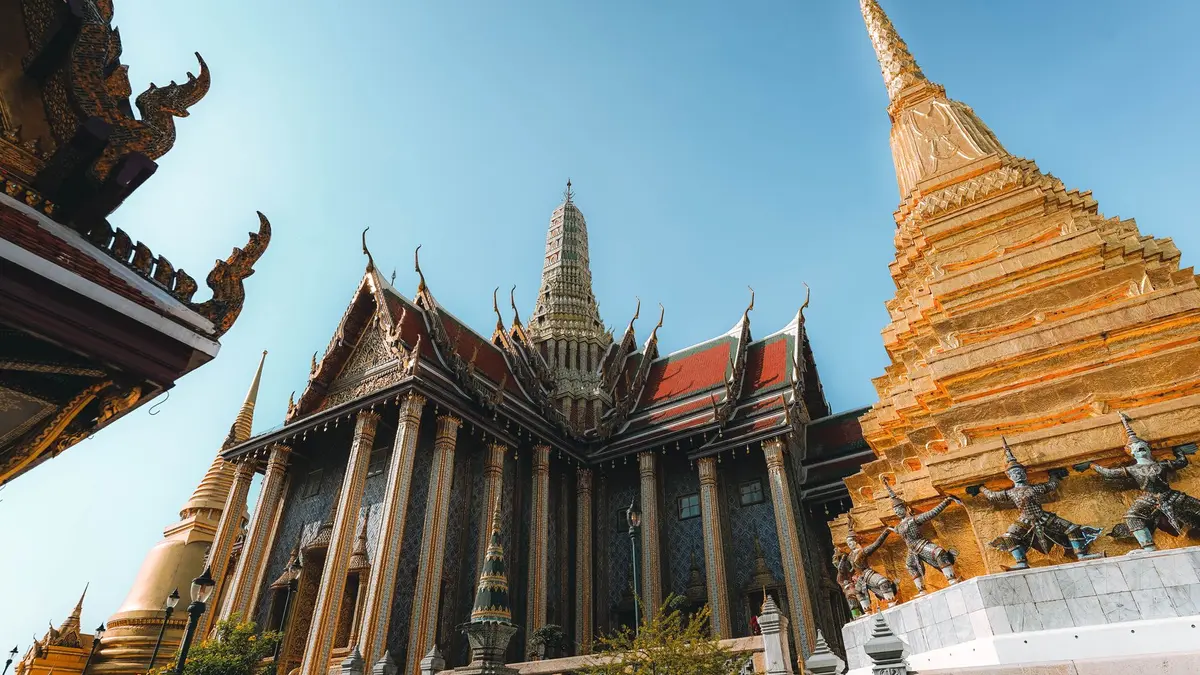
The Grand Palace complex is, without exaggeration, one of the most visually intense places in Southeast Asia. Built in 1782 when King Rama I moved the capital across the river from Thonburi, the compound covers 218,000 square metres and contains over 100 buildings spanning 200 years of Thai architecture. Every surface is covered in something: gold leaf, ceramic mosaic, mirror tiles, mother-of-pearl inlay, or murals depicting the Ramakien epic that stretch for over a kilometre along the covered gallery walls.
Inside the complex, Wat Phra Kaew (Temple of the Emerald Buddha) houses Thailand's most sacred religious object: a 66-centimetre jade Buddha statue that sits atop a towering golden altar. The King personally changes the Buddha's gold robes three times a year to mark the seasons. The temple interior is surprisingly small for something of such national importance, but the surrounding compound of golden chedis, demon guardian statues, and glittering prasat towers makes up for it.
Practical details: Entrance fee is 500 THB ($14 USD), which includes admission to Wat Phra Kaew. A strict dress code is enforced: long trousers or skirts below the knee, covered shoulders, no see-through clothing, no sandals. If you forget, there are rental garments available near the entrance for 200 THB deposit. Get there at 8:30am when the gates open — by 10am the courtyard is packed with tour groups and the heat is punishing. Budget 90 minutes. Audio guides are available for 200 THB and are genuinely worthwhile.
You can book a guided Grand Palace tour that includes skip-the-line entry and a knowledgeable guide who explains the symbolism you would otherwise walk past.
2. Wat Arun (Temple of Dawn)
Directly across the Chao Phraya River from the Grand Palace, Wat Arun's central prang (Khmer-style tower) rises 82 metres above the riverbank, covered in an intricate mosaic of Chinese porcelain pieces and coloured glass that shimmers differently at every hour of the day. Despite its name, Wat Arun is actually most photogenic at sunset when the golden light hits the west-facing tower. But visiting in the morning gives you better light for climbing the tower itself, and the steep staircases up the prang are less crowded before 10am.
Practical details: Entrance fee is 100 THB ($2.80 USD). Cross the river from Tha Tien pier near Wat Pho on the public ferry for just 4 THB. The climb up the central prang is steep with narrow steps, but the river views from the upper terraces are spectacular. Budget 45-60 minutes. Wear shoes with grip for the stairs.
3. Wat Pho (Temple of the Reclining Buddha)
Wat Pho is older than Bangkok itself, predating the city's founding by over 200 years. It is the largest and oldest temple complex in Bangkok, and it houses two superlatives: the 46-metre Reclining Buddha, covered entirely in gold leaf and filling an entire chapel with its massive form, and Thailand's oldest public university, which is still the national headquarters for traditional Thai massage and medicine.
The Reclining Buddha is the headliner, and it deserves the hype. The sheer scale of it — 46 metres long, 15 metres high, its feet alone measuring 5 metres and inlaid with 108 mother-of-pearl panels depicting auspicious symbols — is difficult to process until you are standing in front of it. Walk the full length of the chapel and drop coins into the 108 bronze bowls along the wall for good luck (20 THB for a cup of coins at the entrance).
But Wat Pho is more than the big Buddha. The grounds contain 91 smaller chedis, four large viharns, a bot surrounded by 394 gilded Buddha images, and some of the finest stone guardian statues in Thailand. Most visitors rush through to the Reclining Buddha and leave. Stay an extra 30 minutes and explore the quieter eastern compound — it is beautiful, shaded, and often empty.
Practical details: Entrance fee is 300 THB ($8.50 USD), which includes a bottle of water. Traditional Thai massage at the Wat Pho school is 360 THB for 30 minutes or 620 THB for 60 minutes ($10-17.50 USD) — among the best you will get in Bangkok, and a fraction of spa prices. Open 8am-6:30pm daily.

4. Street Food: Chinatown (Yaowarat) & Beyond
Bangkok has more Michelin-starred street food vendors than any other city on Earth, and the epicentre of it all is Yaowarat Road in Chinatown. This is not a sanitised food market built for tourists. It is a 1.5-kilometre strip of organised chaos that comes alive after dark, when the shophouses close their shutters and the food carts roll out, and the neon signs reflecting off wet pavement make the whole street look like a Wong Kar-wai film.
The highlights along Yaowarat and its side streets (sois): charcoal-grilled seafood at T&K Seafood (the place with the green signs and a permanent queue — the giant grilled prawns for 300 THB / $8.50 are worth the wait). Nai Ek Roll Noodle for some of the best kuay jab (rolled rice noodle soup with pork offal and a deeply savoury broth) in Bangkok at 60 THB / $1.70. Mango sticky rice vendors appear on almost every corner during mango season (April-June) and charge 80-120 THB / $2.30-3.40. Duck noodle soup stalls along Soi Texas (Soi Phadung Dao) serve rich, five-spice duck broth for 60-80 THB / $1.70-2.30.
Beyond Chinatown, do not miss Jay Fai (Samran Rat) — the legendary one-woman Michelin-starred operation where a 75-year-old chef in ski goggles cooks over roaring charcoal flames. Her crab omelette (1,000 THB / $28 USD) and drunken noodles (250 THB / $7) are genuinely extraordinary. Expect a 2-3 hour wait without a reservation; queue before 3pm for dinner service.
For a structured introduction, a Bangkok street food tour with a local guide ensures you hit the vendors worth eating at and skip the tourist traps. Tours typically run 800-1,500 THB ($22-42 USD) and include 8-10 tastings.
- Go where locals queue. If a stall has a line of Thai people, the food is good. If it's all tourists, keep walking.
- Start at 6pm. Yaowarat peaks between 7-9pm. Getting there at 6pm gives you shorter queues and cooler air.
- Bring cash. Most street vendors are cash only. Small bills (20 and 100 THB notes) are appreciated.
- Eat fearlessly, drink cautiously. The food is cooked at high heat and turns over fast — it's safe. Ice in drinks is factory-made and fine. Tap water is not.
5. Chatuchak Weekend Market
Chatuchak is not a market. It is a city within a city. Over 15,000 stalls spread across 35 acres, divided into 27 numbered sections, selling everything from vintage Thai silk to handmade ceramics, leather goods, local designer clothing, antique furniture, orchids, second-hand books, and fighting fish. It is the largest outdoor weekend market in the world, and it draws 200,000+ visitors every Saturday and Sunday.
The key to Chatuchak is not trying to see everything. Pick 2-3 sections that interest you and explore those properly. Section 7 (clothing and accessories), Sections 22-24 (art and home decor), and Section 2-4 (antiques and vintage) are the most rewarding for international visitors. The food along the internal alleyways is excellent — coconut ice cream in a coconut shell (40 THB / $1.15), Thai iced tea (30 THB / $0.85), and pad thai from stalls that have been operating since the market opened in 1982.
Practical details: Open Saturday and Sunday, 9am-6pm (some sections open Friday evening). Nearest BTS station: Mo Chit. Nearest MRT station: Chatuchak Park. Arrive by 9am — by 11am the heat inside the covered sections is brutal, and the narrow alleys are shoulder-to-shoulder. Bring a tote bag, wear comfortable shoes, and navigate using the section numbers painted on the ground. The market map at the main entrance is useful — photograph it. Budget 3-4 hours minimum.
6. Rooftop Bars & the Bangkok Skyline
Bangkok has the best rooftop bar scene in the world. Full stop. The combination of tropical climate, a skyline dense with skyscrapers, relatively affordable prices, and a culture that embraces open-air drinking at altitude has produced a density of high-quality rooftop venues unmatched by any other city.
Lebua Sky Bar (State Tower, 63rd Floor)
The one from The Hangover Part II. Lebua at State Tower's Sky Bar occupies the 63rd-floor open-air terrace overlooking the Chao Phraya River's curve through the city. The setting is genuinely cinematic — a golden dome bar sitting on the edge of a building that drops 250 metres straight down, with the river and city lights stretching to the horizon in every direction. Cocktails start at 690 THB ($19.50 USD) and the signature "Hangovertini" runs 790 THB ($22 USD). The dress code is enforced: no shorts, no sandals, no sleeveless shirts for men. Arrive 30 minutes before sunset (around 6pm) for the best light. No reservation needed for the bar, but expect to wait 20-30 minutes during peak hours.
Vertigo & Moon Bar (Banyan Tree, 61st Floor)
If Lebua is about the river view, Vertigo is about the 360-degree cityscape. The long, narrow rooftop deck at the Banyan Tree Hotel feels like it is floating above the Sathorn financial district. The bar stretches along the building's edge with no glass barriers between you and the void, which is both thrilling and mildly terrifying. Cocktails are 550-750 THB ($15.50-21 USD). Same dress code as Lebua. The attached Vertigo restaurant serves excellent grilled seafood if you want to make an evening of it — mains 800-1,800 THB ($22.50-51 USD).
Pro tip: Both bars have minimum spend policies that are waived if you order at the bar. The best strategy is to arrive at one bar for sunset, have one or two drinks, then move to the other for the nighttime view. They are a 15-minute taxi ride apart.
7. Khao San Road: Worth It or Skip?
Let me be honest: Khao San Road is not for everyone. The 400-metre strip that launched a million backpacker trips has evolved from a budget traveller hub into a neon-lit, bass-heavy party street where the primary activities are drinking large buckets of whiskey-and-Red-Bull, getting temporary tattoos, and watching other tourists do the same. If you are under 25 and looking for cheap drinks and chaotic energy, you will probably love it. If you are over 30 and hoping for authentic Thai culture, you will find it exhausting within 20 minutes.
That said, the streets around Khao San are genuinely interesting. Soi Rambuttri, one block north, has the same backpacker infrastructure but a calmer atmosphere, with decent rooftop bars and restaurants overlooking the street. Phra Athit Road along the river has some of Bangkok's best small bars and live music venues. And the neighbourhood is a 10-minute walk from the Grand Palace district, making it a logical stop before or after temple visits.
Verdict: Walk through it once, ideally after 9pm when the energy peaks. Have a drink on Soi Rambuttri instead. Don't base your hotel here unless you are specifically coming for the party — the noise continues until 3am nightly.
8. Floating Markets
Bangkok's floating markets are among the most photographed experiences in Thailand, but the reality varies enormously depending on which one you visit. The famous ones closest to the city are tourist traps. The ones worth visiting require an early morning and a drive.
Damnoen Saduak — Skip It
The most famous floating market in Thailand, and also the most commercialised. Located 100km southwest of Bangkok, Damnoen Saduak is now essentially a tourist attraction where vendors in boats sell overpriced souvenirs and average food to tourists on motorised longboats. The boat operators charge 500-1,500 THB per person ($14-42 USD) for a 30-minute circuit. The experience feels performative rather than authentic. Unless you have already booked a tour that includes it, skip this one.
Amphawa Floating Market — The Better Choice
Seventy kilometres southwest of Bangkok, Amphawa is a legitimate local market that happens to be on water. It runs Friday through Sunday, 4pm-9pm, and the best experience is the evening session when locals come for dinner. The canal-side vendors sell excellent grilled seafood (giant river prawns for 200-300 THB / $5.60-8.50), Thai desserts, and pad thai, which you eat sitting on the wooden decks with your feet dangling above the water. The evening firefly boat tours (60 THB / $1.70 per person) along the darkened canals are magical. Stay overnight at one of the canal-side guesthouses (800-1,500 THB / $22-42 USD) to experience the market without the day-trip rush.
For a hassle-free visit, book a floating market day trip that includes transport, a guide, and boat rides — these typically run 1,500-2,500 THB ($42-70 USD) and handle all the logistics.
Skip-the-line temple tickets, street food tours, floating market day trips, and Muay Thai ringside seats — all bookable online with free cancellation.
Browse Bangkok Activities →9. Muay Thai Fights
Watching live Muay Thai in Bangkok is one of those experiences that no amount of YouTube preparation can replicate. The sound of shin meeting rib cage, the roar of the crowd, the pre-fight wai kru ritual dance, the gambling section losing its collective mind on a third-round knockout — it is visceral, theatrical, and utterly Thai.
Bangkok has two legendary stadiums. Rajadamnern Stadium (Ratchadamnoen Nok Avenue) is the older of the two, opened in 1945, and has a more traditional atmosphere. Fight nights are Monday, Wednesday, Thursday, and Sunday. Ringside seats are 2,000 THB ($56 USD), second-class seats 1,500 THB ($42 USD), and third-class standing 1,000 THB ($28 USD). The fights start at 6:30pm and run 8-10 bouts, with the main events typically between 9-10pm.
Lumpinee Boxing Stadium moved to a new purpose-built venue in Ram Intra in 2014. It is bigger, cleaner, and more modern, but some purists prefer Rajadamnern's grittier authenticity. Fights are Tuesday, Friday, and Saturday. Pricing is similar: 1,000-2,000 THB ($28-56 USD) depending on seating.
Pro tip: Buy tickets at the stadium box office, not from touts outside. The standing section is where the Thai gamblers gather and the atmosphere is most intense. If you want to try a Muay Thai class yourself, gyms throughout the city offer beginner sessions for 500-800 THB ($14-22 USD) per class.
10. Canal Boat Tours: Bangkok's Hidden Waterways
Before Bangkok had roads, it had canals. The city was once called the "Venice of the East," and while most of the central canals have been paved over, the Thonburi side of the Chao Phraya River still has a network of narrow khlongs (canals) lined with wooden stilt houses, orchid farms, temples, and a way of life that feels a century removed from the skyscrapers across the river.
The best canal tour is a private longtail boat through the Thonburi canals, departing from any of the major river piers. A 90-minute private charter costs 1,500-2,000 THB ($42-56 USD) for the whole boat (fits 4-6 people). The route typically passes through Khlong Bangkok Noi and Khlong Bangkok Yai, stopping at the Royal Barge Museum (100 THB entrance), a local temple, and an orchid farm. The contrast between the quiet, green canals and the megacity you just left is striking.
For budget travellers, the Khlong Saen Saep Express Boat is Bangkok's secret commuter transport. This public canal boat runs east-west through the city centre from the Golden Mount to Bangkapi, covering ground faster than any taxi during rush hour. The fare is 10-20 THB ($0.28-0.56 USD). Be warned: the canal water is not clean, hold on tight at the stops (the boat barely pauses), and pull the blue tarp up when passing under bridges to avoid splashes.
11. Jim Thompson House
Jim Thompson was an American intelligence officer who moved to Bangkok after World War II, single-handedly revived the Thai silk industry, built a stunning traditional Thai house by assembling six antique teak structures from the countryside and reassembling them along a canal, filled it with one of the finest collections of Southeast Asian art in private hands, and then vanished without a trace in the Malaysian jungle in 1967. His house is now a museum, and it is one of the most rewarding cultural stops in Bangkok.
The compound sits on a quiet khlong in the Pathum Wan district, a 5-minute walk from BTS National Stadium. The six teak houses are arranged around a lush tropical garden, connected by raised walkways and oriented according to Thai spiritual principles. The interior showcases Thompson's collection of Thai paintings, porcelain, Burmese carvings, and of course, Thai silk. Guided tours (mandatory, included in the ticket) run every 20 minutes in English and take about 40 minutes.
Practical details: Entrance fee is 200 THB ($5.60 USD) for adults. Open daily 10am-6pm. The Jim Thompson restaurant and bar next door serves excellent Thai food in a garden setting — it is a good lunch stop after the tour. The gift shop sells high-quality Thai silk products (scarves, ties, cushion covers) that make genuine souvenirs.
12. Lumpini Park
Lumpini Park is Bangkok's green lung — a 142-acre park in the centre of the Silom-Sathorn business district that serves as the city's primary escape valve from concrete and traffic. Named after the birthplace of the Buddha in Nepal, the park contains a large lake, running paths, open-air gyms, a public library, and a resident population of monitor lizards that can reach 2 metres in length and will casually walk across your path like they own the place (which, arguably, they do).
The best time to visit is early morning (6-7am) when the park fills with Thai residents doing tai chi, aerobics classes, and jogging around the 2.5km loop path. In the late afternoon, the lake reflects the surrounding skyscrapers and the energy shifts to families and couples. Paddle boats are available on the lake for 40 THB per 30 minutes ($1.15 USD).
Lumpini is also the starting point for exploring the Silom-Sathorn neighbourhood, which contains some of Bangkok's best upscale dining, the Patpong night market (mostly tourist tat, but the atmosphere is lively), and several of the rooftop bars mentioned earlier. The park is directly connected to the MRT Silom station and BTS Sala Daeng station.
13. MBK Center & Bangkok Shopping
Bangkok has more shopping malls per square kilometre than any city I have visited, and MBK Center is the one that best captures the uniquely Thai approach to retail. This eight-storey behemoth near Siam Square contains over 2,000 shops, most of them small independent stalls selling electronics, phone accessories, clothing, leather goods, and Thai handicrafts at negotiable prices. MBK is where Thai families shop, and the food court on the 6th floor is one of the best-value lunch spots in Bangkok — a full meal costs 50-80 THB ($1.40-2.25 USD).
Bargaining is expected at MBK (unlike in the modern malls). Start at 60% of the asking price and meet somewhere around 70-75%. The mobile phone floor (4th floor) is particularly popular for buying unlocked phones and accessories at prices well below international retail.
If MBK's controlled chaos is not your style, the Siam district has the full spectrum of modern retail. Siam Paragon is high-end luxury (plus an excellent aquarium in the basement — Sea Life Bangkok, 990 THB / $28 USD). CentralWorld is the largest mall in Southeast Asia and has everything mid-range. Terminal 21 (at BTS Asok) themes each floor after a different world city and has the best mall food court in Bangkok — every dish 35-45 THB ($1-1.25 USD).
14. Asiatique the Riverfront
Asiatique occupies a former international trade warehouse complex on the Chao Phraya riverfront, converted into an open-air night market and entertainment zone. It is undeniably touristy, but it does the "touristy night market" formula better than most. The setting along the river is pleasant, the Ferris wheel (200-300 THB / $5.60-8.50 USD) gives river views, and the Calypso Cabaret show is a genuinely entertaining Thai ladyboy cabaret performance (1,200 THB / $34 USD).
The shopping is a mix of souvenir stalls, local fashion brands, and handicraft shops — prices are fixed and slightly higher than Chatuchak, but the quality is generally better and the browsing is more comfortable (air-conditioned sections, wider walkways). The riverside restaurants are decent without being remarkable. Asiatique works best as a relaxed evening activity, not a full-day commitment.
Practical details: Open daily 4pm-midnight. Free shuttle boat from Saphan Taksin BTS station (every 15 minutes). Budget 2-3 hours including dinner. Best visited on a weeknight when it is less crowded.
15. Khlong Lat Mayom: The Local's Floating Market
If Amphawa is too far and Damnoen Saduak is too touristy, Khlong Lat Mayom is the floating market that Bangkok locals actually go to. Located on the Thonburi side of the city, just 30 minutes by taxi from central Bangkok, this market operates Saturday and Sunday mornings (8am-3pm) along a narrow canal surrounded by fruit orchards and traditional Thai houses.
The food is the reason to come. Vendors on boats and along the canal banks sell grilled river fish, som tam (papaya salad), coconut pancakes (khanom krok), and some of the best boat noodles (kuay teow reua) in Bangkok — tiny bowls of intensely flavoured pork or beef broth noodles for 15-20 THB ($0.42-0.56 USD) each. You eat five or six bowls and the total bill is under 100 THB. After eating, take a short longtail boat ride through the surrounding orchards (50 THB / $1.40) — the canals here are lined with pomelo trees, jackfruit, and coconut palms.
Why it is special: Khlong Lat Mayom has almost no foreign tourists. The vendors, the customers, the atmosphere — it is all Thai. This is the market that gives you the floating market experience that the tour brochures promise but Damnoen Saduak cannot deliver.

When to Visit Bangkok
Bangkok sits 14 degrees north of the equator. It is hot year-round — average highs range from 32-36°C (90-97°F). The variable is rain, and the difference between seasons is significant enough to affect your trip.
November-February (Cool Season): The best time to visit Bangkok. Temperatures drop to a relatively comfortable 25-32°C (77-90°F) with low humidity and almost no rain. December and January are peak tourist season, so hotel prices rise 20-40%, but the weather makes outdoor sightseeing and temple visits dramatically more pleasant. This is when rooftop bars and outdoor markets are at their best.
March-May (Hot Season): Bangkok at its most brutal. April regularly hits 38-40°C (100-104°F) with suffocating humidity. Outdoor sightseeing before 9am or after 4pm is manageable; midday is genuinely oppressive. The upside: fewer tourists, lower hotel rates, and the Songkran water festival (April 13-15), when the entire city turns into a three-day water fight and the heat becomes a feature rather than a bug. Songkran in Bangkok is one of the wildest festivals in Southeast Asia.
June-October (Rainy Season): Daily afternoon downpours, usually lasting 1-2 hours between 3-5pm, followed by cooler evenings. Mornings are typically clear. The rain rarely ruins a full day, and the city is noticeably less crowded. Hotel rates are at their lowest. Flooding can occur in some areas during September-October — the worst month is typically October. If you can plan around afternoon rain (do temples and outdoor activities in the morning, museums and malls in the afternoon), rainy season Bangkok is underrated.
Songkran (April 13-15) is worth planning a trip around. The Thai New Year water festival transforms Bangkok into a citywide water fight. Silom Road and Khao San Road become epicentres of joyful chaos — locals and tourists alike armed with water guns, hoses, and buckets. Protect your phone in a waterproof pouch and embrace it. Many businesses close for the holiday week, so book accommodation and transport early.
Where to Stay in Bangkok
Bangkok is enormous — over 1,500 square kilometres — and where you base yourself determines what your trip feels like. The BTS Skytrain and MRT subway make the city manageable, so staying near a station is the single most important hotel decision you will make.
Sukhumvit (BTS Nana to Ekkamai)
Bangkok's most international neighbourhood. The stretch from BTS Nana to Thong Lo is dense with hotels at every price point, excellent restaurants (both Thai and international), night markets, bars, and easy Skytrain access to everywhere else. This is where most first-timers should stay. Budget guesthouses from 400-800 THB ($11-22 USD). Mid-range hotels from 1,500-3,500 THB ($42-98 USD). Luxury (Sheraton, Westin, Marriott Marquis) from 5,000-10,000 THB ($140-280 USD).
Silom-Sathorn
The financial district by day, a dining and nightlife hub by night. Home to the best rooftop bars (Lebua, Vertigo), Lumpini Park, and excellent street food. Slightly more upscale and less chaotic than Sukhumvit. Hotels tend to be mid-range to luxury: 2,000-8,000 THB ($56-225 USD). The Mandarin Oriental and Peninsula — two of the finest hotels in Asia — are both on the river end of this district.
Rattanakosin (Old City)
Walking distance to the Grand Palace, Wat Pho, and Wat Arun, plus Khao San Road and the canal network. The area has fewer transport options (no BTS or MRT stations nearby — you rely on river boats, taxis, and tuk-tuks) but the atmosphere is the most historically "Bangkok." Boutique hotels and hostels dominate: 300-2,500 THB ($8.50-70 USD). Best for temple-focused itineraries.
For all areas, you can compare Bangkok hotel prices on Hotellook to find the best deals across booking platforms.
Compare prices from hundreds of Bangkok hotels — from 400 THB guesthouses to five-star riverside resorts. One search checks all major booking platforms.
Compare Hotel Prices →Getting Around Bangkok
Bangkok's traffic is infamous for good reason. A journey that takes 15 minutes by train can take 90 minutes by taxi during rush hour. The secret to moving through Bangkok efficiently is simple: stay above ground or on the water.
BTS Skytrain & MRT Subway
The BTS Skytrain (elevated) and MRT (underground) together cover most of the areas tourists visit, and they are by far the fastest way to travel. Air-conditioned, clean, frequent (every 3-6 minutes during peak), and cheap — single journeys cost 17-62 THB ($0.48-1.75 USD) depending on distance. Buy a Rabbit Card (reloadable stored-value card) at any BTS station for 100 THB ($2.80) plus however much credit you want. It saves queuing for tokens at every station. The MRT accepts the Mangmoom card, not the Rabbit Card — yes, this is annoying; yes, they are supposedly merging them; no, they haven't yet.
Chao Phraya River Boats
The express boat system on the Chao Phraya River is Bangkok's most scenic transport. Orange-flag boats run the full route from Nonthaburi to Sathorn and cost 16 THB ($0.45 USD) flat fare. Use them to reach the Grand Palace district (Tha Chang pier), Wat Arun (cross-river ferry from Tha Tien), Chinatown (Ratchawong pier), and Asiatique (free shuttle from Saphan Taksin). The tourist boat (blue flag) costs 60 THB ($1.70) and provides an audio guide, but the orange-flag boat gets you there just as fast for a quarter of the price.
Taxis & Grab
Bangkok taxis are metered and cheap — flag drop is 35 THB ($1) and most cross-city journeys cost 100-250 THB ($2.80-7 USD). Always insist on the meter. If a driver says "no meter," close the door and take the next one. Grab (Southeast Asia's ride-hailing app) works throughout Bangkok and is especially useful when you cannot flag a cab or want price certainty. Grab prices are typically 10-20% above metered taxis but include the convenience of GPS navigation and electronic payment.
Tuk-Tuks
Tuk-tuks are a Bangkok icon, but they are not cheap transport. They are an experience. Drivers do not use meters, so you negotiate the price before getting in. A fair price for a short hop (1-3 km) is 60-100 THB ($1.70-2.80). Drivers will frequently quote 200-400 THB to tourists. Counter at 60-80 THB and walk away if they refuse — there is always another one. Beware the "40 baht tuk-tuk" scam: a driver offers an impossibly cheap price but takes you to gem shops and suit tailors along the way (he gets a commission for delivering you). If the price sounds too good, it is.
Day Trips from Bangkok
Bangkok is an excellent base for day trips and onward travel throughout Southeast Asia. The ancient capitals of Ayutthaya (80 km north, 90 minutes by train) and Kanchanaburi (130 km west, site of the Bridge over the River Kwai) are easy day trips. For longer journeys to Chiang Mai, the islands, or neighbouring countries, you can compare trains, buses, and flights on 12Go Asia to find the best routes and prices.
Trains, buses, flights, and ferries across Thailand and Southeast Asia — compare schedules and book online with instant confirmation.
Search Routes →Photo Spots — Three Unmissable Frames
-
1Wat Arun at Sunrise from Tha Tien PierThe most iconic Bangkok shot: Wat Arun's central prang catching the first golden light of day, reflected in the Chao Phraya River. The best vantage point is from the east bank at Tha Tien pier or one of the riverside restaurants that face the temple (Eagle Nest bar and Sala Rattanakosin hotel rooftop are the top two). In the early morning, river traffic is minimal and the water is calm enough for reflections. The porcelain mosaic glows warm gold at sunrise and cool blue-white at twilight — both are stunning, but sunrise has fewer people.Best time: 6:00-6:45am for golden hour. Arrive 15 minutes before sunrise. A wide-angle lens (16-35mm equivalent) captures the full prang plus river. Return at blue hour (6:15-6:45pm) for the illuminated version.
-
2Yaowarat Road Neon at NightChinatown's main strip after dark is one of the most photogenic urban scenes in Asia. The combination of Chinese and Thai neon signs, steam rising from wok stations, wet pavement reflecting coloured light, and the constant movement of people and tuk-tuks creates a sensory-overload frame that rewards both wide establishing shots and tight street photography. Stand in the middle of the road (carefully — traffic is real) near the Chinatown Gate (Odeon Circle) for the classic down-the-street perspective with neon signs stacking into the distance.Best time: 7:30-9:00pm when all signs are lit and the food stalls are at peak activity. Shoot after a brief rain shower for the best pavement reflections. A 35mm or 50mm lens captures the street's density without distortion.
-
3Grand Palace Detail Mosaics at OpeningForget the wide shots of the Grand Palace — every tourist gets those. The real photographic treasure is in the details: the millions of individual glass mosaic tiles, gilded demon guardian faces, mother-of-pearl door panels, and Ramakien mural panels along the covered gallery. At 8:30am when the gates open, the low-angle morning sun hits the eastern facades and lights up the mosaic work with an intensity that disappears by mid-morning. Use a medium telephoto (70-200mm) to isolate individual details: a guardian's face, a section of mosaic, the curve of a naga serpent railing.Best time: 8:30-9:30am, the first hour after opening. The eastern wall of Wat Phra Kaew catches direct morning light. By 10am the sun is overhead and the details flatten. Bring a polarising filter to cut glare on gold surfaces.

Budget Quick Facts
- Budget guesthouse / hostel: 400-800 THB ($11-22 USD) per night
- Mid-range hotel (Sukhumvit): 1,500-3,500 THB ($42-98 USD) per night
- Luxury hotel (5-star): 5,000-15,000 THB ($140-420 USD) per night
- Street food meal: 40-80 THB ($1.15-2.25 USD)
- Restaurant meal (mid-range): 200-500 THB ($5.60-14 USD)
- Rooftop bar cocktail: 550-800 THB ($15.50-22.50 USD)
- Grand Palace entrance: 500 THB ($14 USD)
- Wat Pho entrance: 300 THB ($8.50 USD)
- Wat Arun entrance: 100 THB ($2.80 USD)
- BTS / MRT single journey: 17-62 THB ($0.48-1.75 USD)
- Taxi (cross-city, metered): 100-250 THB ($2.80-7 USD)
- Traditional Thai massage (1 hour): 300-500 THB ($8.50-14 USD)
- Muay Thai ringside ticket: 2,000 THB ($56 USD)
- Chatuchak haul budget: 1,000-3,000 THB ($28-84 USD) goes far
- Chang / Leo beer (large bottle): 60-90 THB ($1.70-2.50 USD)
- Airport to city taxi: 300-500 THB ($8.50-14 USD) including tolls
Budget traveller ($30-50 USD/day): Stay in hostels or budget guesthouses, eat almost exclusively at street stalls and food courts, use the BTS/MRT and river boats for transport, visit the free temples and markets. Bangkok at this budget is one of the best-value cities in the world — you will eat spectacularly well and see everything that matters.
Mid-range traveller ($80-150 USD/day): Comfortable hotel with pool, mix of street food and restaurant meals, taxis and Grab when convenient, one or two rooftop bar visits, a guided day trip. This is the sweet spot for most visitors — you experience the best of Bangkok without the penny-pinching.
Luxury traveller ($250+ USD/day): Five-star riverside hotel, fine dining at Gaggan or Suhring, private longtail boat tours, spa treatments, ringside Muay Thai, and rooftop bars without checking the bill. Bangkok's luxury tier delivers experiences that would cost 3-5x more in London, New York, or Tokyo.
Everything you need — hotels, tours, transport, and day trips — searchable in one place with free cancellation on most bookings.
Ready to plan your Bangkok trip?
Tell Tripva your travel dates, interests, and budget — we'll build a complete day-by-day Bangkok itinerary with hotel picks, activity timing, transport routes, and restaurant recommendations. Takes 30 seconds.
Plan Your Bangkok Trip ✦