Why Bali Still Delivers
There is a version of the Bali conversation that goes like this: it's overrun, it's touristy, it peaked in 2018. And then you actually go. You walk through a moss-covered stone gate into a thousand-year-old water temple at 7am, with incense smoke curling through frangipani trees and not a single other visitor in sight. You eat nasi campur at a roadside warung for less than two dollars while a ceremony procession passes behind you, women balancing three-foot-tall fruit offerings on their heads. You watch the sun drop behind Tanah Lot from a cliff-edge bar and understand, immediately, why 6.3 million people visited this island last year.
Bali delivers because it is not one place. It is a volcanic island the size of Delaware that contains Hindu temples older than Notre-Dame, surf breaks that rival Hawaii, rice terraces carved by hand over a millennium, nightlife that runs from sunset DJ sets to 4am clubs, and a spiritual culture so deeply woven into daily life that you'll see offerings on the pavement outside every shop, every morning, without fail. The diversity of experience per square kilometre is unmatched in Southeast Asia.
This guide is for first-timers. Not the "I read a listicle" kind, but the kind that wants to understand what each region actually feels like, which temples are worth the entrance fee and which are Instagram traps, what things actually cost, and how to structure seven to ten days without wasting half of them in traffic. Let's get into it.
The Regions: Where to Base Yourself
Bali's biggest first-timer mistake is treating the island as one destination. The regions are dramatically different in culture, price, and pace. Most seven-day trips benefit from splitting time between two bases — typically Ubud plus one coastal area. Here's what each zone actually feels like.
Ubud — Culture, Nature, and Quiet Mornings
Ubud is Bali's spiritual and artistic heart, set among rice terraces and river gorges in the island's central highlands. The air is cooler here than the coast, the streets are lined with galleries and yoga studios, and the surrounding villages host some of Bali's most important temples. This is where you come to see traditional dance performances, walk through monkey forests, and eat at farm-to-table restaurants overlooking jungle canopies.
Vibe: Peaceful, cultural, health-conscious. Early mornings, early nights. Strong yoga and wellness scene.
Hotels: Budget guesthouses from $15–30/night. Mid-range villas with pools from $60–120/night. Luxury resorts (Four Seasons Sayan, Viceroy) from $400–800/night — compare Ubud hotel prices.
Best for: Couples, solo travellers, culture seekers, anyone who wants more than beaches.
Seminyak — Boutiques, Dining, and Sunset Bars
Seminyak is Bali's most polished coastal neighbourhood. The beach is wide, the restaurants are genuinely excellent (some of the best dining in Southeast Asia), and the shopping runs from local designers to international boutiques along Jalan Kayu Aya and Jalan Petitenget. Sunset is the main event — Ku De Ta, Potato Head Beach Club, and La Plancha are iconic spots, but newer venues keep appearing.
Vibe: Upscale, social, food-focused. More dressed-up than Canggu, less rowdy than Kuta.
Hotels: Mid-range villas from $80–150/night. Boutique hotels from $100–200/night. Luxury (W Bali, The Legian) from $250–500/night — compare Seminyak hotels.
Best for: Couples, foodies, anyone who wants a beautiful beach with good infrastructure.
Canggu — Surfers, Co-working Spaces, and Brunch Culture
Canggu exploded over the last decade from a quiet surf village into Bali's digital nomad capital. The beaches (Echo Beach, Batu Bolong, Berawa) have consistent breaks for all levels, the cafe scene is enormous, and co-working spaces like Dojo and Outpost cater to remote workers. It's younger and more casual than Seminyak, with a rice-paddy backdrop that the coast doesn't have.
Vibe: Laid-back, younger, surf-oriented, brunch-heavy. Feels like a permanent backpacker who got a remote job.
Hotels: Hostels from $8–15/night. Guesthouses and budget villas from $25–60/night. Mid-range villas from $70–140/night.
Best for: Solo travellers, digital nomads, surfers, budget-conscious twentysomethings.
Uluwatu — Cliff Temples, Luxury Resorts, and World-Class Surf
The Bukit Peninsula on Bali's southern tip is where the landscape turns dramatic. Limestone cliffs drop into turquoise water, hidden beaches sit at the bottom of steep staircases, and the Uluwatu Temple perches on a cliff 70 metres above the Indian Ocean. The surf breaks here (Uluwatu, Padang Padang, Bingin) are among the best in Indonesia. New cliff-top resorts and beach clubs have made this area increasingly popular without losing its raw beauty.
Vibe: Dramatic, quieter, more spread out. You need transport — nothing is walkable.
Hotels: Budget rooms from $20–40/night. Mid-range cliff villas from $80–180/night. Luxury (Alila Villas Uluwatu, Six Senses) from $350–700/night.
Best for: Experienced surfers, honeymooners, anyone who wants dramatic scenery over nightlife.
Nusa Dua — Resorts, Calm Water, and Family-Friendly Beaches
Nusa Dua is Bali's purpose-built resort enclave on the southeast coast. The beaches are protected by a reef, making the water calm and swimmable year-round — a major advantage for families with young children. The big international chains (Hilton, Sofitel, St. Regis, Mulia) are all here. It's the most controlled, least "Balinese" part of the island, but it delivers on comfort and convenience.
Vibe: Resort-polished, quiet, family-oriented. Feels more like a beach resort anywhere than specifically Bali.
Hotels: Mid-range resorts from $100–200/night. Luxury resorts from $250–600/night.
Best for: Families with young children, resort holiday seekers, conference attendees.
Compare prices across hundreds of Bali hotels — budget guesthouses from $15/night to luxury cliff villas.
Compare Hotel Prices →Temples That Actually Deserve the Visit
Bali has over 20,000 temples — every village has at least three. Most are active places of worship, not tourist attractions, and the line between sacred site and photo op can get blurry. These five are genuinely worth your time, both for their spiritual significance and their physical beauty.
Tanah Lot
The most photographed temple in Bali sits on a rock formation just offshore, accessible on foot at low tide. It was founded in the 16th century by the Javanese priest Dang Hyang Nirartha. The temple itself is off-limits to non-worshippers, but the silhouette against a sunset sky is one of the most recognizable images in Indonesian tourism. Go late afternoon — the light from about 5pm onward is spectacular. Expect crowds, but the site is large enough to absorb them. Entrance fee: 60,000 IDR (about $3.75).
Uluwatu Temple (Pura Luhur Uluwatu)
Perched on a 70-metre cliff on the southwestern tip of Bali, Uluwatu is one of the island's six key directional temples (sad kahyangan). The cliff-edge path is dramatic, the ocean views are enormous, and every evening at 6pm the amphitheatre hosts the Kecak fire dance — 50+ men chanting in concentric circles while dancers perform episodes from the Ramayana as the sun sets behind them. It's theatrical, atmospheric, and unlike anything else in Bali. Book Kecak tickets at the gate (150,000 IDR, about $9.50). Watch your sunglasses — the resident monkeys are brazen thieves.
Tirta Empul (Holy Spring Temple)
Built in 962 AD around a natural spring, Tirta Empul is where Balinese Hindus come for ritual purification. Visitors can participate — you wade through the pools and stand under each of the 30 fountains in sequence, each representing a different blessing or cleansing. It's a genuinely moving experience if you approach it with respect. Wear a sarong (provided at the entrance), follow the guide's instructions on the correct order, and skip the fountains marked for funeral rites. The water is cold and the pools are waist-deep. Entrance fee: 50,000 IDR (about $3.15).
Besakih (The Mother Temple)
Bali's largest and most important temple complex sits on the slopes of Mount Agung, the island's highest volcano, at about 1,000 metres elevation. Besakih comprises 23 separate temples spread across the mountainside, and it's been the island's central place of worship for over a thousand years. The scale is genuinely impressive. Be warned: the approach to Besakih has a long history of aggressive touts and unofficial "guides" demanding fees. Hire a legitimate guide through your hotel or a reputable agency, or enter through the official ticket counter and politely decline anyone who approaches you in the car park. Entrance fee: 60,000 IDR (about $3.75), plus sarong rental.
Lempuyang (Gates of Heaven)
Lempuyang became one of the most Instagrammed spots in Bali thanks to photos showing the split gate (candi bentar) perfectly framing Mount Agung with a mirror-like reflection below. The reflection was created by a photographer holding a phone screen or mirror beneath the camera — the famous mirror trick was removed by temple management in 2023, so don't go expecting that shot. What you will find is a legitimate and ancient temple complex that requires climbing 1,700 steps through misty forest to reach the highest shrine. The split gate at the lower temple is still photogenic on a clear day, but the real reward is the climb. Arrive before 8am to beat the queue and have the best chance of seeing Agung without cloud cover. Entrance fee: 50,000 IDR (about $3.15).

Skip the guesswork — book guided temple tours, Kecak dance tickets, and cultural experiences with free cancellation.
Browse Bali Activities →Rice Terraces and Waterfalls
Bali's interior is defined by two things: sculpted rice paddies that cascade down volcanic hillsides, and waterfalls hidden in the jungle gorges between them. Both are best visited in the morning before the heat and the tour buses arrive.
Tegallalang vs Jatiluwih: Which Rice Terrace?
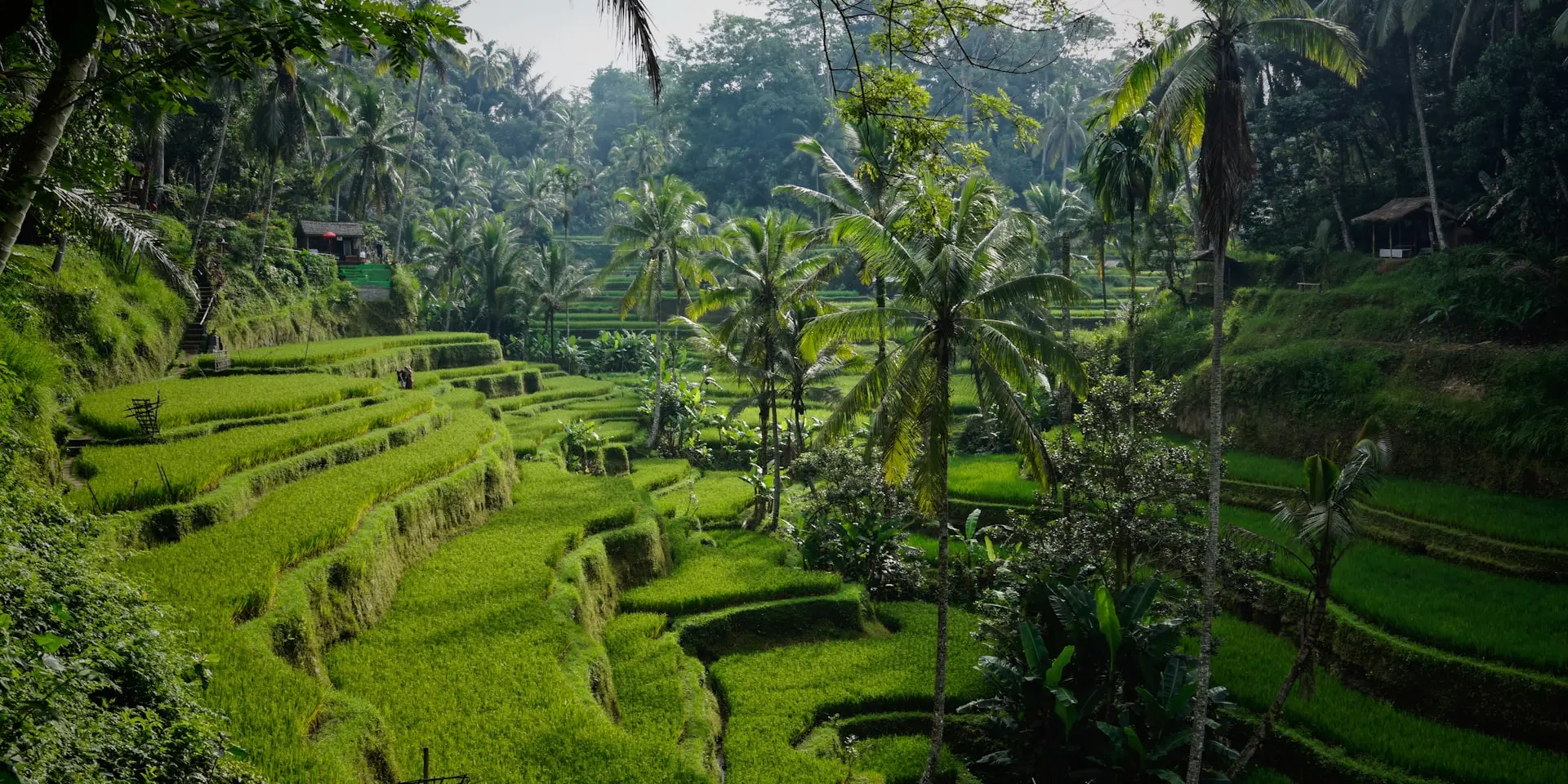
Tegallalang is the famous one — 20 minutes north of Ubud, dramatically steep, easy to access, and heavily developed with cafes, swings, and zip-lines along the ridge. It's beautiful, but it's also crowded by 10am and lined with vendors. Go at sunrise (before 7:30am) and you'll have it largely to yourself. The light is better in the morning anyway.
Jatiluwih is the one locals recommend. A UNESCO World Heritage Site in the Tabanan regency, about 90 minutes from Ubud, Jatiluwih is a vast, gently sloping landscape of terraces that stretches for kilometres without a single zip-line or Instagram swing in sight. The subak irrigation system here dates back to the 9th century. You can walk through the terraces on footpaths for one to three hours depending on your route. It's quieter, more expansive, and feels more authentically Balinese. Entrance fee: 40,000 IDR (about $2.50).
Waterfalls Worth the Trek
Sekumpul Waterfall: Widely considered Bali's most beautiful waterfall, Sekumpul is a cluster of narrow cascades dropping 80 metres into a jungle gorge in the north of the island. Getting there requires a 30-to-45-minute hike down steep steps and across a river — it's not difficult, but it's not flip-flop terrain. The reward is a waterfall that genuinely takes your breath away, surrounded by tropical forest with mist hanging in the air. Bring water shoes. Entrance and guide: approximately 200,000 IDR ($12.50) including a local guide, which is mandatory.
Tegenungan Waterfall: The most accessible waterfall from Ubud (about 30 minutes by scooter), Tegenungan is wide rather than tall and sits in a photogenic gorge with lush vegetation. It gets busy by mid-morning, but the pool at the base is swimmable and the setting is genuinely pretty. Entrance fee: 20,000 IDR (about $1.25).
Tukad Cepung Waterfall: This is the cave waterfall — and it's extraordinary. Water pours through a crack in a canyon ceiling into a narrow cave, and when the morning sunlight hits the falls (roughly 9am–11am), the light beams through the mist like something out of a film. The hike in is about 15 minutes through a riverbed. Wear shoes you don't mind getting wet. Go between 9:30am and 10:30am for the best light rays. Entrance fee: 15,000 IDR (about $1).

When to Visit: Month-by-Month
Bali sits 8 degrees south of the equator. The temperature barely changes all year — expect 27–30°C (80–86°F) daily. What does change dramatically is the rain. The dry season and the wet season are genuinely different experiences.
April–June: Dry season begins. April still sees occasional afternoon showers but they're brief. May and June are excellent — dry, sunny, warm, and significantly less crowded than July–August. Hotel rates are 20–40% lower than peak season. This is the sweet spot for first-timers.
July–August: Peak season. European and Australian school holidays bring the highest visitor numbers and highest prices. Seminyak and Uluwatu beach clubs are packed. The weather is perfect — dry, clear, and breezy — but you'll pay premium rates for accommodation and compete for restaurant reservations. Book everything 2–3 months in advance.
September: The other sweet spot. Still dry season, but the crowds have thinned noticeably. Prices drop. The surf is still good. Many repeat visitors consider September Bali's best month overall.
October: Transitional month. Mostly dry but with increasing cloud cover and occasional evening rain. Still a good time to visit, especially the first half.
November–March: Wet season. Daily tropical downpours, usually in the afternoon, lasting one to three hours. Mornings are often clear and beautiful. The landscape is at its greenest and most lush — rice terraces look extraordinary. Hotel rates drop 30–50%. If you don't mind afternoon rain and want solitude at major sites, wet season Bali is underrated. The worst month for rain is typically January or February.
Nyepi — Bali's Day of Silence — falls in March (the exact date shifts annually based on the Balinese Saka calendar). The entire island shuts down for 24 hours: no flights, no driving, no leaving your hotel, no lights after dark. It's a unique cultural experience if you're there, but plan around it if you need to travel that day. The night before Nyepi, the Ogoh-Ogoh parade features enormous demon effigies paraded through the streets — spectacular and worth planning around.
Getting Around
Bali has no public transport system worth mentioning. No trains, no metro, no reliable bus network. Getting around is the single biggest logistical challenge on the island, and the one most likely to waste your time if you don't plan for it. Here's what actually works.
Grab (Ride-Hailing)
Grab works throughout most of Bali and is the cheapest way to get between nearby locations. A ride from Ubud to Tegallalang is about 40,000–60,000 IDR ($2.50–$3.75). The catch: Grab is unofficially banned in some tourist areas due to pressure from local taxi cartels. You may need to walk a few minutes to a main road for pickup, and some drivers will cancel if the destination is in a restricted zone. Use it for short hops within a region, not for cross-island trips.
Private Driver (Recommended for Day Trips)
Hiring a private driver for a full day is the single best transport decision you'll make in Bali. A driver with an air-conditioned car for 8–10 hours costs $35–50 USD depending on distance, and they'll handle all the navigation, parking, and local knowledge. For a day trip covering waterfalls and temples in the north, or a circuit of the Bukit Peninsula's beaches, a driver is dramatically more efficient and comfortable than any alternative. Ask your hotel to recommend one, or book through Klook or GetYourGuide. Tip 10–15% for good service.
Scooter Rental
Scooter rental is 60,000–80,000 IDR ($3.75–$5) per day and gives you total freedom. However: you legally need an International Driving Permit with a motorcycle endorsement to ride in Bali. Police checkpoints targeting tourists without permits are common, especially around Canggu and Kuta, with on-the-spot fines of 500,000 IDR ($31). Bali traffic is chaotic — narrow roads, unpredictable drivers, dogs, ceremonies blocking streets. If you're not an experienced motorbike rider, skip the scooter and use a driver. Hospital visits for scooter accidents are one of the most common tourist insurance claims in Bali.
Airport Transfers
Ngurah Rai International Airport (DPS) is in southern Bali near Kuta. Pre-book your airport transfer through your hotel or via Klook — it costs $10–20 to most destinations and eliminates the taxi queue chaos on arrival. The drive to Seminyak takes 20–40 minutes, to Ubud 60–90 minutes, and to Uluwatu about 30–45 minutes, depending on traffic. Avoid arriving or departing during rush hours (7–9am, 5–7pm) — airport-area traffic can double those times.
Photo Spots — Three Unmissable Frames
-
1Tegallalang Rice Terraces at SunriseThe steeply tiered paddies north of Ubud are at their most photogenic in the golden hour before 8am, when the low sun catches the water in the flooded paddies and the terraces glow green-gold. The famous palm trees along the ridge create natural leading lines. Walk past the first viewpoint — most visitors cluster there — and follow the path down into the terraces themselves for compositions that include the palm canopy above and the carved landscape below.Best time: 6:30–7:30am. Arrive before the tour buses at 9am. The terraces are most photogenic when freshly planted (green shoots) or flooded (mirror reflections).
-
2Uluwatu Temple at Sunset During KecakThe cliff-edge temple silhouetted against a fiery Indian Ocean sunset is iconic, but the real frame is inside the amphitheatre during the Kecak dance. Fifty men in checked sarongs sit in concentric circles, arms raised, chanting "cak-cak-cak" in hypnotic rhythm as the sun drops behind the performers. The combination of the chanting, the fire, the sunset light, and the ocean backdrop is one of the most dramatic cultural performances in Southeast Asia.Best time: Arrive by 5:30pm to get a seat with the sunset behind the performers. Shoot from the upper tiers for the best framing of dancers against ocean and sky.
-
3Kelingking Beach Viewpoint, Nusa PenidaThe T-Rex-shaped cliff formation at Kelingking Beach on Nusa Penida is one of the most photographed landscapes in Indonesia. The viewpoint at the top looks down at a pristine white-sand beach framed by towering limestone cliffs and turquoise water. The colours are almost absurdly vivid. You can climb down to the beach, but the path is steep, eroded, and genuinely dangerous — most visitors (and the best photos) stay at the top. Nusa Penida is a 30-minute fast boat from Sanur — book a Nusa Penida day trip.Best time: 7–9am before the day-trip crowds arrive. Morning light hits the cliff face directly. Nusa Penida day trips typically leave Sanur at 8am — go the day before and stay overnight for the empty sunrise.

Budget Quick Facts
- Private villa with pool (mid-range): $60–150/night
- Budget guesthouse: $15–30/night
- Warung meal (local food): 25,000–45,000 IDR ($1.50–$2.80)
- Restaurant meal (Western/fusion): 120,000–250,000 IDR ($7.50–$15.50)
- Beach club day bed + minimum spend: 300,000–500,000 IDR ($19–$31)
- Private driver for a full day: $35–50 USD
- Grab ride (short hop): 20,000–60,000 IDR ($1.25–$3.75)
- Scooter rental: 60,000–80,000 IDR/day ($3.75–$5)
- Temple entrance fees: 15,000–60,000 IDR ($1–$3.75)
- Nusa Penida fast boat return: 200,000–350,000 IDR ($12.50–$22)
- Bintang beer (large): 35,000–50,000 IDR ($2.20–$3.15)
- Surf lesson (2 hours): 350,000–500,000 IDR ($22–$31)
- Balinese massage (1 hour): 100,000–200,000 IDR ($6.25–$12.50)
Budget traveller ($40–60/day): Stay in guesthouses, eat at warungs, ride Grab, do free beaches and cheap temple entries. Bali is one of the most affordable destinations in the world at this level.
Mid-range traveller ($100–200/day): Private villa with pool, mix of warung and restaurant meals, private driver for day trips, occasional beach club visit. This is the sweet spot — you'll live extremely well.
Luxury traveller ($300+/day): Five-star resorts, fine dining, private guided tours, spa treatments, helicopter transfers. Bali's luxury tier competes with anywhere in the world at a fraction of European or Maldives prices.
Hotels, tours, activities, and car rental — compare and book everything you need.
Ready to plan your Bali trip?
Tell Tripva your travel dates, interests, and pace — and we'll build a complete day-by-day Bali itinerary with villa recommendations, temple timing, driver routes, and restaurant picks. Takes 30 seconds.
Plan Your Bali Trip ✦