Can You Actually Visit the Maldives on a Budget?
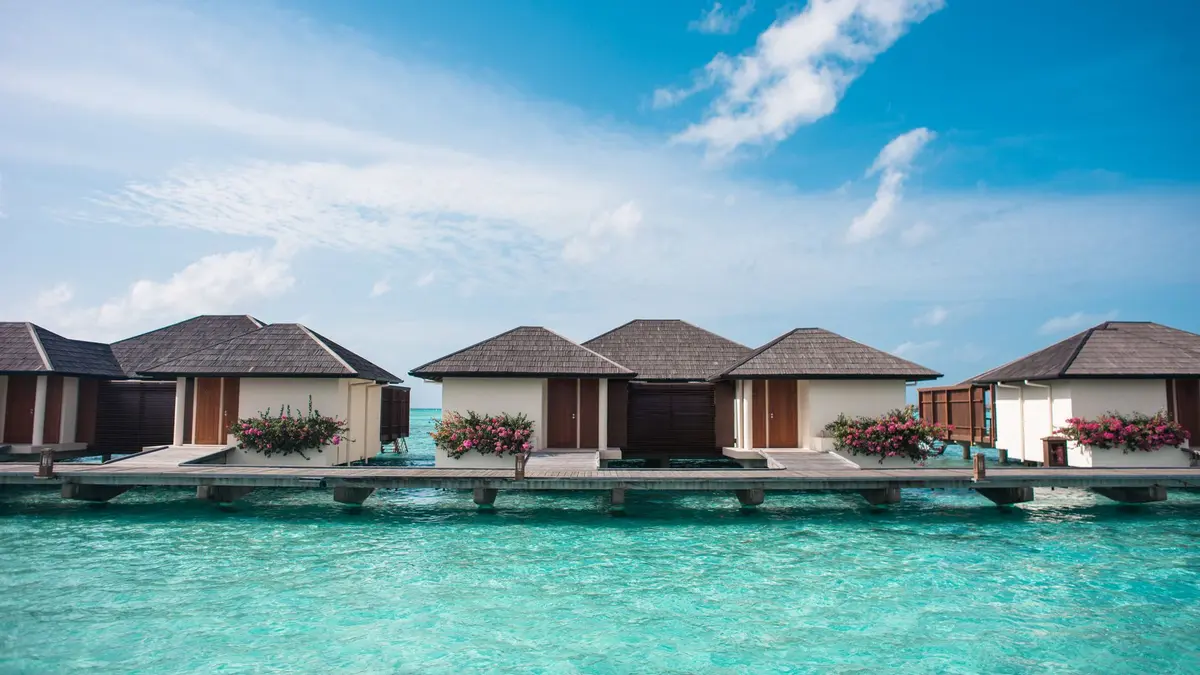
The Maldives has a branding problem. Not the bad kind — the kind where the brand is so overwhelmingly associated with one image that most people cannot see past it. That image is an overwater villa perched above a glassy turquoise lagoon, a glass floor revealing reef sharks drifting below, a private butler delivering champagne on a silver tray. Price tag: $800 to $3,000 per night. The Maldives is for honeymooners with trust funds, the story goes, for celebrities escaping paparazzi, for people who use the word "bespoke" without irony. If you are reading a budget travel guide, surely the Maldives is not for you.
That story is about fifteen years out of date. In 2009, the Maldivian government made a decision that quietly transformed the entire travel equation: it legalized guesthouses on local inhabited islands. Before that, tourists were essentially confined to private resort islands — one island, one resort, no contact with local life, no price competition. After 2009, Maldivian entrepreneurs began converting homes on fishing islands into small guesthouses, and a parallel tourism economy was born. Today, there are over 700 registered guesthouses across more than 100 local islands, and the prices are a different universe from the resorts.
A guesthouse room on a local island — clean, air-conditioned, often with a sea view — runs $40-80 per night. A plate of mas huni (tuna, coconut, and onion, the Maldivian national breakfast) at a local cafe costs $3-5. A full-day snorkeling trip to a nearby reef or sandbank costs $25-40 per person. The same water, the same sand, the same coral reefs, the same manta rays and whale sharks that the resort guests see — but at a tenth of the price. The water does not care whether you paid $2,000 or $50 for the room you slept in last night.
This guide is the proof of concept. We are going to show you exactly how two people can spend five days in the Maldives — swimming with whale sharks, snorkeling pristine reefs, lounging on white-sand beaches, eating freshly caught tuna — for a total of $800-1,200, flights not included. That is less than a single night at most resort properties. The Maldives on a budget is not a compromise version of the Maldives. It is arguably the more authentic one.
Budget Maldives: Local Islands vs Resort Islands
To understand budget travel in the Maldives, you need to understand the country's unique geography and tourism structure. The Maldives is an archipelago of 1,192 coral islands grouped into 26 natural atolls, stretching 870 kilometres north to south across the Indian Ocean. Of those islands, about 200 are inhabited by local Maldivians, and another 160 or so are developed as private resort islands. The rest are uninhabited — sandbanks, reef flats, and tiny palm-covered islets that appear and disappear with the tides.
Resort Islands: The Expensive Maldives
Each resort island is exclusively operated by a single hotel brand. There are no other businesses, no local residents, no price competition. The resort controls everything — accommodation, food, activities, transport. This is the "one island, one resort" model that made the Maldives famous, and it is designed from the ground up to be a closed economic system. All-inclusive packages start around $400-600 per night for a basic water villa, climbing to $1,500-5,000+ for luxury brands like Soneva, Four Seasons, or Waldorf Astoria. Even a beer at a resort bar costs $12-18. The experience is undeniably beautiful, but the pricing reflects monopoly conditions, not market rates.
Local Islands: The Affordable Maldives
Local islands are where Maldivians actually live — fishing communities of 500 to 5,000 people with mosques, schools, shops, and harbours. Since 2009, many of these islands have developed a guesthouse scene that ranges from basic to genuinely comfortable. You stay in a small hotel run by a local family, eat at local restaurants, book excursions through local operators, and experience a version of the Maldives that resort guests never see. The beaches are shared with locals. The snorkeling sites are often the same reefs the resorts use, just accessed from a different angle. The water is identical — this is the same Indian Ocean, the same visibility, the same coral, the same marine life.
The trade-off is real but manageable. Local islands are Muslim communities, so alcohol is not available (some guesthouses have "excursion bars" on nearby uninhabited islands). There is a designated "bikini beach" — a section of the island's shoreline screened off for tourists to swim in Western swimwear, separate from the local beach where modest dress is required. Guesthouse rooms are comfortable but not luxurious — think boutique hotel, not five-star resort. The food is excellent but simple. And the island itself is small — you are not at a manicured resort with infinity pools and overwater restaurants, you are in a Maldivian fishing village that happens to have some of the most spectacular marine scenery on the planet right off its shore.
For budget travellers, the choice is obvious. You are not settling for less — you are accessing the same natural wonder through a different, cheaper, and arguably more interesting door.
Best Budget-Friendly Local Islands
Not all local islands are equally set up for tourism. Some have dozens of guesthouses, regular ferry connections, and well-organized excursion operators. Others have one or two guesthouses and limited infrastructure. Here are the four best local islands for budget travellers, each offering a different flavour of the Maldives.
-
1Maafushi — The Budget Travel HubMaafushi is the most developed local island for tourism and the easiest entry point for first-time budget visitors. Located in the South Male Atoll, it is just 27 kilometres from the airport — reachable by a 30-minute speedboat ($25-35) or a 90-minute public ferry ($2). The island has over 60 guesthouses ranging from $35-100 per night, a dozen restaurants, dive shops, and tour operators lining the main street. The bikini beach is the largest and best-maintained of any local island. Snorkeling right off the beach is decent, and the house reef at the south end has regular nurse shark and ray sightings. Maafushi is not pristine or quiet — it has a backpacker vibe with watersport operators competing for your attention — but it has the best infrastructure, the most competition (which means the lowest prices), and the easiest logistics.Best for: First-timers, solo travellers, anyone who wants maximum convenience and the lowest prices.
-
2Thulusdhoo — The Surf and Culture IslandThulusdhoo sits in the North Male Atoll, about 27 kilometres northeast of Male, accessible by a 75-minute public ferry ($2) or a 20-minute speedboat ($30). It is famous for two things: the "Cokes" surf break (a world-class right-hander that draws surfers from March to October) and one of the last traditional Maldivian lacquer-work workshops. The island is smaller and quieter than Maafushi, with about 30 guesthouses ($40-80 per night) and a more local feel. The bikini beach is small but uncrowded. The house reef is excellent — better than Maafushi's — with healthy coral and frequent turtle sightings within swimming distance of shore. Thulusdhoo is also a working fishing island, and watching the afternoon tuna catch come in is a genuinely fascinating daily ritual.Best for: Surfers, snorkeling enthusiasts, travellers who want a more local atmosphere than Maafushi.
-
3Dhigurah — Whale Sharks and Long BeachesDhigurah is a narrow, three-kilometre-long island in the South Ari Atoll — one of the longest local islands in the Maldives. It has a stunning stretch of white sand beach along its entire length, much of it deserted. The island has about 15 guesthouses ($45-90 per night) and a handful of restaurants. What makes Dhigurah special is its proximity to the South Ari Marine Protected Area, one of the best places in the world to swim with whale sharks year-round. Whale shark excursions run daily ($60-80 per person) and have extremely high success rates — the resident population of juvenile whale sharks feeds in the channel just off the atoll. Manta ray cleaning stations are also nearby. Dhigurah is quieter and more remote than Maafushi or Thulusdhoo, requiring a domestic flight to Maamigili airport ($100-150 one way) followed by a short boat transfer, or a long speedboat ride from Male.Best for: Marine life enthusiasts, couples, anyone willing to pay more for transport to access whale sharks and quieter beaches.
-
4Fulidhoo — The Quiet EscapeFulidhoo is a tiny island in the Vaavu Atoll with a population of around 500 people and fewer than 10 guesthouses ($40-70 per night). It is the closest thing to the "untouched Maldives" that you can find with tourist infrastructure. The beaches are pristine and often empty. The house reef is regarded as one of the best in the Maldives for shore snorkeling — swim 50 metres from the beach and you are in a world of table corals, anemone fields, reef sharks, and eagle rays. The island has a handful of small restaurants serving fresh fish and local dishes. Fulidhoo is reached by a 90-minute speedboat from Male ($35-45) or a public ferry that runs a few times per week ($2-4). The limited accommodation means it stays quiet even during peak season.Best for: Couples, introverts, serious snorkelers, anyone who values solitude over convenience.
Where to Stay: Guesthouses from $40-80/Night
Guesthouses on Maldivian local islands range from basic family-run rooms to polished boutique properties with rooftop terraces and in-house restaurants. The sweet spot for budget travellers is the $40-80 per night range, which gets you a private room with air conditioning, hot water, Wi-Fi, and usually breakfast included.
What to Expect at Different Price Points
$35-50/night (basic): A clean, functional room with AC, a private bathroom, and a fan. The room will be small — think 12-15 square metres. Breakfast is usually included (toast, eggs, fruit, juice). Wi-Fi works but may be slow. The guesthouse may not have a dedicated restaurant, but will point you to local cafes. These properties are often family-run, with the owner doubling as tour operator, airport transfer coordinator, and breakfast cook. Service is personal but informal. On Maafushi, this tier is abundant. On smaller islands, even this price gets you something quite nice.
$50-80/night (comfortable): A larger room, often with a small balcony or terrace. Better furnishings, possibly a minibar, definitely reliable Wi-Fi. Many properties in this range have their own restaurant and can arrange half-board or full-board meal plans ($15-25 per person per day for lunch and dinner). Some have rooftop dining areas with ocean views. On islands like Dhigurah and Fulidhoo, the higher end of this range gets you a beachfront room with direct sand access — a Maldivian beach room for the price of a mid-range Airbnb in most European cities.
$80-120/night (boutique): The upper end of budget territory. Proper boutique guesthouses with design-conscious rooms, ocean-view terraces, and full-service restaurants. Some offer pool access (rare on local islands but growing). At this price on Maafushi, you are getting something that would cost $300+ if the same room existed on a resort island across the channel. This tier is worth considering for a splurge night or two, especially on quieter islands where the atmosphere justifies the premium.
Booking is straightforward — most guesthouses are listed on Hotellook, Booking.com, and Agoda. Comparing across platforms matters — the same room can vary by $10-20 per night depending on where you book. Many guesthouses also offer better rates through direct booking via WhatsApp or email, especially for stays of three nights or more.
- Book at least 2-3 weeks ahead during peak season (December-March) — popular guesthouses on small islands sell out
- Contact the guesthouse directly after booking to arrange airport transfers — they usually organize speedboats or help you find the public ferry
- Ask about meal plans before arrival — on smaller islands with few restaurants, half-board is often the smartest option
- Check recent reviews specifically mentioning snorkeling and beach access — proximity to the house reef varies greatly even on the same island
- Most guesthouses accept card payments, but bring some US dollars or Maldivian Rufiyaa cash for local restaurants and small shops
Compare prices from hundreds of Maldivian guesthouses — filter by island, budget, and guest rating to find the best deals on local islands.
Compare Guesthouse Prices →Getting There: Finding Cheap Flights
The Maldives has one main international airport: Velana International Airport (MLE), located on Hulhumale island adjacent to the capital Male. All international flights arrive here, and it is the starting point for all onward transport to local islands and resorts.
Where Do Cheap Flights Come From?
The Maldives is not inherently an expensive destination to fly to — it depends entirely on where you are coming from and when you book. The cheapest routes consistently originate from South and Southeast Asia:
- Sri Lanka (Colombo): The cheapest gateway. SriLankan Airlines and budget carriers fly Colombo-Male in 90 minutes, often for $80-150 return. If you are combining a Sri Lanka trip with a Maldives add-on, this is the move.
- India (Trivandrum, Kochi, Bangalore, Delhi): IndiGo and Air India Express operate direct flights from several Indian cities with fares from $120-250 return. Trivandrum and Kochi are the closest — just 75 minutes across the Laccadive Sea.
- Southeast Asia (Kuala Lumpur, Bangkok, Singapore): AirAsia flies Kuala Lumpur-Male direct with fares from $150-300 return. Bangkok and Singapore connections are available through various carriers at similar rates.
- Middle East (Dubai, Doha, Abu Dhabi): Emirates, Qatar Airways, and Etihad all serve Male with fares from $250-500 return. These routes work well for travellers combining a Gulf stopover.
- Europe: Direct charter flights from the UK, Germany, and Italy run during peak season. Otherwise, connecting through Colombo, Dubai, or Doha adds a stop but keeps fares in the $400-700 return range with advance booking.
The key to cheap Maldives flights is flexibility and advance booking. Search on Kiwi.com with flexible dates — their "anywhere" search and date matrix are excellent for finding the cheapest routing. Set fare alerts 3-6 months before your target dates. Shoulder season flights (May and October-November) are significantly cheaper than December-March peak fares.
Getting from the Airport to Your Island
Once you land at Velana International, you need to reach your local island. The transport method depends on distance:
- Public ferry ($2-4): The cheapest option. Ferries run from Male to nearby atolls on fixed schedules — usually departing in the morning and returning in the afternoon. The Male-Maafushi ferry takes 90 minutes and costs about $2. Schedules are limited (often one departure per day, no service on Fridays), so plan your arrival day accordingly.
- Speedboat ($25-50): Faster and more flexible. Guesthouses arrange shared speedboats that typically leave in the afternoon and take 20-45 minutes depending on the island. Cost is $25-50 per person per way for islands in the Male atoll area. Book through your guesthouse.
- Domestic flight + boat ($100-160): For distant atolls like South Ari (Dhigurah), you take a 20-minute domestic flight to the nearest island airport, then a short boat transfer. Maldivian Airlines operates these routes. This adds significant cost but is the only practical option for remote islands.
If your international flight arrives late in the afternoon or evening, you will likely miss the public ferry and same-day speedboat transfers. Rather than paying for an expensive last-minute speedboat at night, book one night at a budget hotel on Hulhumale (the island connected to the airport by a short bus ride) for $30-50, then catch the morning ferry or scheduled speedboat transfer. Hulhumale has an artificial beach, restaurants, and a relaxed atmosphere — it is a perfectly pleasant place to spend a first or last night.
Food: Local Cafes vs Resort Dining
Food is one of the starkest cost differences between resort and local island travel. At a resort, a simple lunch can cost $40-80. On a local island, the same meal — often fresher, always more authentic — costs $5-12. Maldivian cuisine is built around tuna, coconut, and rice, with South Indian and Sri Lankan influences running through everything.
Local Cafes (Hotaa)
Every local island has at least a few hotaa — small, no-frills cafes where islanders eat. These are the budget traveller's best friend. A typical meal at a local cafe costs $3-8 and consists of generous portions of freshly prepared food. The menu rotates daily based on what is available, but you will frequently find:
- Mas huni: Shredded smoked tuna mixed with grated coconut, onion, chili, and lime, eaten with roshi (flatbread). This is the traditional Maldivian breakfast and it is addictive. $3-5 with tea.
- Garudhiya: A clear tuna broth served with rice, lime, chili, and onion. Deceptively simple, deeply flavourful, and the dish that Maldivians eat most often. $4-6.
- Fried rice or noodles with tuna: The Maldivian take on fried rice uses smoked or fresh tuna and is a hearty, inexpensive lunch. $4-7.
- Hedhikaa (short eats): Deep-fried snacks filled with tuna, coconut, or fish paste — bajiya (samosa-like triangles), gulha (fish balls), and keemia (fish rolls). Sold individually for $0.50-1.50 each and perfect for between-meal grazing.
- Freshly grilled fish: On islands with active fishing harbours, you can often buy grilled reef fish or tuna steaks at local cafes for $5-10 — fish that was in the ocean hours earlier.
Guesthouse Restaurants
Most mid-range guesthouses have their own restaurants serving a mix of Maldivian, South Asian, and Western food. Prices are higher than local cafes but still very reasonable: $8-15 for a main course. Meal plans (half-board or full-board) offered by guesthouses typically cost $15-25 per person per day and include lunch and dinner — often a better deal than ordering a la carte, especially on smaller islands with limited dining options. Breakfast is almost always included in the room rate.
What Resort Dining Costs (For Comparison)
A resort buffet breakfast runs $30-60 per person. Lunch is $40-80. Dinner at a resort's main restaurant starts at $50 and climbs rapidly. A cocktail is $15-25. A bottle of water from the minibar: $8. This is not an exaggeration — it is the standard pricing model across most Maldivian resorts. When you eat a plate of mas huni at a local cafe for $4 that is genuinely better than the resort version at $25, the absurdity of resort pricing becomes visceral.
Alcohol is not sold on local islands — the Maldives is a Muslim country and alcohol is restricted to resort islands and licensed boats. If having a drink is important to your trip, some guesthouses organize "floating bar" excursions to nearby uninhabited islands or sandbanks where drinks are served on a boat. These typically cost $20-40 per person including a few drinks. Alternatively, you can book a day trip to a resort island (some offer day passes for $50-150) that includes pool and beach access with a bar.
Activities: Snorkeling, Diving, Sandbanks, and Whale Sharks
This is why you came. The Maldives sits on top of one of the richest marine ecosystems on the planet — 2,000+ species of reef fish, 187 species of coral, manta rays, whale sharks, dolphins, turtles, and reef sharks in crystal-clear water with 30-50 metre visibility. And accessing it from a local island costs a fraction of what resorts charge for the same experience.
Free: House Reef Snorkeling
Many local islands have a house reef — a coral reef accessible directly from the beach or a short swim from shore. This is free, unlimited, and often spectacular. On islands like Fulidhoo and Thulusdhoo, the house reef is genuinely world-class. Swim 30-50 metres from the beach and you are hovering over a wall of live coral teeming with parrotfish, butterflyfish, triggerfish, and the occasional reef shark or turtle. Bring your own mask and snorkel (guesthouses rent them for $3-5/day, but owning a good set pays for itself immediately) and you can snorkel multiple times per day at zero cost. This alone makes the Maldives worth the trip.
Snorkeling Excursions ($25-50)
Guided snorkeling trips take you to reefs, channels, and marine areas beyond swimming distance from your island. A typical half-day trip visits 2-3 snorkeling spots and costs $25-40 per person. Full-day trips with lunch on a sandbank run $40-60. These excursions access deeper channels where larger marine life congregates — you are far more likely to see manta rays, eagle rays, and large schools of pelagic fish on an excursion than from shore. Your guesthouse will organize these, or you can book through local dive shops. Compare snorkeling excursion options here.
Whale Shark Swimming ($60-90)
Swimming alongside a whale shark — the largest fish in the ocean, growing up to 12 metres long — is one of those experiences that rearranges your understanding of the natural world. The South Ari Atoll has one of the highest concentrations of whale sharks on earth, with a resident population of juvenile sharks that feed in the channel year-round. Excursions from Dhigurah and nearby islands run daily, with sighting success rates above 90%. The cost is $60-90 per person for a half-day trip including snorkeling gear and a guide. Browse whale shark excursions here. This is not a zoo or aquarium — you are in open ocean, slipping into the water as a 6-metre shark glides past you at arm's length, its spotted skin filtering the sunlight. If you do one paid activity in the Maldives, make it this.
Manta Ray Excursions ($50-80)
Manta rays — with wingspans up to 5 metres — visit cleaning stations on specific reefs where small fish remove parasites from their bodies. Watching a manta arrive at a cleaning station and hover motionless while cleaner wrasses work is mesmerizing. The best manta sites are in the North and South Male Atolls (accessible from Maafushi and Thulusdhoo) and the Ari Atoll (accessible from Dhigurah). Excursions cost $50-80 per person and typically combine manta watching with additional snorkeling stops.
Sandbank Trips ($20-40)
Sandbank trips are the quintessential Maldives budget activity. A small boat takes you to a tiny, uninhabited strip of white sand in the middle of the ocean — nothing but sand, water, and sky in every direction. You snorkel, swim, sunbathe, and have lunch (usually included or brought by the boat crew). Half-day sandbank trips cost $20-35 per person, and full-day versions with multiple stops run $30-50. These are the Maldives postcard moments — impossibly blue water, impossibly white sand — and they cost less than a main course at a resort restaurant.
Scuba Diving ($60-90 per dive)
The Maldives is consistently ranked among the top five dive destinations in the world. Dive shops on local islands charge $60-90 per dive including equipment, or $250-400 for a multi-dive package (4-6 dives). PADI Open Water certification courses run $350-500 — comparable to or cheaper than Thailand and significantly cheaper than the Red Sea or Caribbean. Dive sites include channel drifts with grey reef sharks, coral gardens, shipwrecks, and night dives on the house reef. The visibility regularly exceeds 30 metres.
Dolphin Watching ($25-40)
Sunset dolphin cruises are available from most local islands and cost $25-40 per person. Spinner dolphins are abundant in Maldivian waters and the evening feeding runs are reliable — pods of 50-200 dolphins leaping, spinning, and racing alongside the boat in the golden light. This is one of the most reliably joyful wildlife experiences you can have anywhere, and it costs less than a resort cocktail.
Whale shark swims, snorkeling excursions, sandbank trips, diving courses, and dolphin cruises — compare prices and read verified reviews.
Browse Activities →
Sample 5-Day Budget Breakdown
Here is the math for a five-day Maldives trip for two people, staying on a local island (Maafushi or Thulusdhoo for the cheapest logistics), mixing free activities with paid excursions, and eating at a combination of local cafes and guesthouse restaurants. Costs are shown as totals for two people.
| Category | 5-Day Total (2 people) |
|---|---|
| Accommodation — 5 nights at $55/night (mid-range guesthouse, breakfast included) | $275 |
| Airport transfer — speedboat return (2 people) | $80 |
| Lunches — 5 days at local cafes ($6/person/day) | $60 |
| Dinners — 5 evenings at guesthouse/local restaurants ($10/person/day) | $100 |
| Snacks, water, tea ($3/person/day) | $30 |
| Full-day snorkeling + sandbank excursion ($35/person) | $70 |
| Half-day snorkeling trip ($25/person) | $50 |
| Sunset dolphin cruise ($30/person) | $60 |
| Snorkel gear rental — 5 days at $5/day | $50 |
| Miscellaneous (SIM card, sunscreen, tips) | $40 |
| Total for 2 people (5 days, excl. flights) | $815 |
That is $815 for two people for five days in the Maldives — approximately $82 per person per day. This includes accommodation with breakfast, three paid excursions (snorkeling, sandbank, dolphins), all meals, and gear rental. Add house reef snorkeling (free, every day) and beach time, and you have a full, genuinely incredible Maldives experience.
Upgraded Version ($1,000-1,200 for Two)
Want whale sharks? Add a day trip to South Ari or book your stay on Dhigurah instead. The whale shark excursion adds $120-180 for two. Want a nicer guesthouse with a sea-view room? Bump accommodation to $70-80/night and add $75-125 to the total. Want a resort day pass for the pool bar experience? That is $100-300 for two depending on the resort. Even with all three upgrades, you are looking at $1,100-1,300 total for two people — still less than a single night at most resort properties.
Ultra-Budget Version ($600-700 for Two)
Stay on Maafushi in a basic $35-40/night guesthouse. Take the public ferry instead of the speedboat ($4 return total vs $80). Eat primarily at local cafes. Skip one paid excursion and spend that day snorkeling the house reef instead. Bring your own snorkel gear from home. This strips the budget to around $600-700 for two people for five days — roughly $60-70 per person per day in the Maldives. That number still surprises people, and it should.

Best Time to Visit
The Maldives has two distinct seasons driven by monsoon patterns, and your timing affects both weather and budget significantly.
November-April (northeast monsoon / dry season): This is peak season and the best weather window. Clear skies, calm seas, minimal rainfall, and underwater visibility often exceeding 30 metres. Temperatures are a consistent 28-31°C (82-88°F) with low humidity. This is when the Maldives delivers its postcard-perfect conditions — flat turquoise lagoons, cotton-cloud skies, and reliable snorkeling conditions every day. The downside: guesthouse prices are 20-40% higher than wet season, flights are more expensive, and popular islands are busier. January-March is the driest stretch with the best diving visibility. December 20 through early January is the absolute peak — prices surge and availability on popular islands like Maafushi requires booking months in advance.
May-October (southwest monsoon / wet season): The "green season" brings intermittent rain, stronger winds, and occasionally rough seas. But this is not a monsoon like Southeast Asia's — the Maldives does not get days of continuous rain. Typically, you get a heavy downpour for an hour or two followed by sunshine. The sea can be rougher, especially on the western sides of atolls, which affects some excursions. Visibility drops slightly (still 15-25 metres — better than most dive destinations globally). The massive upside: guesthouse prices drop 30-50%, flights are significantly cheaper, islands are quieter, and you have beaches and reefs more to yourself. June-August is the wettest period. May and September-October are the shoulder months that offer the best balance of acceptable weather and low prices.
For budget travellers: The sweet spots are November (dry season has started but prices have not fully peaked), April (end of dry season, prices starting to drop, weather still excellent), and May (wet season technically begins but weather is often fine, and prices crater). If you are flexible and do not mind the possibility of an afternoon rain shower, the wet season from May to October offers extraordinary value — the same guesthouse that costs $70 in January might cost $40 in June.
Marine Life Calendar
Some marine experiences are seasonal:
- Whale sharks (South Ari Atoll): Year-round, but best from November to April when plankton concentrations peak
- Manta rays (western atolls): Best during the wet season (May-November) when plankton blooms attract them to the western side of the atolls
- Manta rays (eastern atolls): Best during the dry season (December-April)
- Hammerhead sharks: Best January-March in northern atolls (advanced diving)
- Turtles: Year-round on most house reefs
- Dolphins: Year-round, daily sightings on sunset cruises
Tips to Save Money
After covering the big categories — accommodation, transport, food, and activities — here are the smaller optimizations that can shave another 15-25% off your total budget.
1. Bring Your Own Snorkel Gear
A decent mask and snorkel set costs $25-40 at home and lasts for years. Renting on-island costs $3-5 per day, which adds up over a week and the fit is never as good. If you snorkel daily (and in the Maldives, you will), owning your gear saves $20-35 per trip and gives you a better seal, better visibility, and the freedom to snorkel whenever you want without returning rentals. Fins are bulkier to pack but worth it if you have the luggage space — short travel fins fit in a carry-on.
2. Take the Public Ferry
The Maldivian public ferry network connects Male to dozens of local islands at absurdly low prices — $2-4 per person versus $25-50 for a speedboat. The trade-off is time (the ferry to Maafushi takes 90 minutes versus 30 by speedboat) and schedule constraints (ferries typically run once daily and not on Fridays). But if your arrival timing allows it, taking the ferry each way saves $40-90 for two people — enough to fund an entire excursion. Check schedules with your guesthouse before booking flights.
3. Eat at Local Cafes, Not Guesthouse Restaurants
Guesthouse restaurants are convenient and reasonably priced, but local hotaa cafes are consistently 30-50% cheaper for equivalent or better food. Walk into the island's village area (away from the tourist-facing beachfront), find the cafes where islanders eat, and order what they are eating. The food is fresher, more authentic, and dramatically cheaper. On Maafushi, this can mean the difference between spending $8 and $15 on dinner.
4. Negotiate Multi-Activity Packages
If you are booking multiple excursions (snorkeling, sandbank, dolphin cruise, fishing), ask your guesthouse or local tour operator about a package deal. Bundling three or four activities often yields a 15-25% discount compared to booking each individually. Operators prefer guaranteed bookings, and you benefit from the volume discount. This works especially well on smaller islands where one or two operators handle most tours.
5. Travel with a Buddy or Group
The Maldives rewards pair and group travel. Accommodation costs are per room, not per person — a $55 room split between two costs $27.50 each. Speedboat transfers are often per-boat, not per-person, so a group of four splitting a $100 transfer pays $25 each versus $50. Even excursions sometimes have minimum-passenger thresholds — having more people in your group increases the chance of a trip running at the scheduled price rather than requiring a surcharge for a small group.
6. Buy a Local SIM Card
Maldivian SIM cards from Dhiraagu or Ooredoo cost $10-20 for a tourist plan with enough data for a week of normal use (maps, messaging, booking confirmations). Buy one at the airport on arrival. Wi-Fi at guesthouses exists but is often slow and unreliable — having your own data connection means you can compare prices, check ferry schedules, and communicate with tour operators without depending on guesthouse connectivity.
7. Skip the Resort Day Pass (Usually)
Resort day passes ($50-150 per person) let you use a resort island's pool, beach, and facilities for a day. They are marketed heavily to local island tourists. Unless you specifically want the pool-bar-cocktail experience, the money is better spent on a sandbank trip or whale shark excursion — you are in the Maldives for the ocean, not for an infinity pool. The local island beaches are beautiful. The house reef is better than most resort house reefs. Save the resort day pass for a special-occasion splurge, not a routine activity.
8. Visit During Shoulder or Wet Season
We covered this in detail above, but it bears repeating: the single biggest money-saving decision you can make is timing. A trip in May or November costs 30-50% less than the same trip in January, across accommodation, flights, and even some excursions. The weather difference is real but manageable. The savings are substantial.
9. Bring Reef-Safe Sunscreen from Home
Sunscreen on local islands is expensive ($10-15 for a small bottle) and the selection is limited. Bring a large bottle of reef-safe sunscreen from home — you will use it every day, and reef-safe formulas (mineral-based, without oxybenzone or octinoxate) protect both your skin and the coral reefs you came to see. This is not just a budget tip — it is an environmental responsibility in one of the world's most fragile marine ecosystems.
10. Use Hotellook and Kiwi for Price Comparison
Never book the first price you see. Hotellook aggregates guesthouse prices from Booking.com, Agoda, Hotels.com, and direct sites so you can see which platform offers the best rate for the same room. Kiwi.com does the same for flights, including creative routing options (like flying through Colombo) that other search engines miss. Five minutes of comparison shopping can save $50-100 per booking.
- Snorkel mask and snorkel (your own, well-fitted)
- Reef-safe sunscreen (SPF 50+, mineral-based)
- Rash guard or long-sleeve swim shirt (sun protection and modest coverage for local beaches)
- Waterproof phone case or dry bag (essential for boat trips)
- Light, covering clothing for island villages (shoulders and knees covered outside bikini beach)
- Cash (USD or MVR) for small restaurants and tips — cards accepted at guesthouses but rarely at local cafes
- Reusable water bottle — some guesthouses offer filtered water refills
Everything you need — budget guesthouses on local islands, snorkeling excursions, whale shark tours, and flight comparisons.
Ready to plan your Maldives trip?
Tell Tripva your travel dates, budget, and interests — we'll build a complete day-by-day Maldives itinerary with guesthouse picks, activity timing, and island-hopping routes. Takes 30 seconds.
Plan Your Maldives Trip ✦