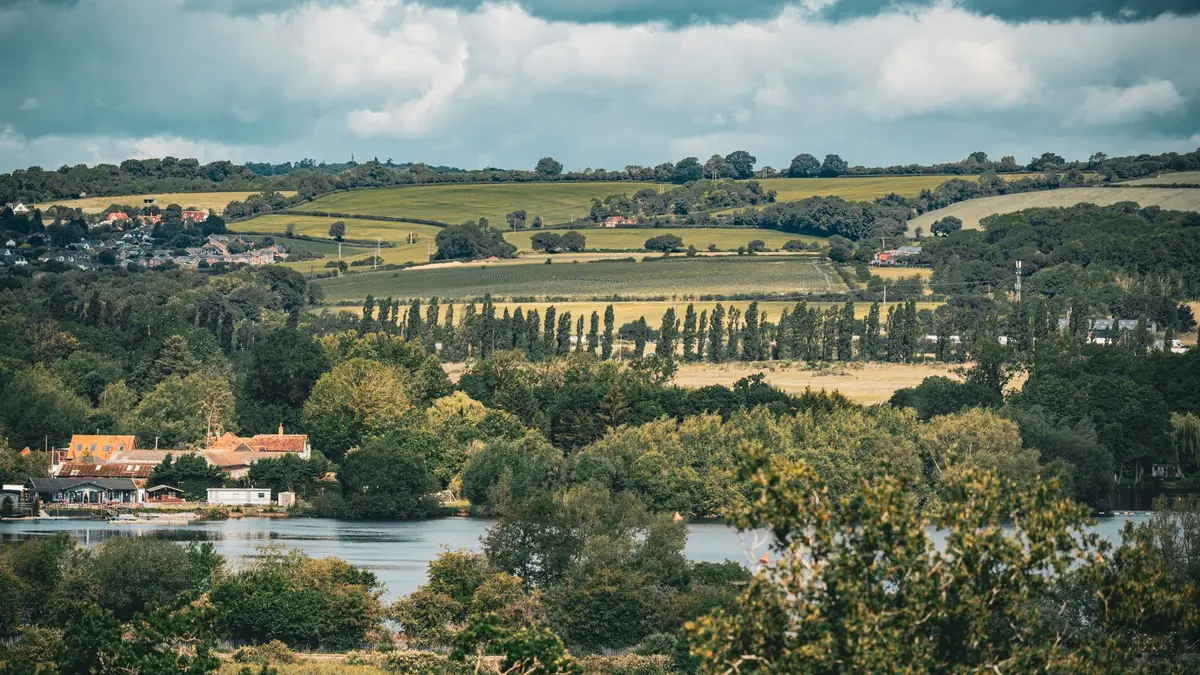
Why Day Trips from London by Train?
London is extraordinary, but after a few days the sheer density of people, concrete, and noise starts to compress your brain. The fix is right there at every major terminus: step onto a train and within an hour you're standing in front of a Roman bathhouse, punting down a river past 600-year-old college buildings, or staring at cliffs that drop straight into the English Channel.
England's rail network radiates from London like spokes on a wheel. Paddington points west to Bath and Windsor. King's Cross shoots north to Cambridge. Victoria heads south to Brighton and the Sussex coast. This geography means that a startling number of England's best destinations sit within a 90-minute train ride of central London — no car rental, no motorway traffic, no parking fees.
Every trip on this list is doable as a comfortable day trip: leave London by 9am, return by 8pm, and still have a full day of exploration. Most can be done on a standard off-peak return ticket for under 25-45 pounds. We've covered how to get there, what it costs, what to see, and the one tip that makes each trip significantly better.
How to Save on Train Tickets
Before diving into the destinations, a few principles that will save you serious money on UK rail fares.
- Book advance tickets: Available 12 weeks before travel on most routes. A London-to-Bath advance single can be as low as 12 pounds versus 50+ for an anytime return. The catch: you're locked to a specific train.
- Off-peak returns: If you want flexibility, off-peak returns are valid on any off-peak train (usually after 9:30am). These cost roughly 40-60% less than anytime tickets.
- Railcard: A 16-25 Railcard or Two Together Railcard (30 pounds/year) gives you a third off most fares. It pays for itself in two or three trips.
- Split ticketing: Sometimes buying two tickets for different portions of the same journey is cheaper than one through ticket. Apps like Trainline and Railsmartr identify these splits automatically.
- GroupSave: Groups of 3-9 travelling together on off-peak services get roughly a third off with most train operators — no railcard needed.
Search and compare UK train fares across all operators. Advance tickets go on sale 12 weeks before travel — early booking gets the best prices.
1. Bath — Roman Baths & Georgian Grandeur
Bath is the single best day trip from London. That's not a casual claim — it's a city with two thousand years of continuously interesting history, UNESCO World Heritage status, and architecture so uniformly beautiful that it feels like walking through an 18th-century painting. The honey-coloured Bath stone catches the light in a way that makes every street photogenic, even in the rain.
What to see: Start at the Roman Baths (21.50 pounds entry; book timed tickets online). The museum built around the original Roman bathing complex is genuinely world-class — the audioguide is narrated by Bill Bryson and worth every minute. From there, walk uphill to the Royal Crescent, the most famous Georgian terrace in Britain. Number 1 Royal Crescent is a museum showing how a wealthy 18th-century family lived (12 pounds). Walk through the Circus — the circular terrace that inspired the Royal Crescent — and down to the Pulteney Bridge, one of only four bridges in the world lined with shops on both sides.
If you have time, Bath Abbey (free, donation suggested) has stunning fan vaulting, and the Thermae Bath Spa (42 pounds for two hours) lets you swim in naturally heated mineral water on a rooftop pool overlooking the city. For lunch, the area around Kingsmead Square has excellent independent restaurants at reasonable prices.
Tip: Arrive on the first off-peak train (usually around 9:15 from Paddington). The Roman Baths open at 9am and the first hour is dramatically quieter. By 11am in summer, the queue stretches around the block.
2. Oxford — Dreaming Spires & Ancient Libraries
Oxford is 800 years of academic ambition compressed into a square mile of golden stone. The density of historically significant buildings per square metre rivals anywhere in Europe. Unlike Cambridge, Oxford sits in a proper small city rather than a town, which gives it a grittier, more lived-in character alongside the college perfection.
What to see: The Bodleian Library is the essential Oxford experience — specifically the Divinity School (free to enter) and, if you book ahead, the Duke Humfrey's Library tour (18 pounds, 90 minutes). This is where they filmed Hogwarts library scenes, but the reality is more impressive than the films suggest. Walk through the Radcliffe Camera square (the domed building you've seen on every Oxford postcard), then visit Christ Church College (18 pounds) for the Great Hall — another Harry Potter filming location, but more importantly a genuinely magnificent medieval dining hall still in daily use by students.
The Ashmolean Museum (free) is the world's oldest public museum and has an outstanding collection. The Pitt Rivers Museum (also free) is stranger and more memorable — a Victorian anthropological collection where shrunken heads share cases with totem poles and samurai armour. For lunch, the Covered Market has been feeding Oxford since 1774; get a sandwich at the Alpha Bar or a pie at Pieminister.
Tip: Most colleges close to visitors during exam season (late May to mid-June). Check individual college websites before you go. Christ Church is the most popular and books out — reserve your entry slot 2-3 weeks ahead in summer.

3. Cambridge — Punting, Chapels & College Courts
Cambridge is smaller, quieter, and in many ways more beautiful than Oxford. The colleges line the River Cam, and the tradition of punting (propelling a flat-bottomed boat with a long pole) gives the city a pace and charm that Oxford's busier streets can't quite match. If Oxford is the intellectual powerhouse, Cambridge is the prettier sibling who's just as clever but doesn't feel the need to prove it.
What to see: King's College Chapel (12 pounds) is the single most stunning interior in England outside of a cathedral. The fan-vaulted ceiling, completed in 1515, is an engineering feat that still makes structural engineers nervous. The stained glass windows are original Tudor glass — 26 windows survived the Civil War only because Cromwell's troops were Cambridge alumni and couldn't bring themselves to smash them.
Punting on the Backs is the quintessential Cambridge experience. You can hire a self-drive punt (25-30 pounds per hour for up to 6 people) from Scudamore's or a chauffeured punt (20 pounds per person, 45 minutes). The chauffeur option is genuinely better unless you want the comedy of attempting to steer — first-timers invariably crash into the banks and lose the pole. The route passes under the Bridge of Sighs, through the grounds of St John's, Trinity, Clare, and King's colleges.
After punting, walk through Trinity College (3 pounds) — Newton's rooms overlook the Great Court — and visit the Fitzwilliam Museum (free), which has one of the best collections outside London. For lunch, the Eagle pub on Bene't Street is where Watson and Crick announced they'd discovered the structure of DNA in 1953. The food is standard pub fare, but the history is unbeatable.
Tip: Self-drive punting is cheaper per group, but budget an extra 20 pounds for the almost-inevitable additional hour you'll need after spending the first hour learning how not to capsize. Go chauffeured if time is limited.
Skip-the-line college entries, guided walking tours, and punting experiences — book ahead for summer weekends.
Browse Cambridge Activities4. Stonehenge & Salisbury
Stonehenge is the most famous prehistoric monument on Earth, and seeing it in person is oddly emotional in a way that photographs don't prepare you for. The stones are bigger than you expect, the landscape is more vast, and the fact that people hauled 25-ton blocks 150 miles from Wales four thousand years ago with no technology beyond rope and determination is humbling. Combine it with Salisbury Cathedral and you have two of England's most significant historical sites in a single day.
What to see: Do Stonehenge first thing in the morning — the earliest bus from Salisbury gets you there around 10am. The visitor centre has a good exhibition explaining the construction timeline and archaeological finds. Allow 2 hours total including the bus ride and walking circuit around the stones. Then return to Salisbury for the afternoon.
Salisbury Cathedral (free entry, 5 pound donation suggested) has the tallest spire in Britain (123 metres) and houses the best-preserved of four surviving copies of the Magna Carta (1215). The cathedral close is the largest in England and feels like stepping into a Constable painting. The medieval city centre has half-timbered buildings, a twice-weekly market (Tuesdays and Saturdays in Market Square since 1227), and excellent independent shops.
Tip: Book the Special Access visit at Stonehenge (39 pounds) if available — it lets you walk among the stones before public opening. These sell out months ahead. Standard tickets only let you view from a roped-off path about 15 metres from the stones.
5. Brighton — Beach, Bohemia & the Royal Pavilion
Brighton is London's seaside escape — a city that has been absorbing Londoners fleeing the capital since the Prince Regent built his absurd palace here in the 1780s. It's scruffy, creative, tolerant, frequently windy, and completely alive. The beach is pebble rather than sand, which somehow adds to the charm rather than diminishing it.
What to see: The Royal Pavilion (18 pounds) is genuinely one of the most extraordinary buildings in England — an Indian-Mogul-Chinese fantasy palace built for George IV that looks like it was designed during a fever dream. The interior is more outrageous than the exterior: a banqueting room with a one-ton crystal chandelier hung from the claws of a silvered dragon.
From the Pavilion, walk through The Lanes — a tangle of narrow 17th-century streets packed with independent shops, jewellers, and cafes. Then head to North Laine (note the different spelling), Brighton's bohemian quarter, for vintage shops, record stores, and street art. Walk the seafront from the Palace Pier (free to walk, traditional amusements and fish and chips) west along the promenade. The British Airways i360 observation tower (19 pounds) gives panoramic views of the coast on clear days.
For food, Brighton punches well above its weight. Terre a Terre is one of Britain's best vegetarian restaurants. The seafood stalls by the fishing museum on the lower promenade serve the freshest fish and chips in the south of England at a fraction of restaurant prices (6-8 pounds for a generous portion).
Tip: Avoid bank holiday weekends — Brighton's population roughly doubles and the train home becomes a sardine tin. A random Tuesday in July is infinitely more pleasant than the August bank holiday.

Walking tours, Royal Pavilion skip-the-line tickets, food tours, and more — perfect for a day trip from London.
Browse Brighton Activities6. Canterbury — Medieval Cathedral City
Canterbury has been a place of pilgrimage since Thomas Becket was murdered in the cathedral in 1170. Chaucer wrote an entire book about the journey there. Eight centuries later, the city retains a compelling medieval atmosphere — half-timbered buildings lean over narrow streets, the city walls are largely intact, and the cathedral dominates every approach.
What to see: Canterbury Cathedral (16 pounds, free with National Art Pass) is the mother church of the Anglican Communion and a UNESCO World Heritage Site. The Norman crypt is the oldest part, dating to 1070. The spot where Becket was killed is marked in the northwest transept — the emotional weight of the place is palpable even if you're not religious. The stained glass is medieval and some of the finest in Europe.
After the cathedral, walk the medieval streets — Butchery Lane, Mercery Lane, and the King's Mile have the best-preserved timber-framed buildings. The Canterbury Tales attraction (14.50 pounds) is a slightly cheesy recreation of Chaucer's stories but entertaining if you're with children. St Augustine's Abbey (ruins, English Heritage, 9.50 pounds) and St Martin's Church (free, the oldest church in the English-speaking world still in continuous use) complete the UNESCO triple.
For lunch, The Goods Shed — a daily farmers' market and restaurant in a converted railway shed next to Canterbury West station — is exceptional. The restaurant uses market ingredients and the quality is outstanding for a small city.
Tip: Take the high-speed train from St Pancras, not the slow service from Victoria. The 34-minute time saving justifies the small price premium. The high-speed service is also significantly more modern and comfortable.
7. Windsor Castle
Windsor Castle is the oldest and largest continuously occupied castle in the world. It has been the home of English and British monarchs for nearly a thousand years. It's also absurdly easy to reach — 22 minutes from London Paddington to Windsor & Eton Central, making it the quickest day trip on this entire list.
What to see: Windsor Castle itself needs 3-4 hours to do properly. The State Apartments are lavish — the Waterloo Chamber and St George's Hall are particularly impressive. St George's Chapel is where numerous royal weddings and funerals have taken place (Henry VIII and Charles I are buried here). Queen Mary's Dolls' House, designed by Sir Edwin Lutyens, is extraordinarily detailed — it has working lifts, plumbing, and a wine cellar with real miniature bottles.
The Changing of the Guard happens at 11am on Tuesdays, Thursdays, and Saturdays (check the official schedule — it changes seasonally). Outside the castle, walk across the bridge to Eton — the famous school's grounds and High Street are pleasant for 30 minutes of wandering. Windsor Great Park (free) stretches 5,000 acres south of the castle — the Long Walk, a 2.6-mile tree-lined avenue, is one of England's most iconic views.
Tip: The castle occasionally closes for state events with little advance notice. Always check the official Royal Collection Trust website the day before you go. Book online tickets — walk-up queues in summer regularly exceed 90 minutes.
8. The Cotswolds — Moreton-in-Marsh & Beyond
The Cotswolds is England's most photographed rural landscape — rolling hills, dry-stone walls, thatched-roof cottages made from the same golden limestone, and villages that look like they were designed by a set decorator for a period drama. The challenge for a day-tripper without a car is reaching the villages, since the area covers 787 square miles across five counties. The solution: Moreton-in-Marsh, which has a direct train from London and serves as a gateway to the rest.
What to see: Moreton-in-Marsh itself has a fine High Street and an excellent weekly Tuesday market (one of the largest open-air markets in the Cotswolds, running since 1227). From there, take the bus or a 20-minute taxi (around 12 pounds) to Bourton-on-the-Water — the "Venice of the Cotswolds," where a shallow river runs through the centre of a village of honey-stone bridges and cottages.
Stow-on-the-Wold (10 minutes by bus from Moreton) is a hilltop market town with antique shops and the famous St Edward's Church door flanked by ancient yew trees. Chipping Campden (15 minutes by bus) is arguably the most beautiful of all Cotswolds villages, with a perfectly preserved High Street of wool merchants' houses dating to the 14th century.
For the ambitious walker, the Monarch's Way footpath connects Moreton to Bourton-on-the-Water (4 miles, 1.5 hours) through classic Cotswolds countryside. Pack a picnic from Moreton's market and eat it on a stone wall overlooking a field of sheep. This is England at its most idyllic.
Tip: Go on a Tuesday for Moreton's market, or avoid Bourton-on-the-Water on summer weekends entirely — it gets painfully crowded. Chipping Campden stays quieter year-round and is the better village to linger in.
A car opens up the entire Cotswolds region — visit multiple villages in a single day without relying on infrequent bus services.
Compare Car Rentals9. Stratford-upon-Avon
Shakespeare's birthplace is a small market town on the River Avon that has made the most of its one extraordinary native son. The town can feel touristy in places — there are a lot of gift shops selling "To buy or not to buy" mugs — but the core Shakespeare sites are genuinely excellent, and the Royal Shakespeare Company's theatres are world-class.
What to see: Shakespeare's Birthplace (22.50 pounds for the "Full Story" ticket covering all five Shakespeare properties) is a well-restored Tudor house where Shakespeare was born in 1564. Anne Hathaway's Cottage (included in the Full Story ticket, a mile outside town) is an enchanting thatched farmhouse with a gorgeous cottage garden. Holy Trinity Church (free, 4 pounds to see Shakespeare's grave) is where Shakespeare is buried — his epitaph famously curses anyone who moves his bones.
The Royal Shakespeare Company produces some of the best theatre in the world. If you can get same-day tickets (check at the box office from 10am, or online from 10:30am for BP-sponsored 5-pound tickets), an RSC performance is the highlight of any Stratford visit. The theatre's Tower (4.50 pounds) has panoramic views over the town and river.
Walk along the River Avon to the Bancroft Gardens for the Gower Memorial (a statue of Shakespeare surrounded by Hamlet, Lady Macbeth, Falstaff, and Prince Hal). Rent a rowing boat (8 pounds for 30 minutes) on the river for a gentle afternoon activity.
Tip: The Full Story ticket is valid for 12 months. If you can't fit all five houses into one day, you can use it on a return visit. The Birthplace and Anne Hathaway's Cottage are the two must-sees if time is short.

10. Portsmouth Historic Dockyard
Portsmouth is Britain's premier naval city, and the Historic Dockyard contains three of the most significant warships in British history in a single site. If you have any interest in maritime history, naval architecture, or just want to stand on the deck of a 500-year-old warship, Portsmouth delivers an experience that's impossible to replicate anywhere else.
What to see: The three headline ships are HMS Victory (Nelson's flagship at Trafalgar, 1805, beautifully restored), the Mary Rose (Henry VIII's warship, sunk in 1545, raised in 1982, displayed in a stunning purpose-built museum), and HMS Warrior (Britain's first ironclad warship, 1860). Each takes 1-2 hours to explore properly. The Mary Rose museum is particularly exceptional — the preservation of a 500-year-old ship and its 19,000 artefacts is a breathtaking feat of archaeology.
Beyond the dockyard, the Spinnaker Tower (15.70 pounds) gives panoramic views of the harbour, Solent, and Isle of Wight. The Gunwharf Quays outlet shopping centre is adjacent if retail therapy appeals. For something different, take the 15-minute passenger ferry (5.40 pounds return) to Gosport and visit the Royal Navy Submarine Museum (included in the Ultimate Explorer ticket) — you can walk through HMS Alliance, a Cold War-era submarine.
Tip: The Ultimate Explorer ticket is valid for a full year, so don't try to cram everything into one exhausting day. See two ships on your first visit and return for the third. HMS Victory alone deserves a full hour.
11. Leeds Castle, Kent
Leeds Castle (in Kent, nothing to do with the city of Leeds in Yorkshire) calls itself "the loveliest castle in the world," which is the kind of claim that normally invites ridicule. In this case, it's hard to argue. The castle sits on two islands in a lake, surrounded by 500 acres of parkland, and the reflection on a still morning is the most photographed castle view in England.
What to see: The castle interior spans 900 years of history — it was a Norman fortress, a royal palace for six medieval queens, a Tudor stronghold, and finally a lavish 20th-century country house (the last private owner, Lady Baillie, restored it as a society gathering place in the 1920s-70s). The rooms reflect all these layers, from the medieval banqueting hall to Lady Baillie's art-deco bathroom.
The grounds are equally impressive: a yew maze (one of the best hedge mazes in England), a grotto at the maze's centre, a falconry centre with daily bird-of-prey displays, and formal gardens including the Culpeper Garden (a cottage-style garden in the shell of the old kitchen garden). Allow at least 4 hours for the castle and grounds combined. There's a decent restaurant on site, or bring a picnic for the lakeside lawns.
Tip: Check the shuttle bus schedule before you go — it runs on castle opening days but not every day. A taxi from Bearsted station costs around 8-10 pounds if you miss the shuttle. The castle is closed some days for private events.
Guided day trips take the logistics out of destinations like Leeds Castle, Stonehenge, and the Cotswolds — with hotel pickup and all transport included.
Browse London Day Trips12. Seven Sisters Cliffs
The Seven Sisters are a series of chalk cliffs on the Sussex coast that form one of England's most dramatic natural landscapes. If you want the iconic white-cliffs-of-England experience, this is actually better than the White Cliffs of Dover — the Seven Sisters are undeveloped, with no port infrastructure or buildings to break the view. It's raw coastal geology: chalk meeting sea in a line of dramatic undulations that photograph spectacularly from the beach below or the clifftop path above.
What to see: There are two main approach options. From Seven Sisters Country Park (bus from Eastbourne), you walk across the meandering River Cuckmere through water meadows to reach the beach at Cuckmere Haven. This is the classic viewpoint — you're looking at the full cliff face from below, with no development in sight. It's a 30-minute walk each way from the visitor centre.
For the clifftop experience, take the South Downs Way path from Birling Gap (National Trust, free parking for members, cafe on site). The path follows the undulating clifftop across all seven sisters — the walk from Birling Gap to the western end and back takes 3-4 hours and covers about 7 miles. The views are extraordinary in every direction: inland across rolling downland, seaward across the Channel, and along the coast to the Belle Tout Lighthouse and Beachy Head.
Beachy Head, just east of the Seven Sisters, is the highest chalk sea cliff in Britain at 162 metres. The view from the top down to the red-and-white-striped lighthouse at the base is vertigo-inducing and unforgettable. The walk from Seven Sisters Country Park to Beachy Head via the clifftop is about 5 miles one way — take the bus back to avoid retracing your steps.
Tip: Wear proper walking shoes — the chalk paths are slippery when wet and the cliff edges are genuinely dangerous. Stay well back from the edge, especially after rain when chalk can crumble without warning. Bring layers; the clifftop wind is fierce even on warm days.

Quick Reference Table
All 12 day trips at a glance — departure station, journey time, approximate costs, and ideal season.
| Destination | From | Time | Return fare (off-peak) | Best for |
|---|---|---|---|---|
| Bath | Paddington | 1h 22m | 42 pounds | History, architecture |
| Oxford | Paddington | 1h 03m | 28 pounds | Colleges, museums |
| Cambridge | King's Cross | 50m-1h 10m | 25 pounds | Punting, chapels |
| Stonehenge | Waterloo | 1h 30m + bus | 44 pounds + bus/entry | Prehistoric wonder |
| Brighton | Victoria | 55m-1h 10m | 20 pounds | Beach, food, nightlife |
| Canterbury | St Pancras | 56m | 34 pounds | Cathedral, medieval |
| Windsor | Paddington | 22-30m | 13 pounds | Royal history |
| Cotswolds | Paddington | 1h 30m | 36 pounds | Villages, walking |
| Stratford | Marylebone | 2h 10m | 35 pounds | Shakespeare, theatre |
| Portsmouth | Waterloo | 1h 40m | 35 pounds | Naval history |
| Leeds Castle | Victoria | 1h + shuttle | 20 pounds + 29 entry | Castle, gardens |
| Seven Sisters | Victoria | 1h 30m + bus | 22 pounds | Coastal walking |
- 12 weeks before: Book advance train tickets for the best fares (especially Bath, Canterbury high-speed, Stratford)
- 4-6 weeks before: Book timed entry for Windsor Castle, Stonehenge, Christ Church (Oxford), Roman Baths
- 1 week before: Check weather forecast — reschedule coastal trips (Seven Sisters, Brighton) for clear days
- Day before: Check for planned rail engineering works (National Rail Enquiries) — weekend replacement buses can double journey times
- On the day: Buy a Railcard if you're making 3+ trips during your London stay (pays for itself fast)
Everything you need for your London stay and day trips — hotels, tours, train tickets, and car rental for the Cotswolds.
Ready to plan your London trip?
Tell Tripva your dates, interests, and budget — we'll build a complete day-by-day itinerary with hotel picks, day trip scheduling, and transport routes across London and beyond.
Plan Your London Trip ✦