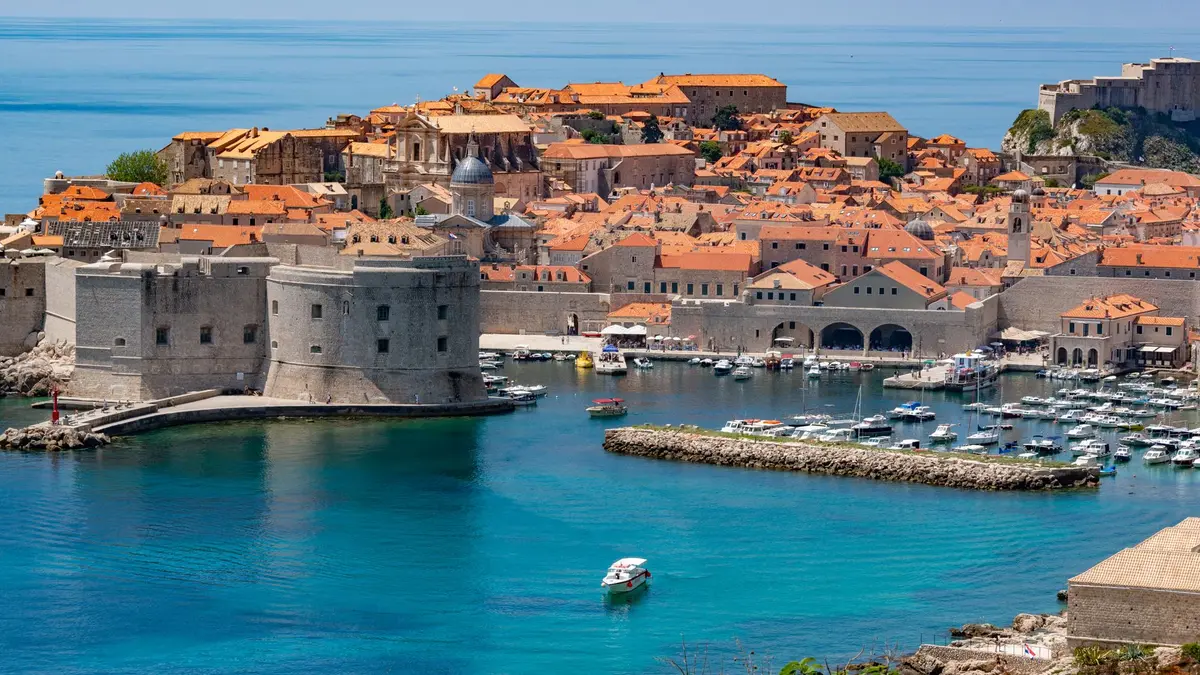
Why Croatia for Island Hopping
Croatia's coastline runs roughly 1,800 kilometres along the eastern Adriatic, but if you measure every island, inlet, and cove, it stretches past 6,000. Scattered along that coast are more than 1,200 islands. Only about 50 are permanently inhabited. The rest are pine-covered rocks rising from water so clear it looks computer-generated — the kind of turquoise-over-white-limestone transparency that makes you check twice whether you are looking at the sea or a swimming pool.
What makes Croatia exceptional for island hopping is not just the number of islands but the infrastructure that connects them. The state ferry company Jadrolinija has been running routes between these islands and the mainland since 1947, and in summer the network is dense enough that you can move between major islands daily without pre-booking weeks in advance. Add private catamarans, water taxis, and seasonal high-speed services, and you have a system that lets you build a flexible multi-island itinerary without the logistical headaches that plague similar trips in, say, Indonesia or the Philippines.
Then there is the cultural layer. These are not resort islands with a single purpose. Hvar has a 2,400-year-old town centre, a Venetian fortress, and a lavender industry that scents the entire island in June. Korcula claims to be the birthplace of Marco Polo and has a walled old town that rivals Dubrovnik in beauty at a tenth of the crowd level. Vis was a closed Yugoslav military base until 1989 and still has the underground tunnels and the sense of secrecy that comes with 45 years of restricted access. Each island has a distinct personality, a distinct cuisine, and a distinct reason to visit.
And yes — Game of Thrones fans already know that Dubrovnik doubled as King's Landing, but the real draw of the Croatian islands is not a TV set. It is a coast where the Roman, Venetian, Napoleonic, Austro-Hungarian, and Yugoslav layers are visible in every harbour wall, every church facade, and every bottle of local wine.
Best Islands Overview
Six islands and one archipelago form the core of any Croatia island-hopping route. They are strung along the Dalmatian coast between Split and Dubrovnik, and each one offers something the others do not. Here is the quick version before we go deep on each.
- Hvar — The glamorous one. Yacht harbours, rooftop cocktails, lavender fields, and the best nightlife on the Croatian islands. Stay in Hvar Town for energy or Stari Grad for quiet.
- Brac — Home to Zlatni Rat, arguably the most photographed beach in the Adriatic. The town of Bol is small and walkable. Excellent olive oil and stone-carving heritage.
- Korcula — A walled medieval town on a wooded island with outstanding white wine (Posip and Grk). Often called "mini Dubrovnik" but without the cruise ship crowds.
- Vis — The furthest major island from the mainland. The Blue Cave, Stiniva Beach (voted Europe's best beach in 2016), and Cold War-era military tunnels. Vis is the Croatia that existed before tourism arrived.
- Mljet — One-third of the island is a national park. Two interconnected saltwater lakes, dense Mediterranean forest, a 12th-century Benedictine monastery on an islet, and almost no nightlife. This is the quiet one.
- Elafiti Islands (Dubrovnik) — Three small islands — Kolocep, Lopud, and Sipan — accessible by local ferry from Dubrovnik. Perfect for a day trip or an overnight escape from the city walls.

Hvar — Nightlife, Lavender & History
Hvar is the most famous of the Croatian islands, and it earns that reputation honestly. The island is 68 kilometres long — the longest in the Adriatic — and runs roughly parallel to the mainland, shielding the coast from open-sea weather and creating the calm channels that make island hopping here so easy.
Hvar Town, at the western tip, is where most visitors spend their time. The main square (Trg Svetog Stjepana) is the largest piazza in Dalmatia, flanked by a 16th-century cathedral and the Arsenal building that once housed a public theatre — one of the first in Europe, opened in 1612. Above the town, the Spanjola Fortress (Fortica) offers panoramic views over the harbour, the Pakleni Islands, and the open sea. The climb takes 20 minutes and is best done in the late afternoon when the light softens and the heat drops.
The nightlife scene centres on the harbour-front bars and the Carpe Diem Beach club on Stipanska island in the Pakleni archipelago, reachable by water taxi. In July and August, Hvar Town can feel like a floating Ibiza — expect late nights, loud music, and prices that reflect the party crowd. If that is not your style, Stari Grad on the north coast is a radically different experience: a 2,400-year-old Greek settlement (one of the oldest towns in Europe, originally called Pharos), with a UNESCO-listed agricultural plain, quiet stone lanes, and family-run konobas serving grilled fish and local wine.
The lavender harvest runs from mid-June to mid-July. Drive or scooter into the island's interior — particularly around the villages of Velo Grablje and Brusje — to see (and smell) the purple fields. Dried lavender sachets and essential oils make excellent lightweight souvenirs and cost EUR 3-8 at roadside stalls.
Compare prices across Hvar Town and Stari Grad — from harbour-view apartments to boutique hotels in the old town.
Compare Hotel Prices →Brac — Zlatni Rat & Olive Groves
Brac is the closest major island to Split — the car ferry takes about 50 minutes to Supetar on the north coast, and the catamaran reaches Bol on the south coast in roughly the same time. It is the third-largest island in the Adriatic, and most of its interior is covered with dry-stone walls, olive groves, and the white limestone quarries that have supplied building stone for centuries. The White House in Washington, Diocletian's Palace in Split, and the Reichstag in Berlin all used Brac stone.
Zlatni Rat (Golden Horn) is the island's centrepiece — a 500-metre-long spit of fine white pebble that extends into the sea from the town of Bol and shifts shape with the wind and currents. It is genuinely one of the most beautiful beaches in the Mediterranean, and it is genuinely crowded from 11am to 4pm in July and August. Arrive early or come in the late afternoon when the day-trippers leave and the light turns golden. The water on both sides of the spit is shallow, warm, and ideal for swimming. Windsurfers and kitesurfers work the western tip where the maestral wind funnels through the channel between Brac and Hvar.
Bol is a compact town with a pretty waterfront promenade, a Dominican monastery (with a Tintoretto painting inside — ask at the desk, they will show you), and a handful of excellent restaurants. Try the local olive oil — Brac's oblica variety produces a mild, golden oil that competes with the best in the Mediterranean. Many producers offer tastings; look for signs reading "ulje" along the roads in the interior.
For hikers, the climb to Vidova Gora (778 metres) — the highest point on any Adriatic island — takes about two hours from Bol and rewards you with a view straight down to Zlatni Rat from above, with Hvar island floating on the horizon behind it. The trail is well-marked but exposed — bring water and sun protection.
Guided hikes, olive oil tastings, and boat trips to hidden coves around the island.
Browse Activities →Korcula — Mini Dubrovnik
Korcula Town is one of the most visually striking small towns in the Mediterranean. The old town sits on a small oval peninsula, enclosed by medieval walls and towers, with a herringbone street pattern designed by the Venetians to channel the breeze in summer and block the bura wind in winter. From the water, it looks like a miniature Dubrovnik — the same honey-coloured stone, the same red-tile roofs, the same defensive walls dropping into the sea — but without the 10,000 daily cruise-ship visitors that overwhelm its more famous neighbour.
The town claims to be the birthplace of Marco Polo, and while Venetian records actually show he was born in Venice (or possibly on the island of Curzola, the Venetian name for Korcula — the debate is real), there is a "Marco Polo House" near the cathedral that you can climb for rooftop views. The cathedral of St. Mark itself is worth a visit for the Tintoretto altarpiece. Moreska, a traditional sword dance dating to the 15th century, is performed in the old town on summer evenings — check the schedule at the tourist office.
Korcula's real distinction is its wine. The island produces Posip, a full-bodied white with stone fruit and floral notes, and Grk, a rare indigenous grape grown almost exclusively in the village of Lumbarda on the eastern tip of the island. Grk vines have only female flowers and require pollination from a different variety planted alongside — this biological quirk limits production and makes the wine genuinely uncommon outside Croatia. Visit a family winery in Lumbarda (Bire, Zure, or Krajancic are all excellent) for a tasting with views over the vineyards to the sea. Expect to pay EUR 10-15 for a tasting flight.
The beaches around Lumbarda — Przina and Bilin Zal — are among the few sandy beaches in Dalmatia, and the water is warm and sheltered. This end of the island is quieter and more residential than Korcula Town.
Stay inside the medieval walls or in a seaside apartment on the quieter east coast.
Compare Hotel Prices →Vis — Blue Cave & Military History
Vis is the furthest inhabited island from the Croatian mainland — a two-hour ferry ride from Split — and that distance is the source of its character. From 1944 to 1989, the Yugoslav military used Vis as a naval base and banned all foreign visitors. While the rest of the Dalmatian coast was being developed for tourism, Vis was frozen in time, its stone villages, fishing harbours, and agricultural terraces preserved by isolation. When the military left and the island opened in the early 1990s, what emerged was the most authentic, least commercialised major island in Croatia.
The Blue Cave (Modra Spilja) on the nearby islet of Bisevo is the island's most famous attraction. Between 11am and noon on sunny days, sunlight enters through an underwater opening and refracts off the white limestone seabed, filling the cave with an unearthly silver-blue glow. Boat tours from Vis Town or Komiza run daily in season (EUR 30-50 per person including the cave entry fee). The visit inside the cave is brief — about five minutes by rowboat — but the light effect is genuinely extraordinary and not easily replicated in photographs. Book early in high season; the number of daily entries is capped.
Stiniva Beach is reached by a steep 20-minute scramble down a rocky path from the road above (or by boat from Komiza). The beach is a narrow strip of white pebble enclosed by towering cliff walls that nearly meet at the entrance, creating a natural amphitheatre open to the sea. It was voted Europe's best beach in a 2016 European Best Destinations poll, and while "best" is subjective, the setting is undeniably dramatic. Bring water and sturdy shoes for the descent — there are no facilities on the beach.
The military tunnels near Komiza are a remnant of the Yugoslav era. An underground submarine pen carved into the rock, large enough to hide patrol boats, is accessible by kayak or on foot depending on water levels. A Cold War-era military installation on Mount Hum, the island's highest point, contains decommissioned radar equipment and offers panoramic views. Neither site is heavily signed or commercialised — ask locally for access, or join a guided military history tour.
Vis Town and Komiza both have outstanding seafood restaurants. The island's signature dish is vis pogaca, a flatbread stuffed with salted sardines, onions, tomatoes, and olive oil — denser and more savoury than pizza, and best eaten warm from a bakery.
Blue Cave excursions, Stiniva beach trips, military tunnel kayaking, and island food tours.
Browse Activities →Mljet — National Park & Saltwater Lakes
Mljet is the antidote to Hvar's glamour. The western third of the island is Mljet National Park — dense holm oak and Aleppo pine forest surrounding two interconnected saltwater lakes, Veliko Jezero (Big Lake) and Malo Jezero (Small Lake), that are connected to the open sea by a narrow channel. The water in the lakes is warmer and calmer than the open Adriatic, making them perfect for swimming, kayaking, and generally floating in silence while surrounded by forest.
On a small island in the middle of Veliko Jezero sits a 12th-century Benedictine monastery, now partly converted into a restaurant. A park ferry shuttles visitors to the island every 30 minutes. The monastery church is simple Romanesque stone, and the surrounding gardens offer shade and quiet. Swimming in the lake from the monastery island, with the forested hills rising on every side, is one of the most peaceful experiences in Croatia.
The national park entry fee is approximately EUR 15 in summer (reduced in shoulder season) and includes use of the park ferry to the monastery island. Cycling is the best way to explore — the park rents bikes near the Polace and Pomena entrances, and a circuit of both lakes takes about two hours at a leisurely pace. The paths are flat, shaded, and well-maintained.
Mljet has no nightlife to speak of. The two main settlements — Polace and Pomena — are small harbours with a handful of restaurants and family-run guesthouses. This is where you come to decompress. Spend a full day here at minimum, two if you want to hike the trails through the interior forest or snorkel the rocky coves on the south coast. The Odysseus Cave near Babino Polje is a large sea cave where, according to local legend, Odysseus was shipwrecked and held captive by the nymph Calypso for seven years. The swimming inside the cave is excellent.

How to Get Between Islands
The ferry network along the Dalmatian coast is anchored by two operators and supplemented by private services. Understanding the difference between them is the key to building a workable itinerary.
Jadrolinija (State Ferries)
Jadrolinija operates the large car ferries and catamarans that form the backbone of the inter-island network. The car ferries are big, slow, and reliable — they run year-round and rarely cancel except in the worst bura storms. The catamarans (foot passengers only) are faster and connect Split directly to Hvar Town, Korcula, and other destinations without the detour to car-ferry ports. In high season (July-August), Jadrolinija runs a catamaran service from Split through to Dubrovnik that stops at several islands along the way.
- Split to Hvar Town (catamaran): approximately 1 hour, EUR 12-15
- Split to Supetar, Brac (car ferry): approximately 50 minutes, EUR 5 foot passenger, EUR 35-40 with car
- Split to Vis (car ferry): approximately 2 hours 20 minutes, EUR 10
- Hvar to Korcula (catamaran): approximately 1 hour, EUR 10-12
- Korcula to Dubrovnik (catamaran): approximately 2 hours, EUR 18-22
Krilo and TP Line (Private Catamarans)
Krilo operates fast catamarans that duplicate and supplement the Jadrolinija routes with different timing. The Krilo Star and Krilo Jet run from Split to Hvar, Korcula, Mljet (Polace and Sobra), and Dubrovnik through the summer season. These are foot-passenger-only services — no cars. Krilo boats tend to be newer and more comfortable than the Jadrolinija catamarans, but they cost slightly more and their schedules are seasonal (roughly June to September).
TP Line operates the catamaran from Split to Bol (Brac) and onward, which is particularly useful if you want to reach Zlatni Rat directly without going through Supetar.
Booking Tips
- Book car ferries 1-2 weeks ahead in July/August — foot passenger space rarely sells out, but vehicle slots do. Book at jadrolinija.hr or Bookaway.
- Catamaran tickets can be bought 1-2 days ahead or on the day at the port office, but peak-season morning departures from Split do sell out.
- Check two sources for schedules: Jadrolinija.hr and GetByBus.com (which aggregates ferry and bus schedules in Croatia).
- Arrive at the port 30-45 minutes early for car ferries, 15-20 minutes for catamarans. Boarding closes 10 minutes before departure.
- The bura (north wind) and jugo (south wind) can cancel catamaran services. Car ferries almost always run. Have a backup plan if you are catching a flight from Split or Dubrovnik the same day as a ferry.
- No direct ferry between Vis and Korcula — you must return to Split or Hvar and connect. Plan your route accordingly.
Elafiti Islands from Dubrovnik
The three Elafiti Islands — Kolocep, Lopud, and Sipan — are served by a local Jadrolinija ferry from Dubrovnik's Gruz harbour. The ride to Lopud takes about an hour (EUR 5) and runs several times daily year-round. Lopud is the most popular for a day trip: the car-free island has a sandy beach (Sunj Beach) on the south side, a short walk through olive groves from the harbour. Sipan is the largest and quietest, with vineyards and two small settlements. Kolocep is the smallest, just 15 minutes from Dubrovnik, with a Blue Cave of its own (smaller than the one on Bisevo, but swimmable).
Sample 10-Day Island Hopping Itinerary
This route runs south from Split to Dubrovnik, hitting the major islands in a logical sequence that follows the ferry network. You can reverse it (Dubrovnik to Split) just as easily — the ferries run in both directions. Adjust the number of nights on each island to match your pace.
-
1Day 1 — Arrive in SplitFly into Split Airport (SPU) and transfer to the city centre (30 minutes by bus, EUR 5). Walk Diocletian's Palace, the Riva waterfront promenade, and the Green Market. Have dinner at a konoba in the Varos neighbourhood. Stay overnight in Split — you will need the morning to catch your first ferry.Fly into Split: search flights on Kiwi
-
2Day 2 — Split to Brac (Bol)Morning catamaran from Split to Bol (approximately 50 minutes). Drop bags at your accommodation, then head straight to Zlatni Rat — arrive before 10am to claim a good spot. Afternoon hike toward Vidova Gora or explore Bol town. Dinner on the harbour.Stay: 1 night in Bol
-
3Day 3 — Brac to HvarMorning ferry from Bol to Hvar Town (seasonal catamaran, or taxi boat). Explore Hvar's main square, climb to Fortica fortress for sunset views. Evening: harbour-front drinks and dinner in the old town.Stay: 2 nights in Hvar Town (or 1 in Hvar Town, 1 in Stari Grad)
-
4Day 4 — Hvar Full DayRent a scooter and explore the island interior — lavender fields (if visiting June-July), the abandoned village of Velo Grablje, and the Stari Grad Plain (UNESCO). Afternoon boat taxi to the Pakleni Islands for swimming in secluded coves. Return to Hvar Town for the nightlife scene or a quiet dinner in Stari Grad.
-
5Day 5 — Hvar to VisMorning catamaran or ferry from Hvar to Vis Town (approximately 1 hour). Afternoon: explore Vis Town's waterfront, the archaeological museum, and the British-era fortress above town. Fresh seafood dinner at Pojoda or Villa Kaliopa.Stay: 2 nights in Vis Town or Komiza
-
6Day 6 — Blue Cave & StinivaFull-day boat tour from Komiza: Blue Cave on Bisevo (arrive by 10am for the best light), Green Cave on Ravnik island, Stiniva Beach for swimming, and the Budikovac lagoon. Alternatively, rent a scooter and drive to Stiniva independently, then kayak the military tunnels near Komiza in the afternoon.
-
7Day 7 — Vis to KorculaReturn ferry from Vis to Split (2 hours), then connect to an afternoon catamaran from Split to Korcula (approximately 2.5 hours via Hvar). Arrive in the evening, check into your accommodation in Korcula Town, and walk the old town walls at dusk.Stay: 2 nights in Korcula Town
-
8Day 8 — Korcula Full DayMorning: explore the old town — cathedral, Marco Polo House, the herringbone streets. Afternoon: taxi or bike to Lumbarda for wine tasting at Bire or Krajancic, followed by swimming at Przina Beach. Evening: catch a Moreska sword dance performance if scheduled, then dinner in the old town.
-
9Day 9 — Korcula to Mljet to DubrovnikMorning catamaran from Korcula to Mljet (Polace or Pomena, approximately 1 hour). Spend the day in Mljet National Park: cycle the lakes, ferry to the monastery island, swim in Veliko Jezero. Late afternoon catamaran from Mljet to Dubrovnik (approximately 1.5 hours). Check in and have dinner in Dubrovnik's Gruz area or walk to the old town.Stay: 1 night in Dubrovnik
-
10Day 10 — DubrovnikWalk the Dubrovnik city walls (EUR 35, best done early morning before the heat). Explore the Stradun, the Rector's Palace, and Fort Lovrijenac. Optional: day trip to the Elafiti Islands (Lopud for Sunj Beach) or a Game of Thrones walking tour. Fly out from Dubrovnik Airport (DBV) in the evening, or add extra nights.
This 10-day route is a framework, not a fixed plan. If you want more beach time, add a night in Bol or Vis. If you are a history and wine person, add a second night in Korcula and skip Brac. The ferry network gives you the flexibility to adjust day by day — just check departure times the evening before at the port office or on jadrolinija.hr.
Pick up in Split, drop off in Dubrovnik. Compare rental prices across all major providers — useful for Brac and Korcula where a car lets you reach quieter beaches and wineries.
Compare Car Rentals →Budget Breakdown Per Day
Croatia is no longer the budget destination it was a decade ago — EU membership (2013) and the euro adoption (2023) brought prices closer to Western European levels, particularly on the islands in summer. But it is still significantly cheaper than the Italian or French coast, and careful choices can stretch your money considerably.
- Accommodation (double room, split between two): EUR 40-80/person (apartments and guesthouses), EUR 80-150/person (boutique hotels)
- Breakfast: EUR 5-8 (bakery pastry + coffee) or included with hotel
- Lunch: EUR 10-15 (pizza, sandwich, or light meal at a konoba)
- Dinner: EUR 18-30 (grilled fish, wine, and sides at a mid-range restaurant)
- Inter-island ferry: EUR 10-22 per hop (average EUR 13)
- Activities: EUR 15-50 (Blue Cave tour, national park entry, wine tasting)
- Scooter rental: EUR 25-40/day (split between two)
- Coffee + snacks: EUR 5-8
Budget traveller (hostel dorms, bakery meals, limited activities): EUR 60-80 per person per day.
Mid-range (private apartment, konoba dinners, one activity per day): EUR 100-150 per person per day.
Comfortable (boutique hotel, restaurant meals, daily tours/rentals): EUR 180-250 per person per day.
10-day total (mid-range, including flights): approximately EUR 1,300-1,800 per person, including return flights from a European city, all ferries, accommodation, food, and activities.
The biggest variable is accommodation. An apartment booked through a local agency or directly with the owner (look for "sobe" or "apartmani" signs) can cost half what the same quality costs on Booking.com or Airbnb, because the owner avoids the platform commission. Ask at the tourist office in each port town — they maintain lists of available rooms.
Best Time to Visit
The Croatian island-hopping season runs from May through October, with July and August as the unambiguous peak. The best time depends on what you are optimising for.
May and early June are the sweet spot for value and comfort. Water temperatures reach 20-22C — swimmable for most people — and air temperatures sit around 24-28C. Ferries are running, most restaurants and hotels are open, and prices are 25-40% below July/August rates. The islands are green from spring rain, the lavender is starting to bloom on Hvar, and you can walk into a waterfront restaurant without a reservation. The trade-off is that some seasonal catamaran routes (particularly Krilo services) may not start until June, limiting your routing options.
July and August deliver guaranteed heat (30-35C), warm sea temperatures (24-26C), the full ferry schedule, and all nightlife and beach bars operating at capacity. They also deliver crowds, higher prices, the need to book accommodation weeks in advance, and the risk of losing a beach spot if you arrive after 10am. If you are committed to peak season, book everything early and focus on the less-visited islands — Vis and Mljet are noticeably quieter than Hvar even in August.
September is arguably the single best month for island hopping. The sea is at its warmest (25C), the summer crowds thin dramatically after the first week, prices drop, the grape harvest is underway on Korcula and Hvar, and the light turns warm and golden. Most ferry services still run through September, though some seasonal routes end mid-month. If you have flexibility, aim for the first two weeks of September.
October is a gamble. Early October can be glorious — warm, uncrowded, cheap — but ferry schedules reduce significantly, and the second half of the month brings the first autumn storms and cooler water (20-21C). Some island accommodations and restaurants close after mid-October. If you are an experienced traveller comfortable with uncertainty and reduced services, early October is excellent value. If you want reliability, stick to September.
November through April: Most inter-island catamaran services stop running. Jadrolinija car ferries continue year-round to the major islands (Hvar, Brac, Korcula, Vis), but frequency drops to one or two departures per day. Many island hotels, restaurants, and attractions close entirely. This is not island-hopping season — it is "pick one island and hunker down" season.
Where to Stay on Each Island
Accommodation on the Croatian islands falls into three categories: private apartments and rooms (the best value), small boutique hotels, and the occasional larger resort. There are very few chain hotels. The apartment market is deep — nearly every family on the coast rents at least one room — and quality varies enormously. Here is where to focus on each island.
Split (starting point)
Stay in or near the Diocletian's Palace quarter for atmosphere, or in the Varos neighbourhood for a quieter residential feel within walking distance of the ferry port. The port (Trajektna luka) is a 10-minute walk from the palace. Avoid hotels on the highway strip near the airport — they are cheap but you will waste time commuting.
Compare prices from hundreds of Split hotels — palace-quarter apartments to harbour-front boutique stays.
Compare Hotel Prices →Brac
Bol is the obvious base — walk to Zlatni Rat, restaurants, and the harbour. Look for apartments on the streets behind the waterfront (the front-row places charge a premium for views you will enjoy from the beach anyway). Supetar on the north coast is a reasonable alternative if you arrive on the car ferry and want to save money — it is a pleasant small town, though it lacks Bol's beach.
Hvar
Hvar Town for nightlife, dining, and convenience. Apartments in the streets above the harbour offer the best balance of price and proximity. For peace, stay in Stari Grad — it is a 20-minute drive from Hvar Town but a completely different experience: quiet, historic, and less expensive.
Vis
Vis Town has more restaurants and a more sociable waterfront. Komiza is smaller, quieter, and closer to the Blue Cave departure point. Both are excellent. Accommodation is limited compared to Hvar — book early in July and August.
Korcula
Stay in or immediately outside the old town walls of Korcula Town if you can find availability. The walled town is small enough to walk end to end in five minutes, and staying inside it means you are steps from restaurants, the waterfront, and the ferry dock. Lumbarda (8 km east) is the choice for beach and wine access.
Mljet
Pomena is the more developed of the two gateway villages, with a large hotel and several guesthouses. Polace is quieter and arguably prettier, with Roman ruins in the harbour. Both are within the national park. If you are staying overnight (recommended), book directly with guesthouse owners — options are limited and fill quickly in peak season.
Dubrovnik (endpoint)
The ferry arrives at Gruz harbour, about 3 km from the old town. Stay in the old town for atmosphere (expensive, crowded, but unforgettable) or in Lapad or Babin Kuk for beaches, lower prices, and a 15-minute bus ride to the walls. Avoid the Pile Gate area's tourist-trap restaurants — walk 100 metres into the residential streets behind the Stradun for better food at half the price.
Old-town apartments, Lapad beach hotels, and harbour-district boutique stays — compare prices across hundreds of options.
Compare Hotel Prices →Everything you need for island hopping — hotels, tours, transport, and car rental across Dalmatia.
Ready to plan your Croatia trip?
Tell Tripva your travel dates, budget, and interests — we'll build a complete day-by-day island-hopping itinerary with ferry schedules, hotel picks, and activity timing. Takes 30 seconds.
Plan Your Croatia Trip ✦