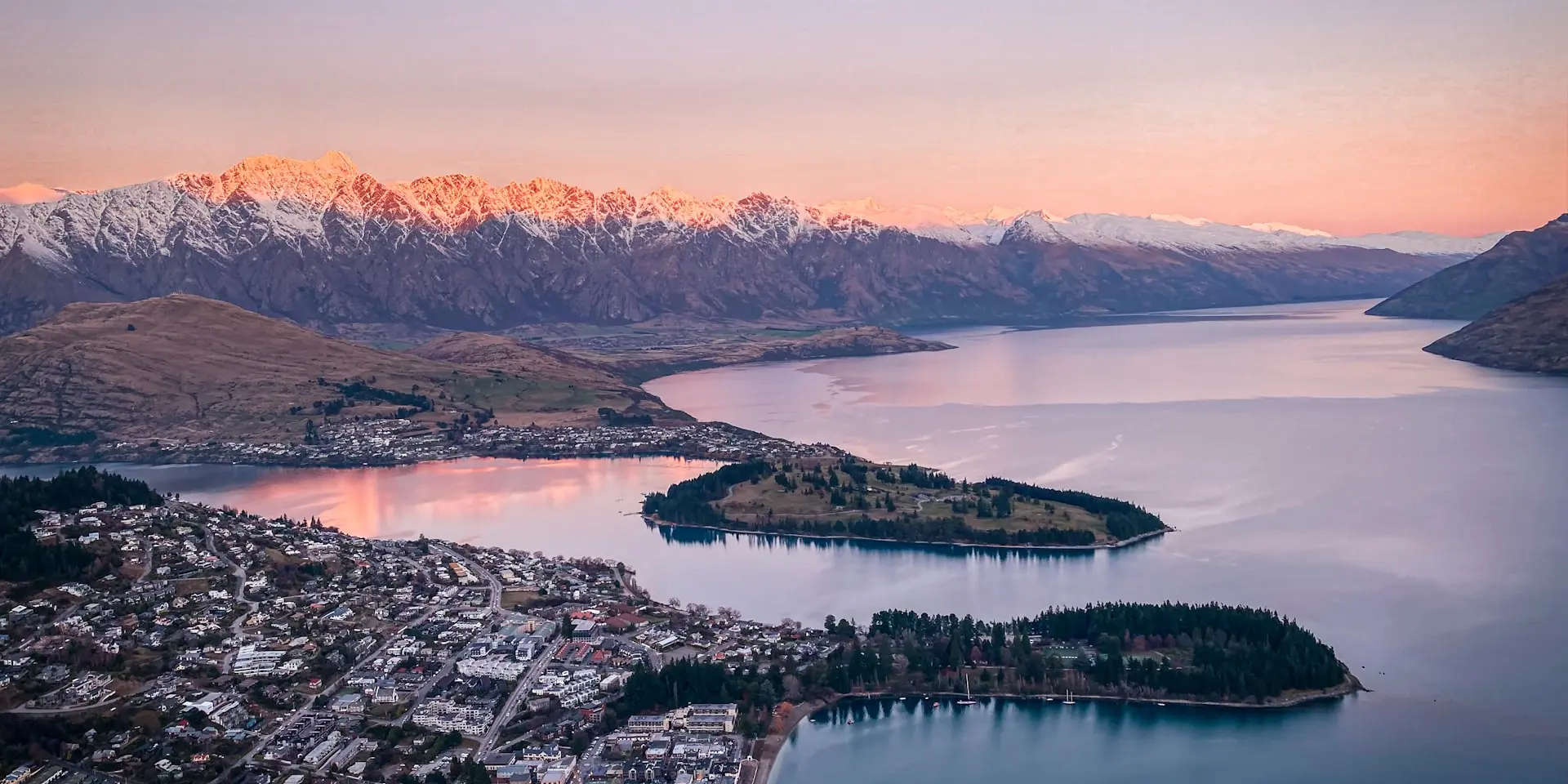
Why Queenstown
Queenstown earned the title "adventure capital of the world" not by committee vote but by sheer density of ways to get your heart rate up within a fifteen-minute drive of town. Set on the northern shore of Lake Wakatipu, a glacial lake that stretches 80 kilometres through the Southern Alps, the town is backed by the jagged wall of The Remarkables mountain range and flanked by dense beech forest. The scale of it hits you the moment you land at the airport, which has one of the most dramatic approaches of any commercial runway on the planet.
What makes Queenstown exceptional is not just the landscape but the infrastructure built around it. This is a town of roughly 16,000 permanent residents that services over three million visitors a year. Every adrenaline activity imaginable has been refined here over decades. Bungee jumping was commercially invented here. Jet boating was born on these rivers. The ski fields, the paragliding launches, the canyon swings, the mountain bike trails -- all of it operates at a professional level you rarely find outside major resort destinations, and the distances between them are tiny.
Film fans will recognise the terrain. Peter Jackson shot extensively across the Queenstown Lakes district for the Lord of the Rings and Hobbit trilogies. Glenorchy, 45 minutes north, stood in for Isengard and Lothlórien. The Remarkables became the Dimrill Dale. The landscape genuinely looks like a fantasy set, which is the point -- it was chosen because it already looked impossible.
But Queenstown is not just for thrill-seekers. The Gibbston Valley wine region is a twenty-minute drive away. Arrowtown, a preserved gold rush village, sits just beyond that. Milford Sound, one of the most photographed natural landmarks in the Southern Hemisphere, is reachable as a long day trip. You could spend a week here without repeating an experience, which is rare for a town this small.

Adrenaline Activities
Queenstown did not invent the concept of adventure tourism, but it perfected the model. AJ Hackett and Henry van Asch launched commercial bungee jumping from the Kawarau Bridge in 1988, and the industry has been building on that foundation ever since. Here are the headline activities, each of which has been operating safely for years or decades.
AJ Hackett Nevis Bungy
The Nevis Bungy is the highest bungee jump in New Zealand at 134 metres -- that is 44 storeys of free fall above the Nevis River canyon. You ride a cable car out to a suspended pod in the middle of the canyon, stand on a glass-floor platform, and jump into 8.5 seconds of weightlessness before the cord catches. The Nevis is not an introductory bungee. It is the definitive one. The sensation of hanging in the middle of a raw alpine canyon, mountains in every direction, is genuinely overwhelming. Expect to pay around NZD $275 and allow a half day including the 40-minute drive from Queenstown and the safety briefings.
Kawarau Bridge Bungy
The original. The 43-metre Kawarau Bridge jump is where commercial bungee began, and it remains the most popular single activity in Queenstown. The jump is lower and less intense than the Nevis, which makes it a better starting point for first-timers. You can opt to be dipped into the river at the bottom of the fall, which adds a shock of glacial cold to the adrenaline. The site has a free viewing area, so if you are travelling with someone who prefers to watch, they will not be bored. Around NZD $220.
Shotover Jet
The Shotover Jet boats carry twelve passengers through the narrow Shotover River canyons at speeds up to 85 km/h, executing 360-degree spins between rock walls that seem close enough to touch. The canyon walls are barely wider than the boat in places, and the driver threads the gaps at speed with practiced precision. The ride is about 25 minutes and it is loud, fast, and very wet. It has been operating since 1965, making it one of the longest-running adventure activities in the region. Around NZD $159.
Nzone Skydive
Tandem skydiving from 15,000 feet over Queenstown delivers roughly 60 seconds of free fall at 200 km/h before the parachute opens. What makes this particular skydive special is the view: Lake Wakatipu below, The Remarkables to one side, Coronet Peak to the other, and on clear days you can see across to Milford Sound and Mount Aspiring. The canopy ride down takes five to seven minutes and the landing is on the Queenstown waterfront. This is consistently rated one of the top skydiving locations in the world. Prices start around NZD $350 for 12,000ft and climb to $450+ for the full 15,000ft experience.
Queenstown Paragliding
Tandem paragliding launches from the Skyline Gondola summit, Bob's Peak, at around 790 metres above Queenstown. The flight is gentler than skydiving but the views are arguably better because you are lower, slower, and can actually take them in. Flights last 8 to 12 minutes depending on thermals and you land near the lake. From NZD $249. On a still day with the lake like glass, it is one of the most serene experiences in Queenstown despite being categorised as adventure.
Skyline Luge
Take the Skyline Gondola up Bob's Peak and ride a gravity-fuelled luge cart back down one of three tracks. The scenic track is gentle and family-friendly. The advanced track adds banked corners and tunnels. It is not extreme in the bungee sense, but it is one of the most fun things you can do in Queenstown, especially with children. Five rides plus the gondola costs around NZD $69 for adults. The gondola ride itself is worth the trip for the panorama alone.

Bungee jumping, skydiving, jet boating, paragliding, and more -- skip-the-line tickets and instant confirmation.
Browse Activities →The Best Hikes
Queenstown sits at the junction of several mountain ranges and national parks, giving it access to hiking that ranges from gentle lakeside strolls to multi-day alpine crossings. The trails below cover that full spectrum.
Ben Lomond Track
The Ben Lomond summit hike is the definitive Queenstown day walk. The track begins at the top of the Skyline Gondola (or from the base if you want to add an extra hour) and climbs steadily through subalpine scrub to the 1,748-metre summit. The final section above the saddle is steep and exposed -- loose rock underfoot, wind that can arrive quickly, and snow that lingers well into November. But the reward is a complete 360-degree panorama: Lake Wakatipu, Cecil Peak, Walter Peak, The Remarkables, and on clear days, Mount Aspiring and the Darran Mountains near Milford.
Allow 6 to 8 hours return from the gondola top. Bring warm layers, wind protection, plenty of water, and food. This is a genuine mountain hike, not a groomed path, and the weather can change in minutes. Check the DOC (Department of Conservation) conditions before setting out. Do not attempt the summit in poor visibility.
Queenstown Hill (Te Tapu-nui)
If Ben Lomond is too much, Queenstown Hill delivers a satisfying short hike with excellent views. The track starts from Belfast Terrace in town and climbs through Douglas fir forest to a viewpoint at 907 metres. The "Basket of Dreams" sculpture marks the main viewpoint, with Lake Wakatipu and the surrounding ranges laid out below. Allow 90 minutes to 2 hours return. Family-friendly, though the final section is moderately steep. No gondola ticket required -- this is a free walk from town.
Bob's Cove
A flat, easy lakeside walk through native beech forest along the shore of Lake Wakatipu, about 12 km from town along Glenorchy Road. The track follows the water's edge through moss-covered trees and opens onto a small bay with mountain views. Allow 45 minutes to 1 hour for the loop. Ideal for families with young children or anyone wanting a peaceful walk without elevation gain. The late afternoon light through the beech canopy is particularly beautiful.
Routeburn Track
One of New Zealand's ten Great Walks, the Routeburn Track connects the head of Lake Wakatipu (near Glenorchy) with the Divide on the Milford Road. The full track is 32 kilometres over 2 to 3 days, crossing alpine meadows, passing through ancient forest, and traversing the Harris Saddle at 1,255 metres with views into the Darran Mountains and Hollyford Valley. DOC hut bookings are required in the Great Walks season (late October to late April) and should be secured months in advance -- this track fills up. The scenery is consistently extraordinary for the entire distance, which is rare even among top-tier multi-day hikes. Day walkers can do the Routeburn Flats section (3 to 4 hours return from the Routeburn Shelter car park) for a taste.
Rob Roy Glacier Track
Technically a day trip from Wanaka rather than Queenstown (about 1.5 hours drive), the Rob Roy Glacier Track is worth the detour. The track crosses the Matukituki River on a swing bridge and climbs through beech forest to a viewpoint directly beneath the Rob Roy Glacier. Waterfalls cascade from the ice face above, avalanches rumble in the distance (safely), and the scale of the glacier against the valley walls is humbling. Allow 3 to 4 hours return. The drive through the Matukituki Valley on an unsealed road is an experience in itself -- Lord of the Rings scenery at its most immediate.
Milford Sound Day Trip
Milford Sound (Piopiotahi in Māori) is not in Queenstown. It is a 4.5-hour drive each way through Fiordland National Park, and it is one of the greatest road trips in the Southern Hemisphere. The question is not whether to go -- it is how.
The Drive
The Milford Road (SH94) from Te Anau to Milford is 120 kilometres of escalating drama. You pass through tussock valleys, mirror-still lakes, ancient beech forest, and finally the Homer Tunnel -- a 1.2 km single-bore tunnel blasted through solid granite that drops you into the Cleddau Valley on the other side. The road is the experience as much as the destination. Stop at Mirror Lakes, The Chasm, and Falls Creek along the way. Allow the full day -- leaving Queenstown by 7am is realistic for a midday cruise.
Cruise Options
Real Journeys (now RealNZ) runs the largest cruise operation on the sound with boats ranging from standard scenic cruises to smaller expedition vessels. The standard cruise is about 2 hours and covers the full length of the fiord from the terminal to the Tasman Sea and back. Go Orange offers a more budget-friendly cruise on slightly smaller boats with a similar route. Both operators get you close to Stirling Falls (a 151-metre cascade that drenches the bow deck), past seal colonies on the rocks, and along the sheer granite walls that rise 1,200 metres straight from the water. Dolphins are common; penguins less so but not rare.
What You Will See
Mitre Peak is the centrepiece -- a 1,692-metre pyramid of rock that rises directly from the water and is one of the most photographed mountains in New Zealand. Stirling Falls and Bowen Falls provide the drama. Fur seals haul out on rocks near the mouth of the fiord. Bottlenose dolphins often ride the bow wave of the cruise boats. On quiet mornings, the reflections on the water are flawless.
Milford Sound receives about 7 metres of rain per year -- one of the wettest inhabited places on Earth. When it rains, hundreds of temporary waterfalls appear on the cliff faces, turning the entire fiord into a vertical water feature. Locals say the best time to see Milford is in the rain, and they are right. Bring waterproof layers and embrace it. A clear blue-sky day is beautiful but a rainy day is otherworldly.
Fly-Cruise-Fly
If the 9-hour round-trip drive is too much, the fly-cruise-fly option takes a scenic flight from Queenstown over Fiordland, lands at Milford, puts you on a cruise, and flies you back. The flight itself is extraordinary -- you cross the Richardson Mountains, the Hollyford Valley, and arrive over the fiord from above. It costs significantly more (NZD $600-800+), but it saves 7 hours of driving and adds a scenic flight that many travellers say was the highlight of their entire New Zealand trip.

A rental car is essential for Milford Sound, Glenorchy, and the wineries. Compare prices from all major providers.
Compare Car Rentals →When to Visit
Queenstown has a genuine four-season climate, and unlike many destinations, each season offers a distinctly different experience worth travelling for.
Summer (December to February) is peak season. Days are long -- sunset is not until after 9:30pm in late December -- and temperatures hover between 20 and 25 degrees Celsius. This is prime time for hiking, water sports, mountain biking, and the Routeburn Track. Lake Wakatipu is swimmable (barely -- glacial meltwater keeps it around 10-14 degrees) and the town buzzes with energy. Book accommodation well in advance and expect to pay peak rates. The tradeoff is reliable weather and access to everything.
Autumn (March to May) is arguably the most beautiful season. The deciduous trees around Arrowtown and along the Arrow River turn deep gold, orange, and red. The crowds thin out by late March, prices drop 20-30%, and the weather stays mild through April. Hiking conditions are excellent. The Arrowtown Autumn Festival in late April is worth timing your trip around. Mornings are crisp and the light is golden.
Winter (June to August) transforms Queenstown into a ski town. The Remarkables ski area is a 25-minute drive from town with terrain for all levels and views that make you forget to turn. Coronet Peak is even closer at 20 minutes and offers night skiing on Fridays and Saturdays. The town itself stays lively with après-ski bars, winter festivals, and restaurants running at full capacity. Daytime temperatures range from 1 to 8 degrees. Snow rarely falls in town but the mountains above are consistently white from June onward.
Spring (September to November) is the quiet shoulder season. Wildflowers appear in the alpine meadows, the ski season winds down (lifts usually close late September to early October), and hiking tracks reopen as snow melts. The Routeburn Track opens for bookings in late October. Prices are at their lowest and you will have popular viewpoints and trails to yourself. The weather is variable -- pack layers -- but the scenery is green and fresh and the waterfalls run at full force from snowmelt.
Compare prices from hundreds of Queenstown hotels -- from backpacker hostels to luxury lodges on the lakefront.
Compare Hotel Prices →Beyond Adventure: Wine, Food & Scenery
Queenstown's identity is built on adrenaline, but some of the best experiences here do not involve jumping off anything.
Gibbston Valley Wine Region
The Gibbston Valley, a 25-minute drive east of Queenstown through the Kawarau Gorge, is home to the world's southernmost commercial vineyards. The region specialises in Pinot Noir -- the cool climate and schist soils produce wines with distinctive minerality and bright acidity that consistently medal at international competitions. Gibbston Valley Winery has a cave cellar carved into the rock face where you can taste their range. Peregrine Wines, Amisfield, and Kinross are all within minutes of each other. A self-drive wine trail is easy to organise, or several operators run guided tours that include lunch. The landscape of vineyards against canyon walls is striking regardless of whether you drink.
The Food Scene
Fergburger is Queenstown's most famous food institution -- a gourmet burger shop on Shotover Street that has had a permanent queue outside since roughly 2001. The burgers are large, creative, and genuinely good. The queue moves faster than it looks. Go at 8am or after 10pm to avoid the worst of it. Beyond Fergburger, Rātā by chef Josh Emett offers fine dining in a heritage cottage with a menu built around New Zealand lamb, venison, and Bluff oysters. Botswana Butchery on the waterfront does excellent steak. Bespoke Kitchen is the best breakfast spot in town -- the cabinet food alone is worth the visit.
Arrowtown
Twenty minutes from Queenstown, Arrowtown is a former gold rush settlement from the 1860s with a preserved main street of stone cottages now housing cafes, galleries, and boutiques. The Chinese Settlement historic reserve at the edge of town tells the story of Chinese miners who came during the gold rush -- one of the best-preserved sites of its kind in New Zealand. In autumn, the trees along the Arrow River turn every shade of gold and copper. The walk along the river from town takes 30 minutes and is flat enough for anyone. Even if you are not interested in history, Arrowtown is worth the drive for the atmosphere and a long lunch at The Fork & Tap or Provisions.
Lake Hayes
A small lake between Queenstown and Arrowtown, Lake Hayes has a flat walking and cycling track around its perimeter (8 km loop, about 2 hours walking). On still mornings, the reflections of the surrounding mountains in the water are perfect -- this is one of the most photographed lakes in the South Island. The loop is paved and suitable for pushchairs and wheelchairs. No elevation gain, no fitness required, and the light at dawn or dusk is exceptional.
Photo Spots -- Three Unmissable Frames
-
1Bennetts Bluff LookoutThe definitive Queenstown photograph. Bennetts Bluff is a roadside lookout on the Glenorchy-Queenstown Road, about 25 minutes from town, perched above a sheer drop to Lake Wakatipu. The view takes in the full sweep of the lake, Pig and Pigeon Islands below, and the mountains beyond stretching to the horizon. This is the shot you see on every New Zealand tourism poster and Instagram feed -- and in person it is even more dramatic than the photos suggest. The lookout has a small car park and a short walk to the viewing platform.Best time: Golden hour, either morning or evening. Morning light hits the mountains across the lake. Arrive early in summer as the car park fills quickly.
-
2Glenorchy Road with Remarkables ReflectionThe road from Queenstown to Glenorchy follows the western shore of Lake Wakatipu for 45 minutes through some of the most photogenic landscape in New Zealand. Several pullover spots along the road offer views of The Remarkables reflected in the lake on calm days. The combination of the winding road, the lake, and the mountain wall creates a composition that works at any focal length. The road itself features in drone footage of virtually every New Zealand travel video ever made.Best time: Early morning on a windless day for mirror reflections. The road faces east-southeast so morning light is optimal.
-
3Milford Sound with Mitre PeakMitre Peak rising 1,692 metres from the dark waters of Milford Sound is one of the most iconic natural compositions in the Southern Hemisphere. The best angles come from the cruise boats as they approach from the terminal -- the mountain fills the frame with the fiord walls closing in on either side. From the shore near the terminal building, early morning reflections on the water create a symmetrical image that has graced the cover of more travel magazines than any other New Zealand landmark.Best time: Dawn for reflections, or during rain for hundreds of waterfalls on the cliff faces. Both conditions produce extraordinary images.
Budget Quick Facts
- Nevis Bungy: NZD $275+
- Kawarau Bridge Bungy: NZD $220+
- Tandem Skydive (15,000ft): NZD $350-$450+
- Milford Sound cruise: NZD $90-$180
- Fly-cruise-fly (Milford): NZD $600-$800+
- Shotover Jet: NZD $159
- Hostel dorm: NZD $40-$65/night
- Mid-range hotel: NZD $180-$350/night
- Luxury lodge: NZD $500-$1,500+/night
- Budget meal (Fergburger, cafe): NZD $15-$25
- Restaurant dinner: NZD $40-$80 per person
- Fine dining (Rātā, Botswana Butchery): NZD $100-$160 per person
- Rental car: NZD $60-$120/day (book early in peak season)
- Petrol: NZD $2.80-$3.20/litre
- Ski lift pass (daily): NZD $140-$180
Queenstown is not a budget destination by New Zealand standards, and New Zealand is not a budget destination by world standards. Activity costs add up fast -- a day of bungy plus jet boat plus gondola can easily reach NZD $500-$600 per person. The key savings lever is accommodation: staying in Frankton or Arrowtown rather than central Queenstown drops rates significantly, and a rental car (which you will want anyway for Milford, Glenorchy, and the wineries) makes the distance irrelevant. Combo deals through the major operators (AJ Hackett, Skyline) typically save 15-20% if you are doing multiple activities. The free activities -- hiking Queenstown Hill, walking around Arrowtown, driving to Glenorchy, swimming in the lake -- are some of the best things to do in town.
Everything you need -- flights, hotels, adventure activities, and car rental for exploring the Southern Alps.
Ready to plan your Queenstown trip?
Tell Tripva your travel dates, interests, and pace -- we will build a complete day-by-day Queenstown itinerary with activity bookings, accommodation, and driving routes. Takes 30 seconds.
Plan Your Queenstown Trip ✦